
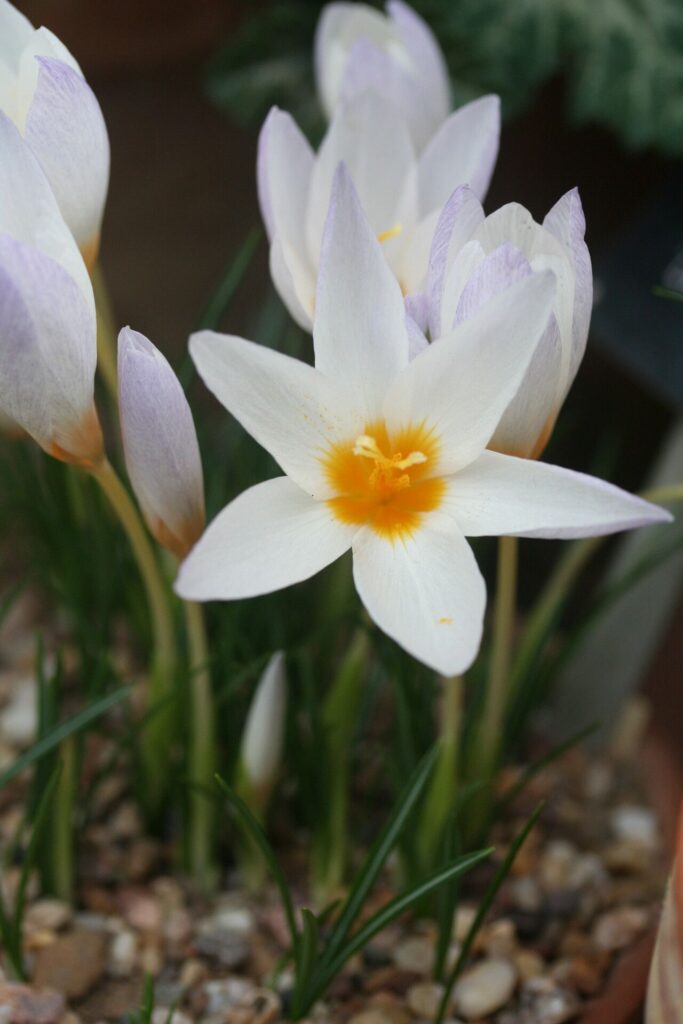
From One Crocus to Many: A Guide to Propagating the Charming Crocus caspius
The delicate beauty of the Crocus caspius is a sight to behold, with its vibrant purple blooms emerging from the cold earth in early spring. But did you know you can easily multiply your own collection of these delightful flowers?
While the Crocus caspius is commonly sold as corms (modified stems), there are two main methods of propagation: division of corms and seed sowing.
Division of Corms: The Quick and Easy Way
This method is ideal for a jump-start in growing more Crocus caspius. After the flowering season, gently lift the corms from the ground. You’ll notice smaller corms, called offsets, attached to the main corm. Carefully separate these offsets using clean, sharp tools.
Now, you have multiple corms ready to plant! The process is as simple as finding a sunny spot with well-drained soil. Plant the offsets about 2-3 inches deep and a few inches apart, ensuring the pointed end faces upwards. Water them well and wait excitedly for spring to witness their blossoming beauty.
Seed Sowing: A Patient Approach
For those who enjoy the anticipation of watching a tiny seed transform into a flowering crocus, seed sowing is an equally rewarding method.
Here’s how:
-
Harvest the Seeds: After the crocus finishes blooming, the flowers develop into pods containing seeds. Allow these pods to mature completely before harvesting.
-
Seed Preparation: Remove the seeds from the pods and let them dry in a cool, airy place for a few days. This helps ensure good germination rates.
-
Sowing time: The best time for sowing Crocus caspius seeds outdoors is in autumn. Sow them in a seed tray filled with a seed-starting mix or directly into well-prepared soil.
-
Patience is Key: The seeds of Crocus caspius can take 18-24 months to germinate! Provide consistent moisture and ensure the soil is well-drained.
- Transplantation: Once the seedlings are large enough to handle, gently transplant them into a sunny location with well-drained soil. You may see your first blooms in a few years.
Additional Tips:
- Choose a position with full sun to partial shade for optimal growth.
- Ensure the soil is well-drained to prevent rotting.
- Apply a layer of mulch around the plants to retain moisture and suppress weeds.
- Fertilize in spring with a balanced fertilizer specifically for bulbs.
Beyond the Beauty:
The Crocus caspius isn’t just a decorative plant. It’s a food source for pollinators and plays a vital role in supporting biodiversity. Watching this vibrant crocus thrive in your garden, knowing you propagated it yourself, is a rewarding experience that connects you to the beauty and wonder of nature.
By following these simple methods, you can easily multiply your Crocus caspius collection and enjoy this gorgeous flower year after year. Remember, patience and a touch of plant magic—that’s all you need to turn a single crocus into a vibrant, blooming patch!