
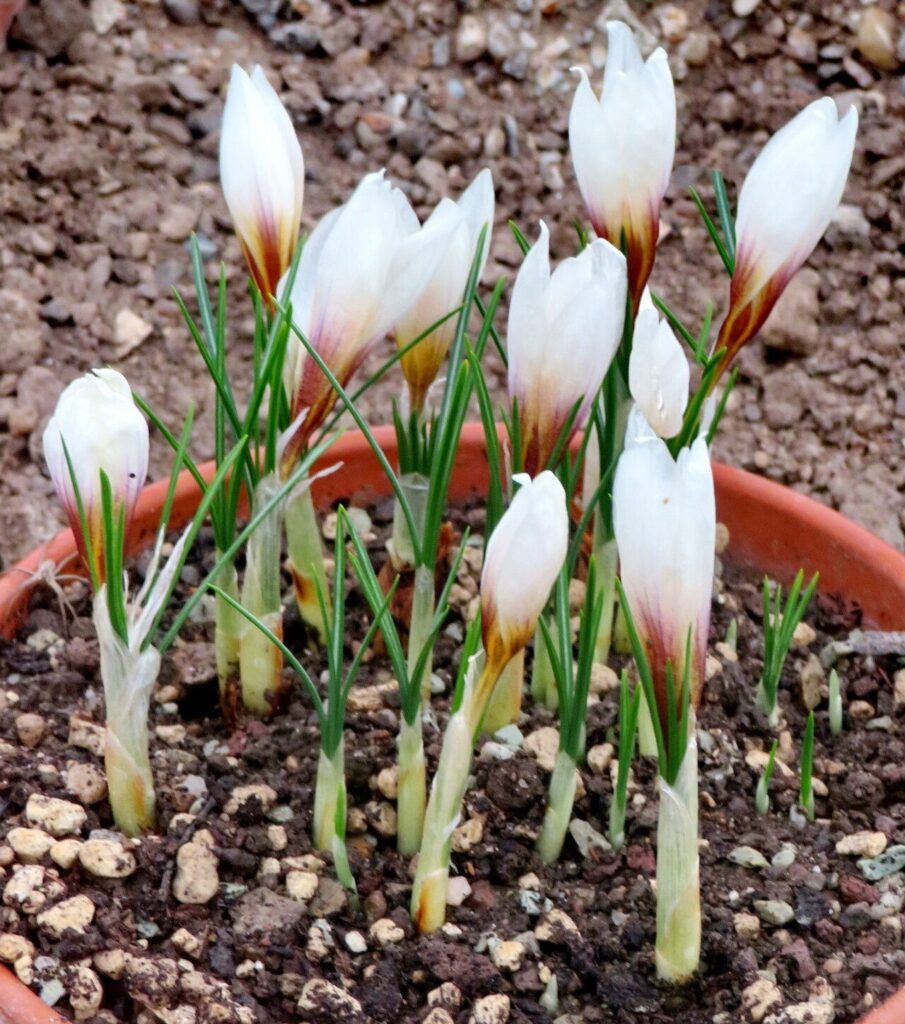
Propagating the Adriatic Crocus: A Gardener’s Guide to Crocus hadriaticus
Introduction:
Crocus hadriaticus, also known as the Adriatic crocus or Dalmatian crocus, is a captivating member of the Iridaceae family, prized for its delicate, lavender-blue flowers with striking orange throats. Native to the rocky terrains of the Adriatic coast, this crocus displays remarkable hardiness and a charming resilience, making it a sought-after addition to rock gardens and alpine landscapes. Its relatively compact size and striking blooms contribute to its popularity among gardeners. However, propagating Crocus hadriaticus presents unique challenges, making successful cultivation a particularly rewarding experience.
Seed Germination:
Seed germination for Crocus hadriaticus is possible but presents significant challenges. The seeds are notoriously slow to germinate, often requiring a period of cold stratification to mimic the natural winter conditions of their native habitat.
Challenges: Low germination rates, lengthy germination period (often several months).
Practical Tips: Seeds should be sown in autumn in a well-drained seed-starting mix. Cold stratification, ideally for 8-12 weeks at temperatures near 4°C (39°F) is crucial. Sowing outdoors in a cold frame or directly into a prepared bed mimics natural conditions. Keep the sowing medium consistently moist but not waterlogged.
Rewards: Achieving germination offers the possibility of increased genetic diversity within your collection, and provides a sustainable approach to propagating this species on a larger scale.
Cuttings:
Currently, there are no known reliable methods for propagation of Crocus hadriaticus via cuttings. Crocuses do not readily propagate from stem or leaf cuttings.
Division:
Division is the most successful and commonly used method for propagating Crocus hadriaticus. These plants form corms that, once mature, can be separated, ideally during the dormant summer months.
Challenges: Disturbing the existing corms can damage the plant, leading to reduced flowering or even death. Successfully separating the corms without causing damage requires careful handling. Each division should ideally include a portion of healthy root for successful establishment.
Practical Tips: Gently lift established clumps of corms after the foliage has died back in summer. Carefully separate the corms, ensuring each has some roots attached. Plant the divided corms immediately in well-draining soil, spacing them adequately.
Rewards: Division is a relatively straightforward method that offers predictable results and is usually fairly successful. It provides the most rapid increase in the number of plants.
Tissue Culture:
While tissue culture techniques are used for numerous plant species, there isn’t readily available information specifically addressing the successful propagation of Crocus hadriaticus via this method. Further research in this area would be worthwhile.
Conclusion:
Propagating Crocus hadriaticus presents a unique set of challenges, but the rewards are substantial. While seed germination offers the potential for genetic diversity but presents significant difficulties, division offers the most realistic and successful method for home gardeners. Mastering the delicate art of corm division, with its careful handling and attention to detail, stands as a testament to the gardener’s skill and patience. The eventual emergence of those lovely lavender blooms is an immensely satisfying reward, a tangible symbol of triumph over the inherent challenges of cultivating this stunning crocus. For aspiring propagators, patience, careful observation, and a deep understanding of the plant’s natural habitat are key to success. Don’t be discouraged by initial setbacks—the beauty of the Adriatic crocus makes the effort worthwhile.