
Propagating the Swan Orchid: A Guide to Cultivating Cycnoches guttulatum
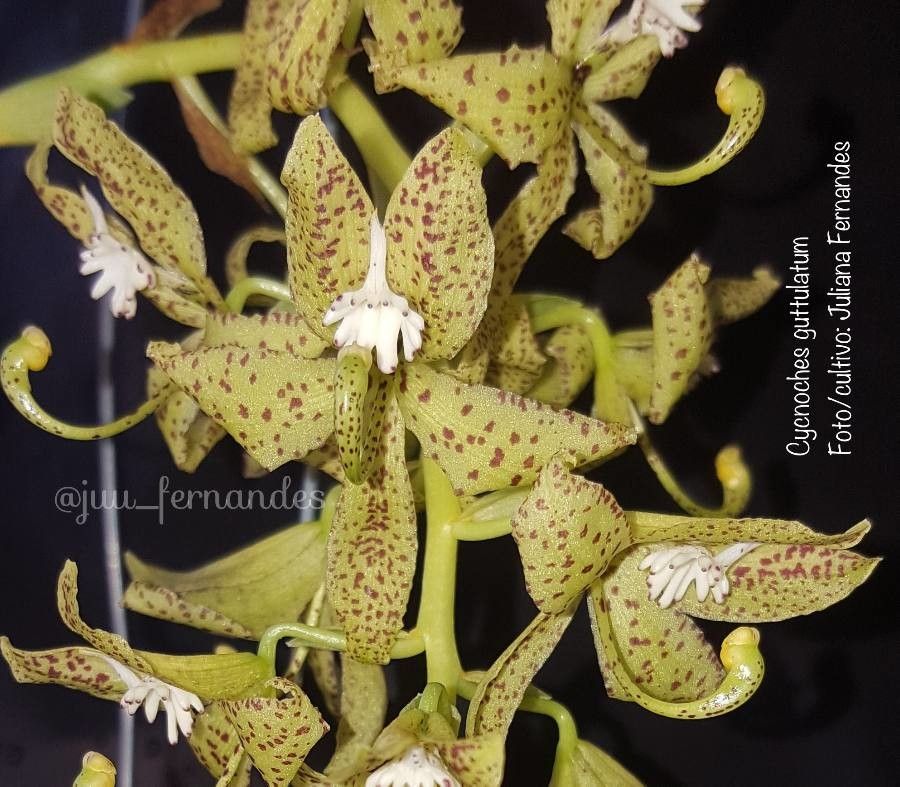
Cycnoches guttulatum, commonly known as the Swan Orchid, is a captivating epiphytic orchid prized for its unique, elegantly shaped flowers resembling swans in flight. Its pendulous inflorescences bear striking blooms, typically greenish-yellow with dark purple spotting, showcasing remarkable variations in color and markings between individual plants. This variability contributes to its popularity among orchid enthusiasts, who relish the challenge of cultivating and propagating this species. However, propagation isn’t always straightforward, presenting both unique challenges and significant rewards.
Seed Germination:
Currently, there are no known reliable methods for seed germination propagation of Cycnoches guttulatum. Orchid seeds are extremely fine and lack endosperm, meaning they require a symbiotic relationship with specific mycorrhizal fungi for germination and initial growth. Establishing this symbiotic relationship in a controlled environment is exceedingly challenging, even for expert orchid growers and laboratories. While some sources might suggest attempting seed germination, the success rate is extremely low, making this method impractical for most hobbyists.
Cuttings:
Cuttings are not a viable propagation method for Cycnoches guttulatum. Unlike some other orchids, this species does not readily produce adventitious roots from stem cuttings.
Division:
Division is the most practical and commonly successful method for propagating Cycnoches guttulatum. This involves carefully separating established mature plants into multiple sections, each containing several pseudobulbs and healthy roots.
Challenges: The main challenge lies in ensuring each division has sufficient root mass to sustain itself. Dividing a plant too aggressively can weaken or kill the individual sections. Care must be taken to avoid damaging the rhizome, which connects the pseudobulbs.
Practical Tips: The best time for division is typically during the active growth period following flowering. Use a sharp, clean knife or shears to minimize damage. Allow the cut portions to callus over slightly before repotting in a well-draining substrate suitable for orchids (e.g., a mix of bark, sphagnum moss, and perlite). Ensure each division has at least three pseudobulbs.
- Rewards: Division offers a relatively high success rate, allowing for the rapid increase of a desirable clone. This preserves the specific traits and characteristics of a parent plant that an enthusiast might value.
Tissue Culture:
Tissue culture offers the potential for large-scale propagation of Cycnoches guttulatum, overcoming the limitations of other methods. This sterile laboratory method involves growing orchid plants from small segments of plant tissue on a nutrient-rich agar medium.
Challenges: Tissue culture requires specialized equipment, a sterile environment, and considerable expertise. It’s generally not a feasible option for home growers. The process can also be sensitive to contamination, potentially leading to loss of plant material.
Practical Tips: This is best left to specialized orchid labs or nurseries equipped for this endeavor.
- Rewards: A successful tissue culture allows for the production of a large number of genetically identical plants in a short period, ideal for commercial propagation.
Conclusion:
Propagating Cycnoches guttulatum presents a unique set of hurdles. While seed germination and cuttings are currently impractical, division offers a viable approach for home enthusiasts, balancing manageable challenges with a rewarding outcome. Tissue culture represents a more complex but efficient method for large-scale propagation. The satisfaction of successfully cultivating this exquisite orchid, however, comes not only from achieving propagation but also from mastering the specific needs of this fascinating plant, including providing appropriate light, humidity, and watering regimes. Embrace the challenge; the beauty of your flourishing Cycnoches guttulatum will be its own reward. Don’t be discouraged if your first attempts encounter some difficulties – persevere, learn from your experiences, and enjoy the journey of cultivating this stunning species.