
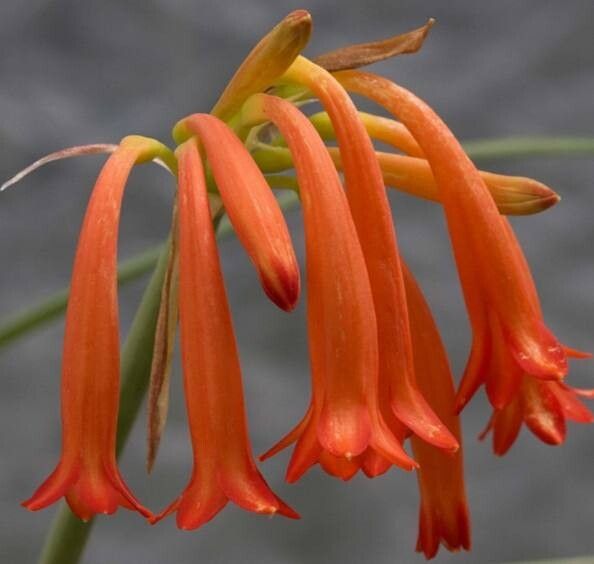
Propagating Cyrtanthus epiphyticus: A Gardener’s Guide to the Climbing Fire Lily
Introduction:
Cyrtanthus epiphyticus, commonly known as the Climbing Fire Lily, is a captivating South African bulbous plant prized for its vibrant, scarlet-red flowers that resemble miniature lilies. Its climbing habit, clinging to trees and other supports, adds to its unique horticultural appeal. While relatively uncommon in cultivation compared to other Cyrtanthus species, its beauty and unusual growth form make it a highly sought-after addition to any collection specializing in South African flora. Propagation, however, presents a unique set of challenges, making successful cultivation all the more rewarding.
Seed Germination:
Currently, there are no known reliable methods for seed germination propagation of Cyrtanthus epiphyticus. While seed production may occur in ideal conditions, germination rates are reportedly extremely low, and successful seedling establishment is exceptionally difficult. Further research is needed to determine optimal germination techniques for this species.
Cuttings:
Propagating Cyrtanthus epiphyticus from cuttings is also unreliable. This species doesn’t readily produce stem cuttings suitable for propagation. Attempts at stem or leaf-bud cuttings have consistently failed to produce viable plants.
Division:
Division is the most practical and reliable method for propagating Cyrtanthus epiphyticus. This involves carefully separating the bulb clusters that naturally form over time.
-
Challenges: The delicate nature of the bulbs and their interconnected root systems makes division a delicate operation. Damaging the bulbs during separation can lead to rot and failure. The plant also doesn’t readily produce offset bulbs in abundance.
-
Practical Tips: Division should ideally be undertaken during the plant’s dormant period (usually winter). The bulb clusters should be carefully separated with a sharp, clean knife or secateurs, ensuring each division has a healthy portion of roots attached. After division, allow the cut surfaces to dry slightly before replanting in well-draining, slightly acidic potting mix.
- Rewards: This method offers the easiest route to increasing your stock of Cyrtanthus epiphyticus, provided you already have a mature, established plant that has produced sufficient offsets.
Tissue Culture:
Tissue culture offers a potential method for large-scale propagation of Cyrtanthus epiphyticus. However, this technique requires specialized laboratory equipment, sterile conditions, and expertise in plant tissue culture protocols.
-
Challenges: Establishing sterile cultures and finding the optimal media and growth hormones for this species would require extensive experimentation. The cost and technical expertise needed to establish a tissue culture protocol may outweigh the benefits for most home gardeners.
-
Practical Tips: For those with access to tissue culture facilities, experimentation with different media formulations (including those known to be successful for other Cyrtanthus species) would be a starting point. Finding a suitable explant (e.g., shoot tip or axillary bud) is crucial.
- Rewards: Successful tissue culture offers the possibility of mass propagation, producing many plants from a small starting material and preserving genetic diversity.
Conclusion:
Propagating Cyrtanthus epiphyticus presents significant challenges, with division proving to be the most practical approach for the home gardener. Seed germination and cuttings have been demonstrated as unreliable. While tissue culture offers potential for large-scale propagation, its complexity and cost make it less accessible to amateur growers. The difficulties involved, however, only amplify the deep sense of satisfaction that comes from successfully nurturing and propagating this captivating plant. For aspiring propagators, patience, meticulous care, and attention to detail are crucial. Be prepared for setbacks and embrace the learning process – the vibrant blooms of your successfully propagated Climbing Fire Lilies will be a well-earned reward.