
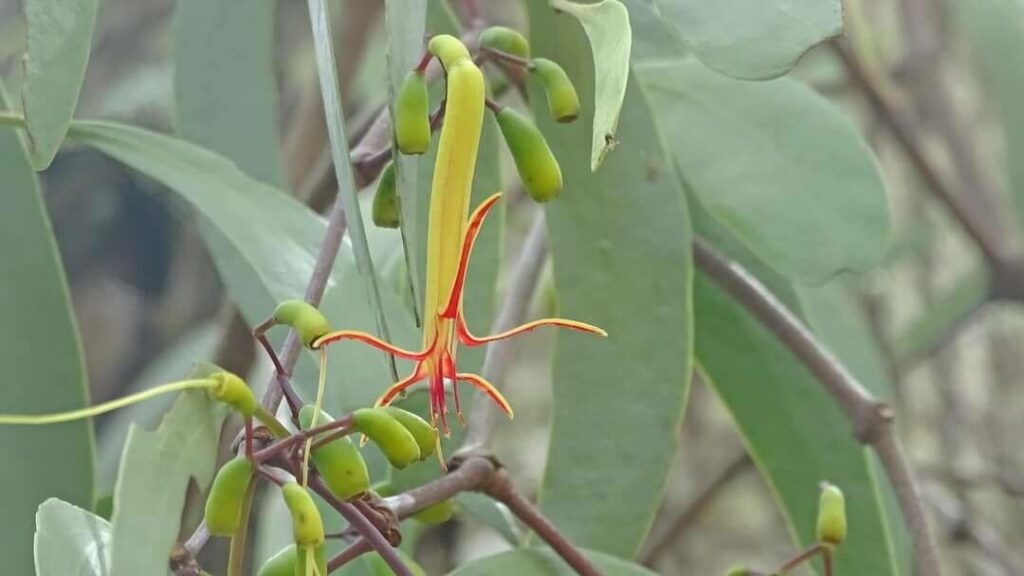
A Touch of Green Magic: Propagating the Mesmerizing Dendrophthoe Glabrescens
The plant kingdom holds countless marvels, and the Dendrophthoe glabrescens, commonly known as the Malaysian Mistletoe, is one such enchanting species. With its vibrant red blooms and unique growth habit as a hemiparasite, this plant sparks curiosity and captivates the eye. But have you ever wondered how this botanical gem is propagated? Let’s delve into the fascinating world of Dendrophthoe glabrescens propagation.
Before we begin, understanding the nature of this plant is key. Unlike most plants, Dendrophthoe glabrescens is not entirely self-sufficient. It attaches itself to a host tree, drawing some nutrients while still photosynthesizing independently. This hemiparasitic nature influences its propagation, making it a process requiring a delicate touch and specific conditions.
The Art of Seed Dispersal and Germination:
In the wild, Dendrophthoe glabrescens primarily relies on birds for propagation. The vibrant red berries, ripe with sticky pulp, attract avian visitors. The birds, after feasting on the fruit, inadvertently carry the seeds to potential host trees. When the seeds, still embedded in the sticky remnants of the fruit, are wiped onto branches, the propagation journey begins.
Replicating Nature’s Touch:
Can this natural process be replicated by human hands? The answer is a cautious yes, though success is not guaranteed. Here’s how you can attempt to propagate Dendrophthoe glabrescens:
-
Seed Collection: Collect mature berries from a healthy Dendrophthoe glabrescens. Remember, collecting from wild populations can be harmful. If possible, source ethically-sourced seeds.
-
Seed Preparation: Carefully remove the pulp surrounding the seeds. It’s crucial to note that the seeds are extremely delicate and should be handled with utmost care.
-
Selecting the Host: Selecting the right host is vital. Dendrophthoe glabrescens prefers specific tree species. Research and identify suitable hosts in your region.
-
Sowing the Seeds: Gently press the seeds onto young, healthy branches of the chosen host tree. The sticky residue from the fruit naturally helps the seeds adhere to the branch.
- Patience is Key: The germination period can be unpredictable, ranging from a few weeks to several months. Maintaining the host tree’s health with adequate watering and sunlight is crucial during this period.
Challenges and Ethical Considerations:
Propagating Dendrophthoe glabrescens is not without its challenges. The delicate nature of the seeds, the need for a specific host species, and the unpredictable germination rate can make it a daunting task.
Moreover, ethical considerations come into play. Removing seeds from the wild can harm delicate ecosystems. Additionally, introducing a potentially parasitic plant to a new environment should be approached with caution, as it might disrupt the local flora.
A Rewarding Endeavor:
Despite the challenges, successfully propagating Dendrophthoe glabrescens is a rewarding experience. The sight of this unique plant thriving on its host tree, with its vibrant flowers adding a splash of color to the landscape, is truly captivating.
However, it is important to remember that appreciating the beauty of nature sometimes lies in observing and admiring its wonders, rather than attempting to recreate them. Propagation is best left to the natural world, especially with a species as unique and specialized as Dendrophthoe glabrescens.