
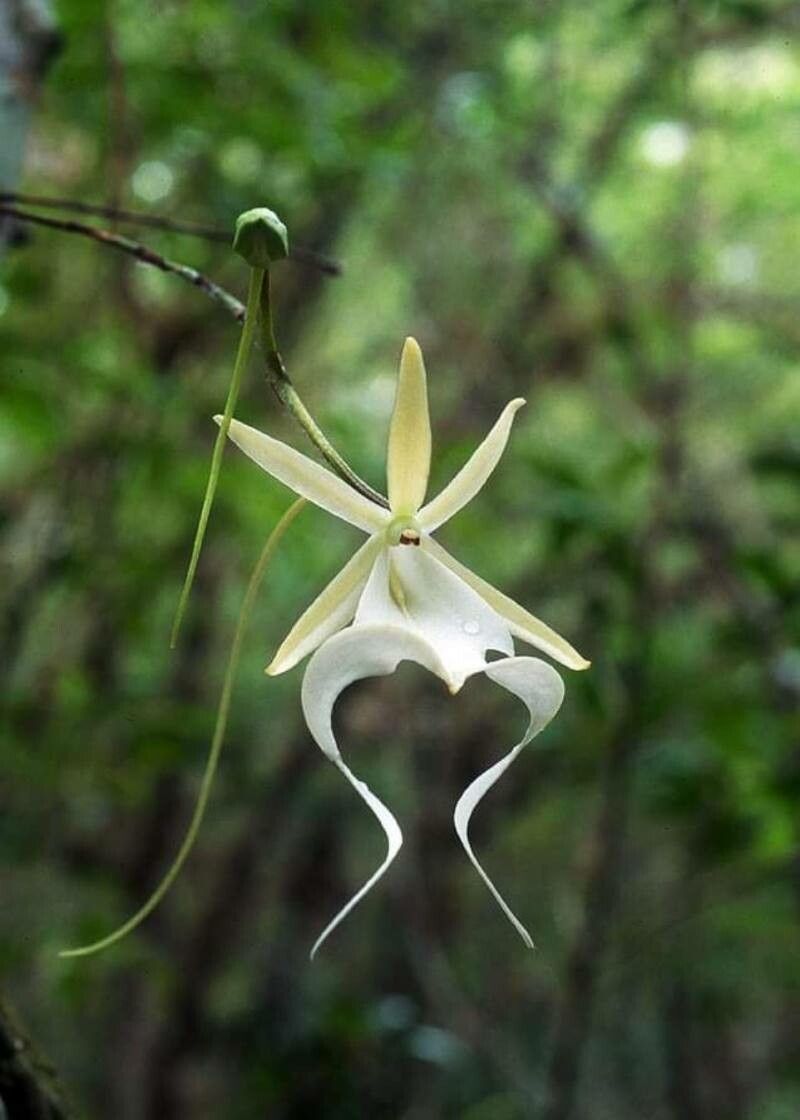
Propagating the Ghost Orchid: A Challenging but Rewarding Endeavor
Introduction:
Dendrophylax lindenii, commonly known as the ghost orchid, is a captivating epiphytic orchid famed for its ethereal beauty and elusive nature. Its pure white, almost translucent flowers, lacking leaves and appearing to float mysteriously on the air, have captivated gardeners and botanists alike. This horticultural enigma, however, presents significant challenges for propagation, making successful cultivation a testament to dedication and expertise. Its rarity and difficulty in propagation contribute to its high desirability and considerable horticultural significance.
Seed Germination:
Currently, there are no known reliable methods for seed germination propagation of Dendrophylax lindenii. Ghost orchid seeds require a very specific and delicate mycorrhizal relationship with a specific fungus for germination and early development. Reproducing this symbiotic relationship in a controlled environment is currently beyond our capabilities. Attempts at sterile in vitro germination have thus far proven unsuccessful.
Cuttings:
Currently, there are no known reliable methods for propagation of Dendrophylax lindenii through cuttings. The plant’s unique structure, lacking leaves and possessing specialized root systems for nutrient uptake, makes the successful rooting of cuttings virtually impossible.
Division:
Division is not a viable method for propagating Dendrophylax lindenii. The ghost orchid grows exceptionally slowly and forms a compact root system intertwined with its host substrate. Attempting to divide the plant would almost certainly result in irreparable damage or the death of both parts.
Tissue Culture:
Tissue culture offers the most promising – though still challenging – avenue for Dendrophylax lindenii propagation. While successful propagation through tissue culture has been achieved in research settings, it is extremely complex and requires specialized equipment, media, and a deep understanding of orchid physiology and mycorrhizal associations. The challenges include securing healthy, disease-free plant material, identifying and replicating the necessary growth hormones and fungal symbionts, and maintaining sterile conditions throughout the entire process. The rewards, however, are significant: potential for large-scale propagation, genetic preservation, and the possibility of studying the plant’s unique symbiotic relationships.
Conclusion:
Propagating Dendrophylax lindenii presents a significant hurdle for even the most experienced orchid growers. While seed germination, cuttings, and division are currently impractical, tissue culture offers a path toward propagating this remarkable plant, albeit a technically demanding one. The success rate remains low, and it demands substantial investment in specialized equipment and expertise. Yet, the challenge is precisely what makes the cultivation and propagation of the ghost orchid so rewarding. To successfully nurture this elusive beauty from a tiny tissue culture seedling to a flowering plant is a triumph of horticultural skill and patience, a testament to the dedication required to coax life from this botanical phantom. For aspiring propagators, the journey is long and arduous, but the ethereal reward makes it a profoundly satisfying pursuit. Focus on mastering the fundamentals of orchid culture before tackling this ultimate challenge. Patience, persistence, and a commitment to continuous learning are essential ingredients for success.