
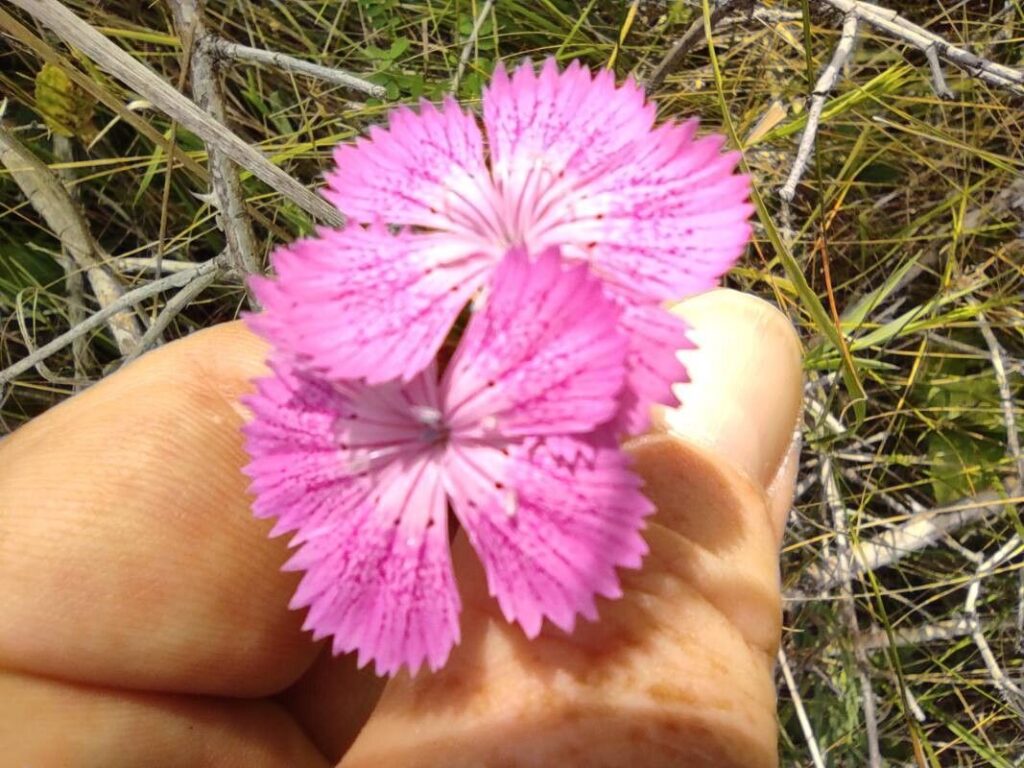
Spreading the Cheerful Carpet: Propagating Dianthus collinus
Dianthus collinus, with its charmingly tousled blooms and vibrant colours, is a delightful addition to any garden. Also known as the “Cheddar pink,” this hardy perennial thrives in sunny locations and instantly adds a touch of cheer with its profuse flowering. If you’re already smitten with its charm, you’ll be happy to know that propagating Dianthus collinus is relatively straightforward. Let’s explore the different methods to multiply your stock and spread the joy of this charming flower.
1. Seed Starting: A Rewarding Journey from Tiny Beginnings
Starting Dianthus collinus from seed is a rewarding experience, allowing you to witness its life cycle from the very beginning.
- Timeline: Sow seeds indoors 6-8 weeks before the last expected frost.
- Sowing: Scatter seeds over a well-draining seed-starting mix, barely covering them.
- Conditions: Provide ample light, warmth (around 70°F), and consistent moisture.
- Transplanting: Once seedlings develop a few sets of true leaves, gradually harden them off before planting outdoors after the last frost danger.
2. Cuttings: A Quick and Reliable Method
Taking cuttings is arguably the fastest and most reliable way to propagate Dianthus collinus. This method ensures you retain the characteristics of the parent plant.
- Timing: The ideal time for taking cuttings is late spring or early summer when the plant is actively growing.
- Selection: Choose healthy, non-flowering stems, preferably from new growth.
- Preparation: Using a sharp, sterile knife or pruning shears, cut a 3-4 inch section just below a leaf node. Remove the lower leaves and any flower buds.
- Rooting: Dip the cut end in rooting hormone (optional but beneficial). Plant the cutting in a well-draining rooting mix and keep it consistently moist.
- Transplanting: Once roots develop (typically in 4-6 weeks), you can transplant the rooted cuttings into individual pots or directly into your garden.
3. Division: Rejuvenating Mature Plants
Dividing established Dianthus collinus clumps not only propagates the plant but also revitalizes it, ensuring healthy growth and continuous blooms.
- Timing: Early spring or fall, during cooler temperatures, is the ideal time to divide.
- Lifting: Carefully dig up the entire clump, ensuring you get as much of the root system as possible.
- Division: Gently separate the clump into smaller sections, ensuring each division has a good amount of roots and shoots.
- Replanting: Replant the divisions at the same depth they were originally growing, water thoroughly, and mulch around the base.
Tips for Success:
- Well-Draining Soil: Dianthus collinus prefers well-drained soil and is susceptible to root rot in overly wet conditions.
- Sunlight Requirements: Provide at least 6 hours of direct sunlight daily for optimal growth and flowering.
- Watering: Water deeply but infrequently, allowing the soil to dry out slightly between waterings.
- Deadheading: Regularly deadhead spent blooms to encourage continuous flowering and prevent the plant from putting energy into seed production.
Propagating Dianthus collinus is a truly fulfilling experience, allowing you to expand your garden with this charming perennial. Whether you choose to start from seed, take cuttings, or divide existing clumps, following these guidelines will give you a higher chance of success. Happy propagating!