
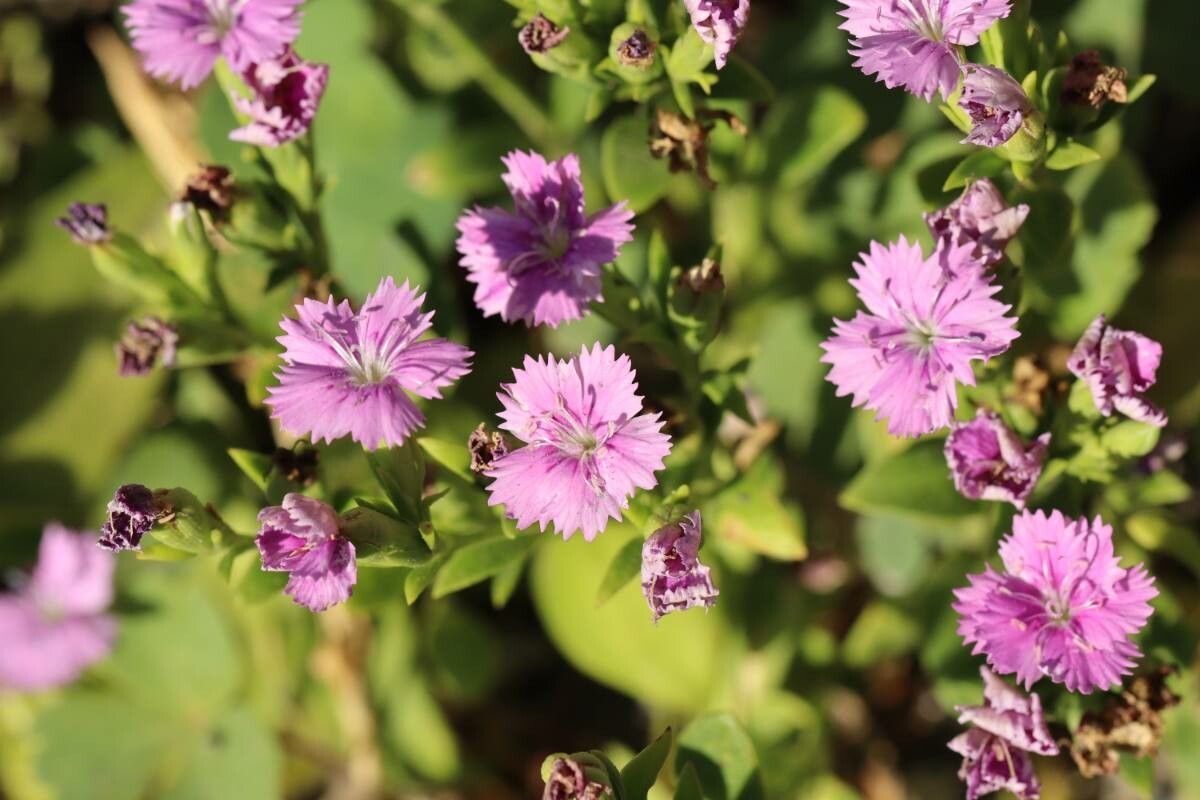
Propagating Dianthus japonicus: A Gardener’s Guide to the Japanese Pink
Dianthus japonicus, commonly known as the Japanese Pink, is a charming perennial prized for its delicate, often fragrant, flowers and its ability to thrive in a variety of conditions. Its low-growing habit and vibrant blooms make it a favourite among rock garden enthusiasts and those seeking ground cover options. Its popularity stems from its relatively easy care and the profusion of blossoms it produces, but propagating this delightful plant presents some unique challenges and rewards.
Seed Germination:
Currently, there are no known reliable methods for seed germination propagation of Dianthus japonicus. While the plant does produce seeds, their germination rate is notoriously low and inconsistent, making seed propagation an unreliable method for most gardeners. Further research into specific seed pretreatment methods or germination conditions might be necessary to improve success rates.
Cuttings:
Cuttings offer a more reliable method for propagating Dianthus japonicus.
Challenges: Success with cuttings relies on proper timing and technique. Softwood cuttings taken in spring or early summer have shown higher success rates.
Practical Tips: Take 4-6 inch cuttings from non-flowering stems, removing lower leaves to prevent rotting. Dip the cut ends in a rooting hormone powder before planting in a well-draining, moist propagating mix (e.g., a blend of perlite and peat moss). Maintain high humidity (e.g., using a propagator or covering with a plastic bag) and consistent moisture levels. Rooting typically takes 4-6 weeks.
Rewards: Cuttings provide a faster and more reliable method of producing genetically identical plants to the parent, preserving desirable traits.
Division:
Division is a straightforward and effective propagation method for established Dianthus japonicus plants.
Challenges: Division is best performed in spring or autumn when the plant is actively growing but not flowering. Care must be taken to avoid damaging the root system during the process.
Practical Tips: Gently lift the entire plant from the soil, separating the clump into several smaller divisions, each with its own root system and several healthy stems. Replant the divisions immediately, ensuring adequate space between them. Water thoroughly after planting.
Rewards: Division is a simple and effective method to rapidly increase the number of plants and rejuvenate older clumps. It also avoids the uncertainties associated with germination from seedlings or rooting cuttings.
Tissue Culture:
Tissue culture is a more advanced technique that can be used to propagate Dianthus japonicus in large quantities.
Challenges: Tissue culture requires specialized equipment, a sterile environment, and a good understanding of plant tissue culture protocols. It is not a practical method for home gardeners.
Practical Tips: This method is best left to professionals or laboratories equipped for sterile plant tissue propagation. Small pieces of plant material (explants) are cultured on agar-based media containing plant growth regulators, promoting shoot and root development.
Rewards: Tissue culture allows for rapid mass propagation of genetically uniform plants, potentially important for commercial cultivation or the propagation of rare cultivars.
Conclusion:
Propagating Dianthus japonicus presents a unique set of challenges and rewards. While seed germination is currently unreliable, both cuttings and division offer viable options with varying degrees of difficulty. Tissue culture represents a high-tech solution more suitable for large-scale production. The success of any method hinges on careful attention to detail, proper timing, and a keen understanding of the plant’s specific needs. However, the satisfaction of successfully nurturing a tiny cutting into a vibrant flowering plant or dividing a healthy clump to share with friends is a unique reward that underscores the enduring appeal of propagating this charming Japanese Pink. Don’t be discouraged by initial setbacks – perseverance and patience will ultimately yield the beautiful results you desire.