
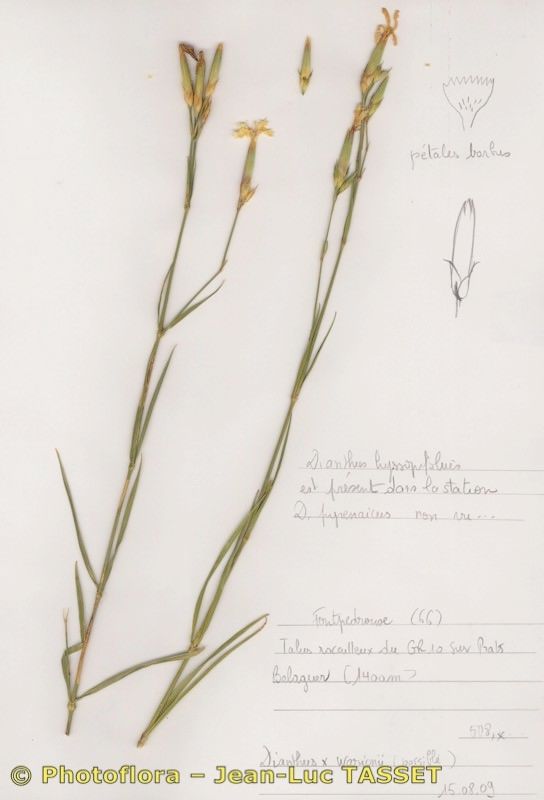
Propagating Dianthus × warionii: A Gardener’s Guide to the Cheddar Pink
Dianthus × warionii, commonly known as Cheddar Pink, is a captivating alpine plant prized for its vibrant pink, often intensely colored, flowers and its ability to thrive in well-drained soils. Its compact habit and long flowering season make it a popular choice among rock garden enthusiasts and those seeking low-maintenance, yet strikingly beautiful additions to their landscapes. However, propagating this charming plant can present some challenges, making the successful cultivation all the more rewarding.
Seed Germination:
Currently, there are no known reliable methods for seed germination propagation of Dianthus × warionii. While some Dianthus species readily propagate from seed, Cheddar Pink, being a hybrid, often exhibits reduced fertility, resulting in low germination rates or seeds that produce offspring with vastly different characteristics from the parent plant.
Cuttings:
Cuttings represent a much more successful method for propagating Dianthus × warionii.
- Challenges: While relatively straightforward, success depends on timing and technique. Overly mature or woody cuttings root poorly.
- Practical Tips: Take semi-hardwood cuttings in late spring or early summer. Select 4-6 inch long cuttings from non-flowering stems, removing lower leaves to prevent rot. Dip the cut ends in rooting hormone before planting in a well-draining, sterile rooting medium like a perlite and vermiculite mix. Maintain a consistently moist (but not waterlogged) environment, ideally with high humidity, using a propagator with a covering or misting regularly. Rooting usually takes 4-6 weeks.
- Rewards: This method ensures that new plants are genetically identical to the parent plant, preserving desirable traits. It’s also a readily accessible method for smaller-scale propagation.
Division:
Division is another viable, albeit seasonal, propagation method for Dianthus × warionii.
- Challenges: This method is only suitable for established plants and can stress the parent plant if not done correctly. It’s also limited by the size and maturity of the plant to be divided.
- Practical Tips: Divide mature plants in spring or autumn, carefully separating the root crown into sections, each with its own established root system and several growing points. Replant immediately into well-prepared soil ensuring adequate spacing for good air circulation and optimal growth.
- Rewards: Division provides a quick way to increase the number of plants relatively rapidly, allowing for larger-scale propagation compared to cuttings. It also minimizes the stress on the parent plant compared to taking multiple cuttings.
Tissue Culture:
Tissue culture offers a technically advanced method for propagating Dianthus × warionii.
- Challenges: This method requires specialized equipment, sterile conditions, and a high level of technical expertise. It’s also typically more expensive than other propagation methods.
- Practical Tips: This should be undertaken in a controlled lab environment with suitable media and growth regulators. Explants from actively growing shoots are typically used. Sterilization is crucial to prevent contamination.
- Rewards: Tissue culture allows for the rapid and large-scale propagation of genetically identical plants, allowing for increased availability of superior cultivars. It also facilitates disease elimination.
Conclusion:
Propagating Dianthus × warionii effectively requires a thoughtful choice of method based on resources and desired scale. While seed germination is not a reliable option, cuttings and division provide achievable approaches for most gardeners. Tissue culture offers the potential for more large-scale propagation but demands specific expertise and resources. The challenges inherent in working with this hybrid highlight the significant satisfaction that comes from nurturing these beautiful plants from cuttings or divisions. The vibrant bloom of a successful propagation is a testament to perseverance and a celebration of gardening artistry hard earned. So, aspiring propagators should not be discouraged; the rewards far outweigh the effort, guaranteeing a unique and fulfilling gardening experience.