
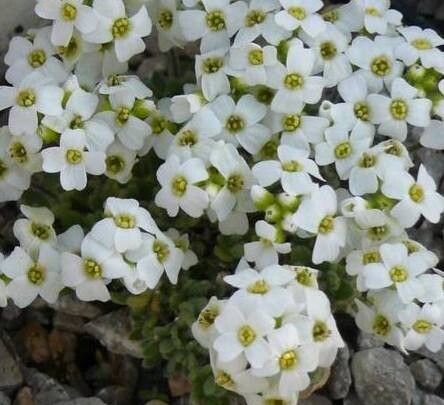
Propagating Draba ossetica: A Gardener’s Challenge and Reward
Draba ossetica, also known as Caucasian Draba or Ossetian Draba, is a captivating alpine plant prized for its diminutive stature, dense rosettes of silvery-green foliage, and charming displays of small, white flowers. Its resilience to harsh conditions and unique beauty have earned it a place in the hearts of many rock garden enthusiasts. However, propagating this charming species can present unique challenges, making success all the more rewarding. Its relatively slow growth also makes efficient propagation methods highly desirable.
Seed Germination:
Currently, there are no known reliable methods for seed germination propagation of Draba ossetica. While some species within the Draba genus readily germinate from seed, Draba ossetica appears to be particularly recalcitrant. This is likely due to factors such as seed dormancy mechanisms, specific environmental requirements for germination, or a combination of both. Further research into specialized stratification techniques or hormone treatments might reveal viable strategies, but currently, seed propagation remains impractical for most gardeners.
Cuttings:
Propagating Draba ossetica from cuttings presents a moderately challenging but potentially rewarding option.
Challenges: Draba ossetica has a tendency to rot easily if cuttings are not properly treated. The small size of the plant also limits the number of cuttings that can be taken from a single specimen. Success rates are often low without the use of rooting hormone and optimal environmental conditions.
Practical Tips: Take semi-hardwood cuttings in late spring or early summer. Use a sharp, sterile knife or shears to prevent the spread of disease. Dip the cut ends in a rooting hormone powder. Plant cuttings in a well-draining, gritty propagation mix (e.g., a mix of perlite and vermiculite) and maintain high humidity, ideally using a propagator or humidity dome. Place in bright, indirect light and avoid overwatering.
Rewards: Cuttings offer the chance to produce genetically identical clones of the parent plant, preserving desirable characteristics. This method allows for more efficient propagation compared to division, particularly useful when dealing with limited stock material.
Division:
Division is the most reliable method for propagating Draba ossetica.
Challenges: Draba ossetica is a slow-growing plant, and mature specimens suitable for division are few and far between. Careful handling is required to avoid damaging the delicate root system. Divisions must be large enough to ensure survival and recovery.
Practical Tips: The best time to divide is in spring or autumn, after flowering or before new growth emerges. Gently lift the entire plant, and carefully separate it into smaller sections, ensuring each division has sufficient roots and foliage. Replant the divisions immediately in well-drained soil, providing ample space for growth. Water sparingly after repotting.
Rewards: Division is the most straightforward method, providing a relatively high success rate and allowing for the rapid establishment of new plants. It is also a less invasive method than tissue culture.
Tissue Culture:
Tissue culture propagation is a complex and specialized technique rarely employed for amateur gardeners.
Challenges: Establishing aseptic conditions and mastering the intricate protocols involved in tissue culture is challenging and requires specialist equipment and expertise. The optimized medium and hormone concentrations may vary and require further study.
Practical Tips: Such a task would involve sterilizing plant material, placing it onto a nutrient agar, and fostering the growth of plantlets under controlled conditions in a laboratory or controlled environment.
Rewards: Tissue culture offers the potential for large-scale propagation and the elimination of diseases. However, the high initial investment and specialized knowledge needed make it impractical for most home propagators.
Conclusion:
Propagating Draba ossetica presents several challenges, stemming from its slow growth and sensitivity. While seed germination remains unreliable, cuttings offer a viable albeit sometimes unreliable alternative in specific conditions, with division proving the most successfully practiced method. Tissue culture offers theoretical possibility at a high cost. The inherent difficulties, however, contribute significantly to the deep sense of accomplishment that comes with fostering its growth and reproduction. Persistence, patience, and meticulous attention to detail are key to success. For those willing to accept the challenge, the reward of cultivating this beautiful alpine gem is well worth the effort.