
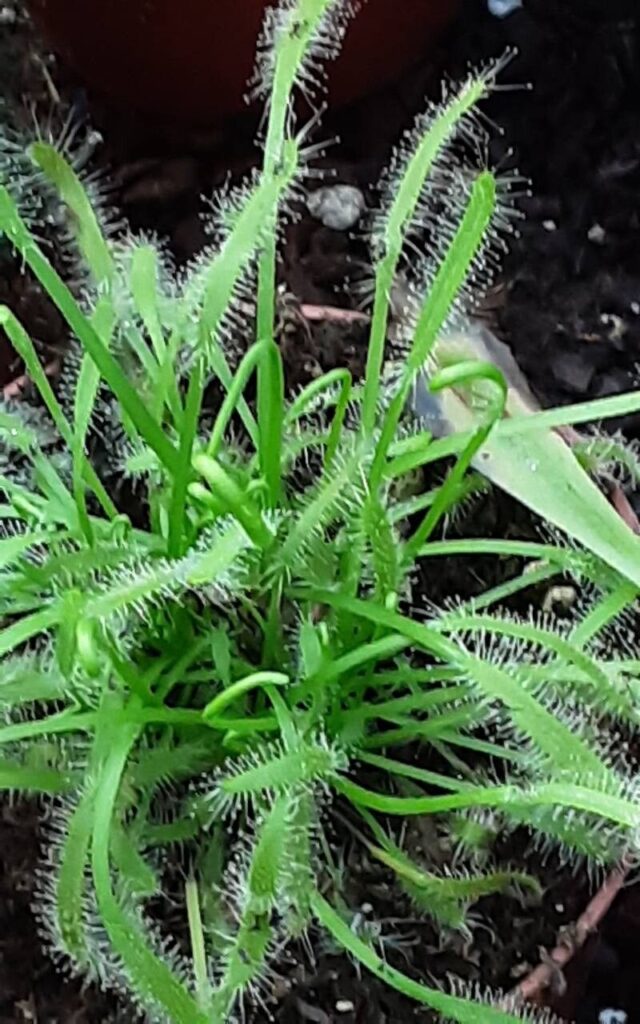
Catch a Falling Star: Propagating the Delicate Beauty of Drosera filiformis
The Drosera filiformis, also known as the Thread-leaved Sundew, is a captivating carnivorous plant with its slender, thread-like leaves covered in glittering, dew-like mucilage. These shimmering drops are not just pretty – they’re sticky traps that lure unsuspecting insects into the plant’s clutches. But what if you want to share this captivating beauty with others (or, for that matter, grow more of it yourself)? That’s where propagation comes in.
While Drosera filiformis may seem delicate, it’s surprisingly easy to propagate, making sharing this charming plant a breeze. Here’s a breakdown of the most successful methods:
1. Leaf Cuttings: A Simple Start
This is perhaps the most accessible technique for even the beginner grower. Snip a healthy leaf close to the base, leaving a small portion of the stem attached. Place the cutting on a moist, peat-based medium like a 50/50 mix of peat moss and perlite. Maintain high humidity by covering the container with a plastic dome or bag, mimicking a greenhouse environment.
Within a few weeks, you’ll see tiny plantlets emerging from the leaf base. Once these plantlets develop a few true leaves, they can be gently separated and planted into their own pots.
2. Seed Propagation: For a New Generation
Drosera filiformis produces small, black seeds that germinate easily under the right conditions. Sow the seeds onto moist, sterilized seed starting mix. Cover the container with a plastic wrap to maintain humidity, and place it under bright, indirect light.
Keep the seed starting mix consistently moist, but avoid overwatering. Patience is key; germination can take several weeks, but soon you’ll see tiny seedlings pushing through the soil, ready to grow into stunning sundews.
3. Division: Splitting to Multiply
Mature Drosera filiformis plants can be divided to create new ones. Carefully remove the plant from its pot and gently separate the root ball, ensuring each section has its own healthy crown and roots. Repot the divisions using a fresh peat-based medium and provide them with ample moisture.
4. Tissue Culture: A Highly Specialized Method
While tissue culture is primarily used for large-scale propagation by commercial growers, it can yield a massive amount of plantlets from a small starting material. This method requires specialized equipment and sterile techniques, making it unsuitable for hobbyists.
Important Considerations:
- Environment: Drosera filiformis thrives in constantly moist conditions. Use a pot with drainage holes to prevent waterlogging, and avoid direct sunlight, as it can scorch the delicate leaves.
- Water: Never use tap water, as it can contain chlorine and fluoride that harm your sundews. Use distilled, rainwater, or deionized water for watering and misting.
- Nutrient-Poor Soil: These carnivores get their nutrients from the insects they catch, so use a nutrient-poor soil mix specifically designed for carnivorous plants, like a blend of peat moss, perlite, and silica sand.
- Dormancy: Depending on your location, Drosera filiformis might go dormant in the winter, losing its leaves. Don’t be alarmed! This is perfectly natural. Provide a cool, dry environment during dormancy, and your sundew will return to life in spring.
Propagating Drosera filiformis opens a world of possibilities. It’s a great way to share your love of carnivorous plants with friends and family, expand your own collection, or even start your own mini sundew nursery. Enjoy the process, and remember, capturing the beauty of these glistening wonders is a fascinating journey, one leaf, seedling, and division at a time.