
Propagating Echeveria globulosa: A Guide to Cultivating the ‘Moonstones’
Introduction:
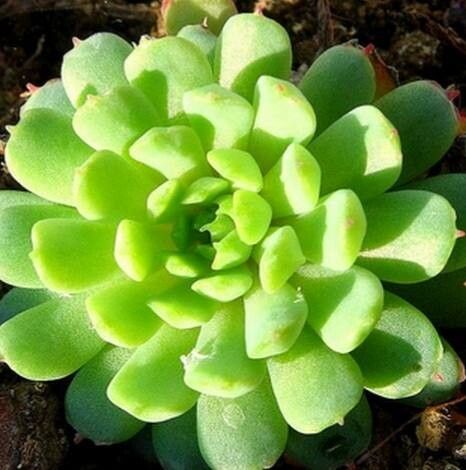
Echeveria globulosa, affectionately known as the ‘Moonstones’ succulent, captivates gardeners with its mesmerizing, almost ethereal beauty. Its tightly packed, powdery-blue leaves form a perfect rosette, creating a miniature, sculptural masterpiece. This popularity amongst succulent enthusiasts makes its propagation a sought-after skill. While generally considered a relatively easy succulent to care for, propagating Echeveria globulosa presents unique challenges depending on the chosen method. This article explores the various propagation techniques, highlighting their advantages and disadvantages to help you successfully add more Moonstones to your collection.
Seed Germination:
Currently, there are no known reliable methods for seed germination propagation of Echeveria globulosa. While Echeveria seeds can germinate in general, obtaining viable seeds from Echeveria globulosa is difficult due to low seed production and infrequent flowering. Furthermore, even with viable seeds, their germination rate tends to be low. Therefore, this method is not recommended for propagating this specific species.
Cuttings:
Viability: High
Challenges: Leaf cuttings can be prone to rot if not handled carefully, and stem cuttings require sufficient time to callous over before planting.
Practical Tips:
- Leaf Cuttings: Allow the leaf to slightly callous over for 1-2 days before placing it on well-draining soil. Minimize watering until roots appear, typically taking 2-4 weeks. Success rates are variable.
- Stem Cuttings: Take cuttings from healthy, mature stems. Allow the cut end to callous over for several days before planting in well-draining succulent potting mix. Avoid overwatering during rooting. This method yields more consistent results than leaf cuttings.
Rewards: Relatively quick propagation, maintains the parent plant’s characteristics.
Division:
Viability: Moderate
Challenges: Echeveria globulosa doesn’t readily offset like some other Echeveria species. Careful separation of existing offsets is crucial to avoid damaging the parent plant and the offsets themselves.
Practical Tips: Division is most successful when the parent plant is mature and has produced several offsets. Gently separate the offsets, ensuring each has a healthy root system. Plant them immediately in well-draining soil, avoiding overwatering.
Rewards: Preserves the genetic identity of the parent plant and allows for a quicker increase in plant numbers compared to cuttings.
Tissue Culture:
Viability: High
Challenges: Requires specialized equipment, a sterile environment, and technical expertise. The initial investment can be significant.
Practical Tips: This method involves growing plants from small pieces of plant tissue in a nutrient-rich, sterile medium. This is only achievable in a laboratory setting or with extensive knowledge of sterile techniques.
Rewards: Large-scale propagation with high success rates, rapid multiplication, disease-free plants, and potential for genetic improvement.
Conclusion:
Propagating Echeveria globulosa presents unique challenges and rewards depending on the method employed. While seed germination is unreliable, cuttings and division offer achievable, albeit time-consuming, results for the home grower. Tissue culture provides the most efficient method, but requires significant investment and specialized knowledge. The satisfaction derived from propagating Moonstones lies not only in the beautiful plants you produce, but also in overcoming the inherent difficulties. The patience and careful attention required deepen the connection with this exquisite succulent, making the success that much sweeter. For aspiring propagators, we encourage patience, careful observation, and a willingness to experiment – the stunning results will be worth the effort.