
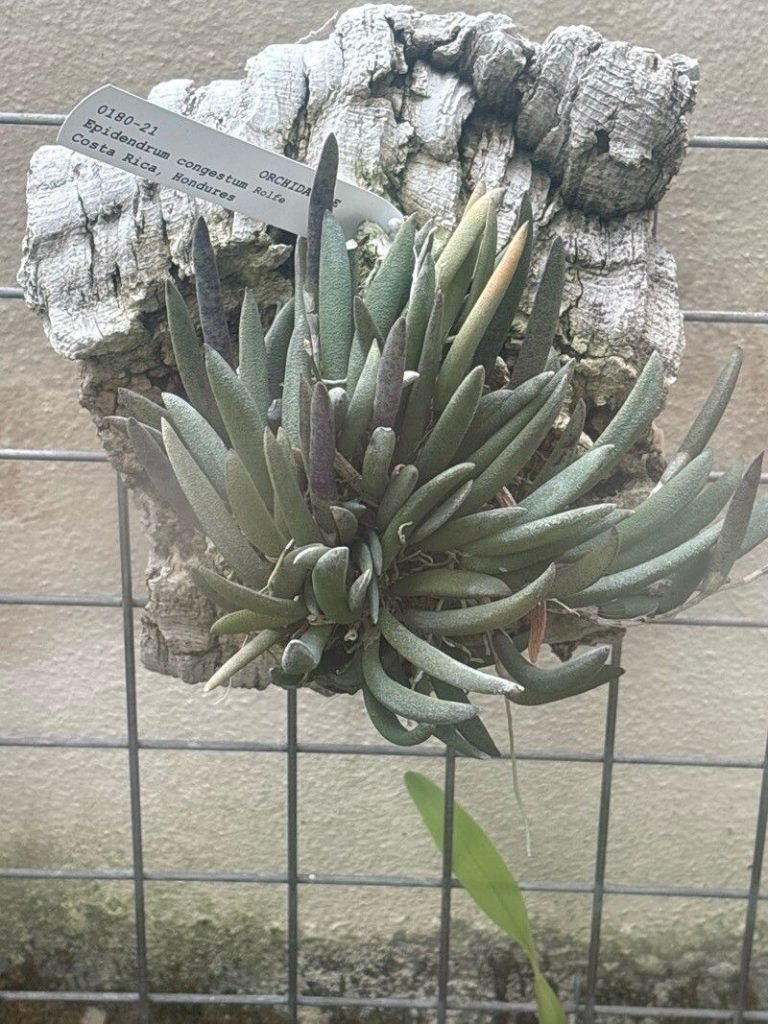
Propagating Epidendrum congestum: A Guide for Orchid Enthusiasts
Epidendrum congestum, a captivating member of the orchid family, is known for its densely clustered, vibrant flowers. While its common name isn’t widely used, its striking appearance and relatively easy cultivation have garnered it a loyal following among orchid enthusiasts. Its compact growth habit and profuse blooming make it a desirable addition to any orchid collection. However, propagating this beautiful species presents unique challenges and rewards, varying across different methods.
Seed Germination:
Currently, there are no known reliable methods for seed germination propagation of Epidendrum congestum. Orchid seeds, including those of E. congestum, are dust-like and lack endosperm, requiring a symbiotic relationship with specific mycorrhizal fungi for successful germination. Establishing this symbiotic relationship in a controlled environment is extremely difficult and rarely successful outside of specialized laboratories. Attempts at seed germination are not recommended for the average home hobbyist.
Cuttings:
Propagating Epidendrum congestum through cuttings is also generally unsuccessful. Unlike some other Epidendrum species, E. congestum does not readily produce stems suitable for vegetative propagation through stem cuttings. Attempts at rooting stem sections have typically yielded low success rates, with cuttings often failing to root and succumb to rot.
Division:
Division is the most reliable method for propagating Epidendrum congestum. Mature, well-established plants often develop multiple pseudobulbs which can be carefully separated.
Challenges: Successfully dividing E. congestum requires care to avoid damaging the roots and pseudobulbs. Each division needs a sufficient number of roots and pseudobulbs to establish itself. Poor technique can lead to plant loss.
Practical Tips: The best time for division is during active growth, typically after flowering. Carefully remove the plant from its pot, gently untangle the roots, and divide the plant into sections, each with several healthy pseudobulbs and attached roots. Repot each division into a well-draining orchid potting mix, ensuring adequate spacing. Avoid overwatering immediately following division.
Rewards: Division offers a relatively quick and efficient method for increasing the number of plants, preserving the genetic characteristics of the mother plant.
Tissue Culture:
Tissue culture is a viable, albeit complex and specialized, method for propagating Epidendrum congestum.
Challenges: Tissue culture requires a sterile laboratory environment, specialized equipment, and a thorough understanding of sterile techniques to prevent contamination. The process requires significant expertise and investment.
Practical Tips: The process involves isolating and sterilizing small sections of plant tissue (meristems or leaf segments), placing them on a nutrient-rich agar medium in sterile conditions, and inducing the growth of new plantlets. This requires specialized knowledge and equipment.
Rewards: Tissue culture allows for mass propagation of E. congestum, producing numerous clones quickly and efficiently. It also minimizes the risk of disease transmission.
Conclusion:
Propagating Epidendrum congestum presents its fair share of challenges. While seed germination and cuttings are largely impractical, division remains a reliable method for home growers. Tissue culture is the most efficient method but requires significant expertise and resources. The unique satisfaction derived from successfully propagating E. congestum, especially through division, comes from overcoming these hurdles and witnessing the growth of a new plant from a small section of the original. Despite the difficulties, the rewards – a thriving collection of these beautiful orchids – make the effort worthwhile for the dedicated orchid enthusiast. If you are a beginner, start with division. For larger-scale propagation, explore the options within tissue culture. Remember patience and meticulous care are crucial to success.