
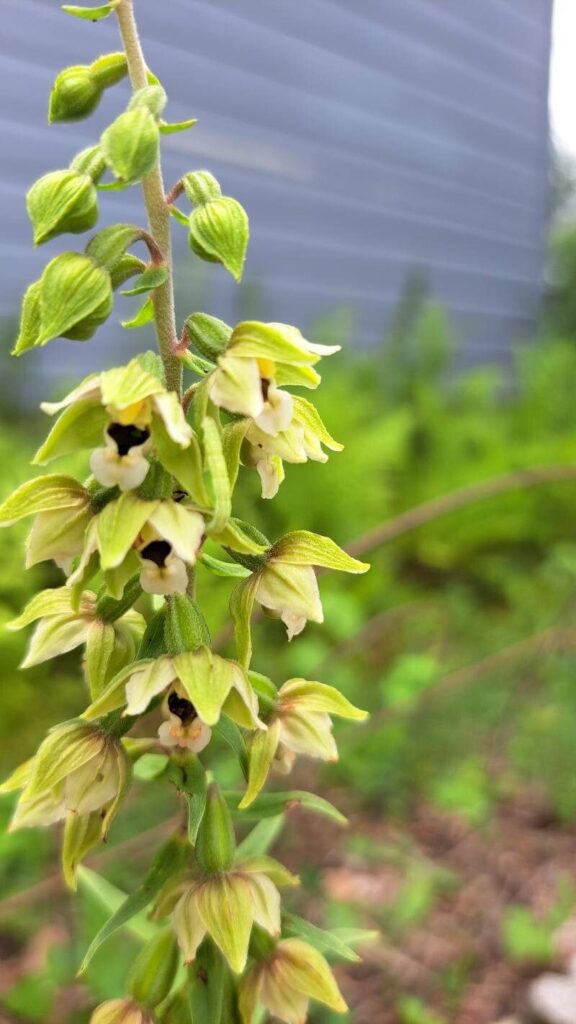
Propagating Epipactis muelleri: A Gardener’s Guide to a Challenging Orchid
Epipactis muelleri, also known as Mueller’s helleborine, is a terrestrial orchid prized for its delicate beauty and relative ease of cultivation once established. Native to specific regions of Europe, this orchid displays elegant, pendulous flower spikes adorned with subtly coloured blossoms – typically greenish-white to light brown, often tinged with purple. Its understated elegance and ability to thrive in shady, woodland-like conditions make it a sought-after addition to many gardens specializing in native plants or orchids. However, propagating this species presents a unique set of challenges.
Seed Germination:
Currently, there are no known reliable methods for seed germination propagation of Epipactis muelleri. The seeds of this orchid, like many other orchids, are extremely fine and lack endosperm (the nutrient store for the developing seedling). They require a symbiotic relationship with specific mycorrhizal fungi in the soil for successful germination. Establishing this symbiotic relationship in a controlled horticultural setting is exceptionally difficult and remains largely unresolved for this species.
Cuttings:
Cuttings are not a viable propagation method for Epipactis muelleri. This orchid, like most terrestrial orchids, does not readily produce new plants from stem or leaf cuttings. The lack of adventitious roots (roots that develop from non-root tissue) prevents successful propagation via this method.
Division:
Division is the most reliable method for propagating Epipactis muelleri. This involves carefully separating established plants into smaller clumps, each containing multiple pseudobulbs and roots.
-
Challenges: Dividing Epipactis muelleri must be done carefully to avoid damaging the delicate roots. Overly aggressive division can weaken or kill the plants. Timing is crucial; division is best undertaken during the plant’s dormant period (usually late autumn or early spring).
-
Practical Tips: Use a sharp, sterilized knife or spade to separate the rhizomes. Ensure each division has a healthy portion of rhizome and roots. Plant the divisions immediately in a well-drained, humus-rich soil mix suitable for orchids, replicating its natural woodland habitat. Avoid overwatering initially, allowing the roots to establish themselves.
- Rewards: Division allows for the relatively quick propagation of established plants, maintaining the genetic characteristics of the parent plant. This is a preferable method for increasing numbers for gardeners compared to other, less successful methods.
Tissue Culture:
Tissue culture presents a potential method for propagating Epipactis muelleri, though specialized knowledge and laboratory facilities are required.
-
Challenges: Establishing aseptic conditions and developing a suitable nutrient medium containing the necessary hormones to stimulate growth are critical yet technically demanding. Successfully inducing protocorm formation (the early seedling stage) and subsequent plant development requires expertise in orchid tissue culture techniques.
-
Practical Tips: Sterile techniques are paramount. The procedure requires specialized equipment and knowledge of plant growth regulators and media formulations. This method is not suitable for amateur gardeners.
- Rewards: Tissue culture offers the potential for large-scale propagation and the production of disease-free plants. It may also allow for the exploration of genetic variation and the preservation of rare genotypes.
Conclusion:
Propagating Epipactis muelleri presents significant challenges for the amateur gardener. While seed germination is currently not feasible, division offers a viable, albeit delicate, method for propagation. Tissue culture, while holding great potential, is best left to specialized laboratories. Successfully propagating this orchid, regardless of the method, offers a great sense of accomplishment. The rewards – the subtle beauty of a thriving Mueller’s helleborine in your garden, a testament to your patience and horticultural skill – far outweigh the initial difficulties. For the aspiring propagator, begin with division and focus on providing the optimal growing conditions to ensure the health and survival of your plants. The patience required will be rewarded with a stunning, increasingly rare plant.