
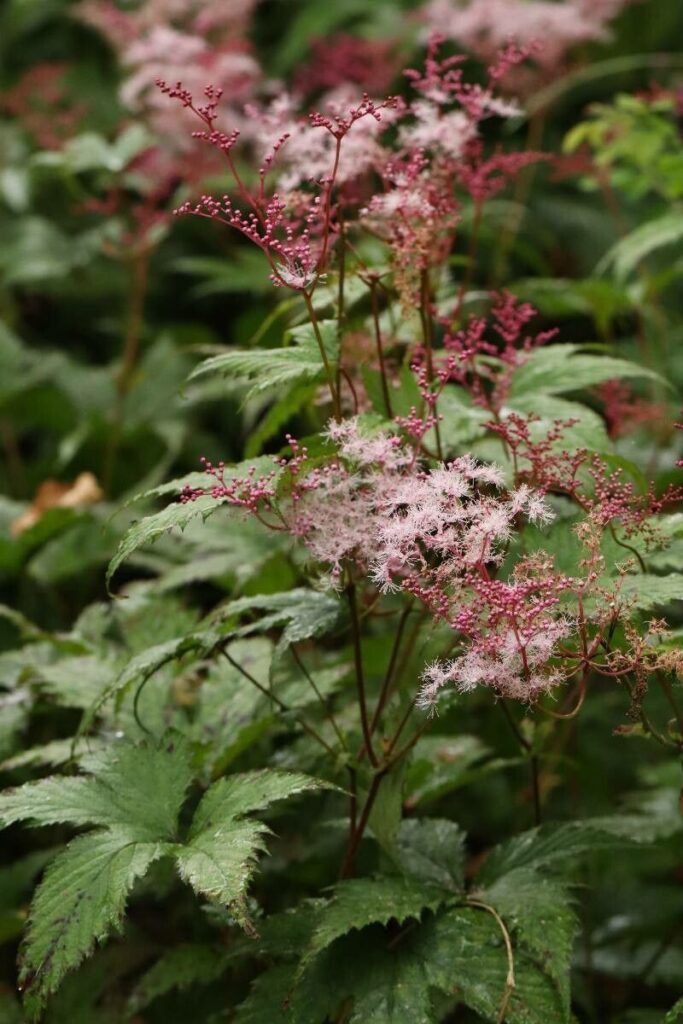
Doubling Down on Delicacy: Propagating the Queen-of-the-Prairie (Filipendula multijuga)
The Queen-of-the-Prairie (Filipendula multijuga), with its graceful sprays of delicate pink flowers and lush green foliage, is a showstopper in any garden. Native to Japan, this perennial offers a touch of exotic beauty that thrives in a variety of conditions. Want to create a whole court of these royal blooms? Propagating Filipendula multijuga is surprisingly simple, and we’ll explore two methods to expand your floral kingdom.
Method 1: Division – Sharing is Caring
Division is the easiest and most efficient way to propagate your Queen-of-the-Prairie. This method involves digging up an established plant and dividing it into smaller sections, each with its own roots.
Here’s how to do it:
- Timing is Key: The best time to divide your Filipendula multijuga is in early spring or fall when the plant is dormant or actively growing but not flowering.
- Dig Carefully: Using a sharp spade or garden fork, carefully dig up the entire clump, ensuring you dig a wide circle around the plant to avoid damaging the roots.
- Divide and Conquer: Gently shake off excess soil and examine the root system. You can either tease apart smaller sections with your hands or use a clean, sharp knife to divide the clump into larger divisions. Each division should have a healthy amount of roots and shoots.
- Replant and Rejoice: Replant your divisions at the same depth they were originally growing, spacing them about 18-24 inches apart to allow for future growth. Water them thoroughly and provide consistent moisture as they establish.
Method 2: Seed Starting – A Test of Patience:
While division offers quicker results, growing Filipendula multijuga from seed provides a rewarding challenge and a chance to witness the plant’s entire lifecycle.
Here’s the game plan:
- Source Your Seeds: You can collect seeds from your own plants or purchase them from a reputable supplier.
- Cold Stratification is Crucial: Filipendula multijuga seeds require a period of cold stratification to break their dormancy and encourage germination. This mimics the natural winter conditions the seeds would experience. Place your seeds in a damp paper towel inside a sealed plastic bag and store them in the refrigerator for 4-6 weeks.
- Sowing Time: After stratification, sow the seeds in seed trays filled with a well-draining seed starting mix. Don’t bury the seeds, but gently press them onto the surface and mist with water.
- Warmth and Light: Place the seed trays in a warm, bright location, but out of direct sunlight. Consistent moisture is essential for successful germination, so keep the soil consistently moist but not waterlogged.
- Patience is a Virtue: It can take several weeks for the seeds to germinate. Once the seedlings have developed a few sets of true leaves, you can transplant them into individual pots to continue growing indoors until the danger of frost has passed.
Caring for Your New Royals:
Whether you choose division or seed starting, providing the right conditions ensures your new Filipendula multijuga plants thrive. They prefer partial shade to full sun and moist, well-drained soil. Regular watering, especially during dry periods, is crucial. Adding a layer of mulch around the base of the plants helps retain moisture and suppress weeds.
Propagating your Queen-of-the-Prairie is a rewarding experience that allows you to easily multiply these elegant flowers. Soon, your garden will be graced with a flourishing court of these majestic blooms, attracting pollinators and captivating all who behold their delicate beauty.