
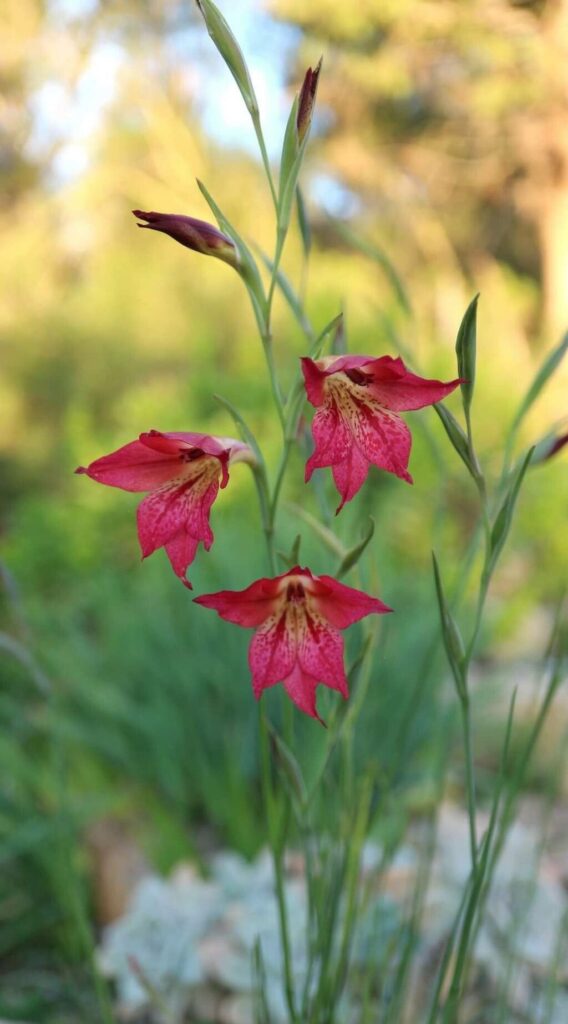
Propagating the Spotted Gladiolus: A Gardener’s Guide to Gladiolus maculatus
Introduction:
Gladiolus maculatus, commonly known as the Spotted Gladiolus, is a captivating member of the Iridaceae family, renowned for its elegant, slender leaves and striking, speckled flowers ranging in hues from deep pink to vibrant orange. Native to Southern Africa, this species holds a prominent place in the hearts of many gardeners, prized for its unique beauty and relatively long flowering period. Its popularity, however, is partly tempered by the challenges associated with its propagation. While visually stunning, achieving successful propagation requires patience, understanding, and the right technique.
Seed Germination:
Currently, there are no known reliable methods for seed germination propagation of Gladiolus maculatus. While seeds may be produced, germination rates are exceptionally low, and even when germination occurs, seedlings are often weak and slow to develop. The unpredictability and low success rate make seed propagation impractical for most home gardeners and even commercially unreliable.
Cuttings:
Cuttings are not a viable method for propagating Gladiolus maculatus. This species does not readily produce roots from stem or leaf cuttings.
Division:
Division is the most reliable and commonly used method for propagating Gladiolus maculatus. This involves carefully separating the corms (underground storage organs) after the plant has finished flowering and the foliage has died back.
- Challenges: Successfully dividing Gladiolus maculatus requires careful handling to avoid damaging the corms, which can lead to rot. Each division should ideally have at least one actively growing shoot.
- Practical Tips: Dig up the corms after the foliage has fully yellowed and dried. Gently separate the smaller cormels (baby corms) and larger corms, ensuring each has healthy roots and shoots attached. Allow the separated corms to dry for a few days before planting them in well-drained, fertile soil.
- Rewards: Division is relatively straightforward, offering a reasonably high success rate provided proper care is taken. It is a quick way to increase the number of plants, preserving the desirable traits of the parent plant.
Tissue Culture:
Tissue culture provides a potential pathway for large-scale propagation of Gladiolus maculatus, overcoming the limitations of other methods. This laboratory-based technique involves growing plants from small pieces of plant tissue in a sterile, nutrient-rich medium.
- Challenges: Tissue culture requires specialized equipment, a sterile environment, and expertise in microbiological techniques. It is generally expensive and not feasible for most home gardeners.
- Practical Tips: This method is best left to professionals or specialized nurseries with the necessary infrastructure and knowledge.
- Rewards: Tissue culture offers the potential for rapid and large-scale multiplication, allowing for the production of many genetically identical plants from a single explant. It also allows for disease elimination and the preservation of rare or endangered cultivars.
Conclusion:
Propagating Gladiolus maculatus presents a unique set of challenges, with division proving the most accessible and practical method for the average gardener. While seed germination and cuttings are not viable options, and tissue culture requires specialized facilities, succeeding in propagating this beautiful plant through division offers a significant sense of accomplishment. The effort required is rewarded by the vibrant display of spotted flowers, a testament to patience and horticultural skill. For those embarking on this journey, meticulous care, diligent handling, and a bit of luck will lead to the rewarding experience of cultivating this captivating species. Don’t be discouraged by the initial hurdles – the beauty of the Gladiolus maculatus makes the effort worthwhile.