
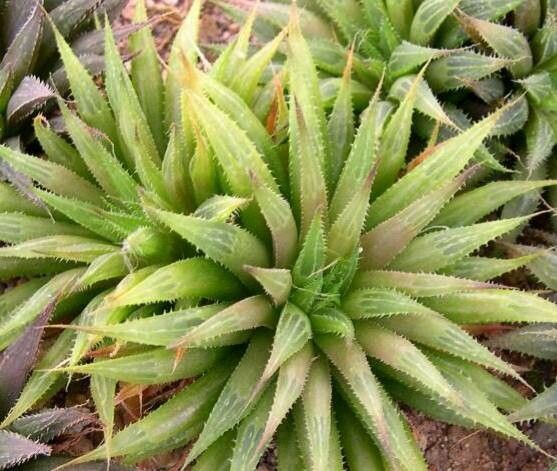
Tiny Treasures: Propagating Your Haworthia heidelbergensis for Succulent Success
Haworthia heidelbergensis, with its mesmerizing, translucent leaves and compact rosette form, is a succulent that captivates plant lovers. But what if you want to share this beauty with others, or simply expand your own miniature succulent collection? That’s where propagation comes in.
While some plants are notoriously difficult to propagate, Haworthia heidelbergensis is surprisingly cooperative, offering multiple methods for creating new, adorable plants. Let’s explore these pathways to succulent success:
1. Leaf Cuttings: A User-Friendly Option
This is the most accessible method for Haworthia heidelbergensis. Here’s how:
- Select a healthy leaf: Choose a plump, mature leaf from the base of the rosette.
- Clean and cut: Use a sharp, clean knife or scissors to make a precise cut at the base of the leaf.
- Allow to callous: Leave the leaf in a dry, well-ventilated area for a few days to allow a callus to form over the cut end. This prevents rot.
- Pot and plant: Choose a well-draining potting mix specifically designed for succulents. Place the leaf cutting horizontally on the soil, ensuring the callused end is in contact with the mix. Don’t bury it entirely.
- Patience is key: Keep the soil slightly moist and provide bright, indirect light. New plantlets will emerge from the base of the leaf in a few weeks to a few months.
2. Offsets: A Natural Expansion
Many Haworthia heidelbergensis produce offsets, or “pups,” naturally at the base of the parent plant. This is a great way to multiply your plants and enjoy their growth over time.
- Patience is vital: Offsets take their time to develop. Allow them to grow to a reasonable size, ideally about a third the size of the parent plant, before separating.
- Gently separate: Use a sharp, sterilized knife or a pair of tweezers to gently pry the offset from the parent plant, taking care not to damage either.
- Potting: Pot the separated offset in a well-draining succulent mix. Water it lightly and place it in bright, indirect light. The offset should root and grow quickly.
3. Seed Propagation: For the Patient Gardeners
While less commonly used than leaf cuttings or offsets, seed propagation offers a fun way to increase your Haworthia heidelbergensis.
- Sowing: Sow seeds in a well-draining potting mix specifically designed for succulents. Lightly press the seeds into the soil, but don’t bury them. Keep the soil moist and provide bright, indirect light.
- Germination: Haworthia heidelbergensis seeds can take weeks or even months to germinate. Patience is paramount.
- Thinning: As seedlings emerge, thin them out, leaving the strongest ones to grow.
Tips for Success:
- Well-draining soil: Essential for succulent propagation.
- Bright, indirect light: Haworthia heidelbergensis thrives in bright, indirect light. Avoid direct sunlight, which can scorch their delicate leaves.
- Moderate watering: Allow the soil to dry out completely between waterings.
- Good ventilation: Ensure proper air circulation to prevent fungal growth and encourage healthy callus formation.
By mastering these propagation methods, you can create a thriving collection of Haworthia heidelbergensis. Remember, propagation is a journey, not a race. Embrace the process, enjoy the anticipation, and revel in the joy of nurturing new life from your beloved succulents.