
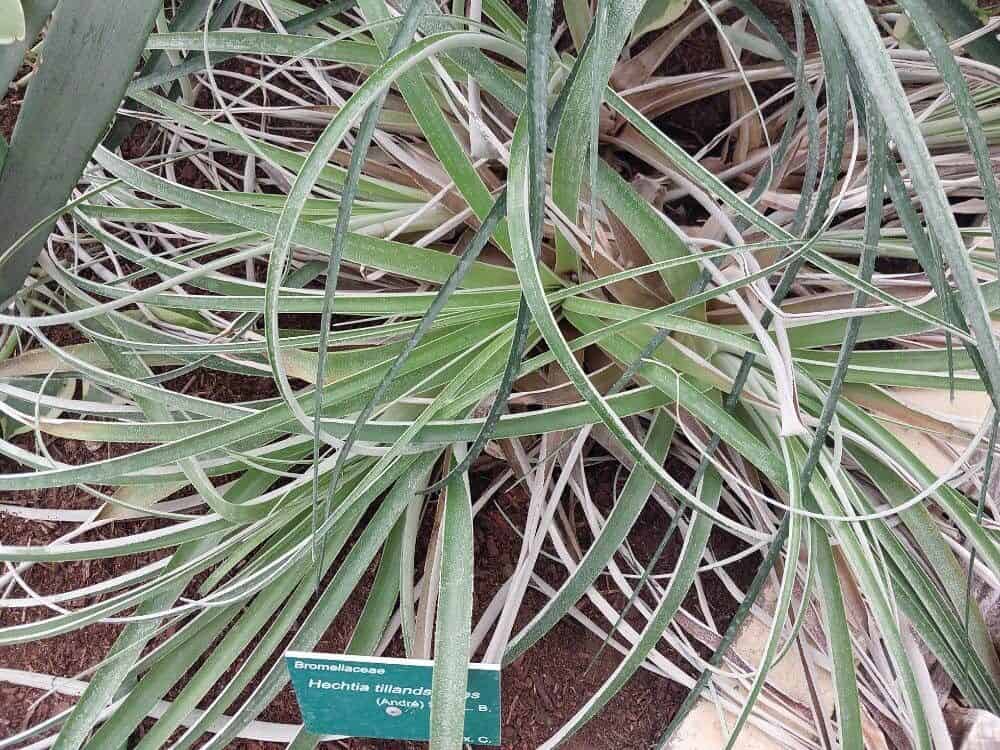
Unleash the Miniature Bromeliad Army: Propagating Your Hechtia Tillandsioides
Hechtia tillandsioides, with its spiky foliage and architectural form, is a bromeliad that commands attention despite its miniature size. This little terrestrial bromeliad, unlike its air-loving Tillandsia cousins, thrives in well-draining soil. And if its unique look wasn’t enticing enough, Hechtia tillandsioides rewards its owner with a propagation process that’s as satisfying as it is simple.
Forget struggling with finicky seeds; Hechtia tillandsioides readily multiplies through offsets, commonly known as “pups.” These miniature replicas sprout at the base of the mother plant, eventually developing their own root system.
Here’s how to turn one Hechtia tillandsioides into many:
1. Timing is Everything: The ideal time to propagate is during the warmer months when your plant is actively growing. Look for pups that have reached at least a third of the mother plant’s size and have developed their own set of roots.
2. Tools of the Trade: You won’t need an elaborate toolkit for this job. A sharp, sterilized knife or pair of shears and well-draining soil are all you need.
3. The Separation:
* **Carefully remove the mother plant from its pot.** This is a good opportunity to check the root system and refresh the potting mix.
* **Locate a pup ready for separation.** Gently wiggle the pup while applying slight pressure at the base to see if it detaches easily. If it resists, use your sterilized knife or shears to carefully sever it from the mother plant, ensuring you retain some roots on the pup.
* **Let the wounds heal.** Allow both the mother plant and the pup to sit in a shaded area for a few hours.  This allows the cut surfaces to callus over and prevents rot.
4. Planting Your New Recruits:
* **Choose a well-draining potting mix.**  A mix specifically formulated for cacti and succulents works well, or you can create your own by combining equal parts potting soil, perlite, and coarse sand.
* **Select a pot with good drainage** and slightly larger than the pup’s root system.
* **Plant the pup at the same depth it was previously growing.** Gently firm the soil around the base, ensuring the base of the leaves is not buried.
5. Aftercare is Key:
- Water sparingly. Keep the soil lightly moist but avoid overwatering, as this can lead to root rot.
- Provide bright, indirect light. Avoid direct sunlight, particularly during the hottest part of the day, as it can scorch the delicate leaves.
- Be patient. It may take a few weeks for the pup to establish itself in its new home. Once you see new growth, you can resume a regular watering schedule.
Enjoy Your Bromeliad Bounty!
Propagating your Hechtia tillandsioides is a rewarding experience, allowing you to expand your plant collection while enjoying the satisfaction of multiplying these fascinating plants. Before you know it, you’ll have an army of spiky miniatures brightening your home!