
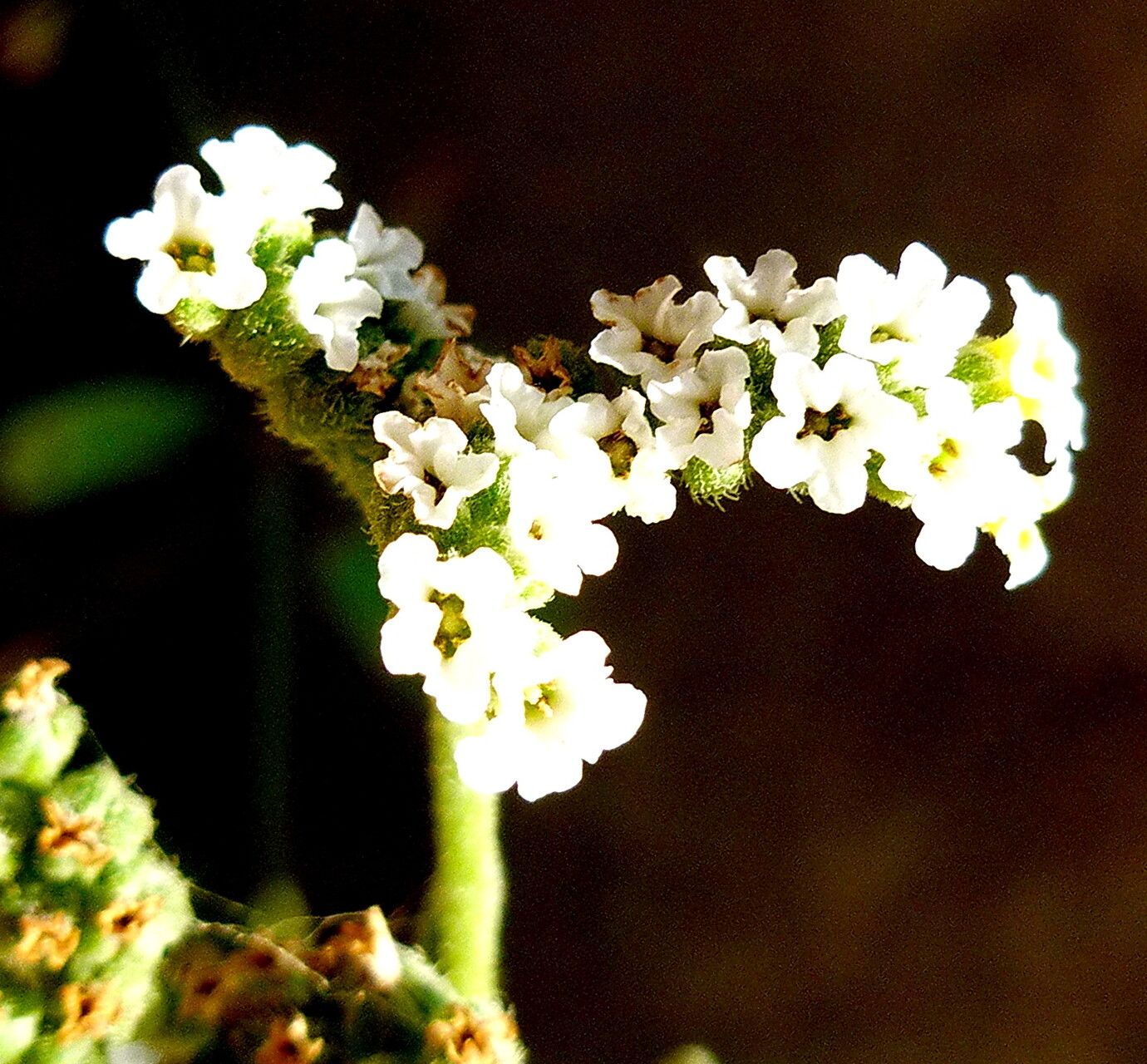
Propagating Heliotropium bacciferum: A Gardener’s Guide to the Seaside Heliotrope
Introduction:
Heliotropium bacciferum, commonly known as Seaside Heliotrope, is a striking herbaceous perennial prized for its clusters of tiny, fragrant white flowers and its ability to thrive in coastal environments. Its tolerance of salty winds and sandy soils makes it a popular choice for seaside gardens, attracting pollinators and adding a touch of delicate beauty to challenging landscapes. However, its propagation can present unique challenges, making success all the more rewarding. Its relatively slow growth contributes to this difficulty, and unlike some popular garden plants, there’s limited readily available information on its propagation.
Seed Germination:
Currently, there are no known reliable methods for seed germination propagation of Heliotropium bacciferum. While the plant does produce seeds, their viability and germination rate are exceptionally low. Further research into specific germination requirements, such as light exposure, temperature, and pretreatment techniques (e.g., scarification), is needed to determine if seed germination could become a viable method.
Cuttings:
Cuttings offer a more reliable method of propagating Heliotropium bacciferum.
Challenges: Rooting can be slow, and success rates can vary depending on the time of year and the techniques employed. Overwatering or inadequate drainage can lead to rot.
Practical Tips: Take semi-hardwood cuttings (partially mature stems) in late spring or early summer. Use a sharp, clean knife or shears to avoid damaging the stem. Remove lower leaves to prevent rot. Dip cuttings in rooting hormone to enhance success. Plant cuttings in a well-draining mix (e.g., perlite and peat moss) and maintain a consistently moist but not soggy environment by misting daily. Propagate under a humidity dome or covered tray to maintain high humidity and prevent desiccation.
Rewards: Cuttings provide a quicker way to establish new plants compared to other methods, maintain the genetic characteristics of the parent plant, and are generally easier than other approaches for hobbyists.
Division:
Division is another viable, albeit less common, method for propagating this plant.
Challenges: Heliotropium bacciferum generally does not form large, easily divisible clumps. Improper division can damage the root system, leading to plant failure.
Practical Tips: Division is best undertaken in spring or autumn when the plant is actively growing. Carefully dig up the entire plant and gently separate it into smaller sections, ensuring each section has healthy roots and shoots. Replant the divisions immediately, ensuring proper spacing and watering.
Rewards: Division allows for the propagation of established plants, potentially speeding up the process of getting mature plants compared to cuttings.
Tissue Culture:
Tissue culture is a potentially highly effective but also specialized and complex method for propagating Heliotropium bacciferum.
Challenges: This method requires specialized equipment, sterile conditions, and expertise in plant tissue culture techniques. Establishing optimal media and growth conditions for Heliotropium bacciferum would likely necessitate considerable experimentation. The cost and time investment can also be significant.
Practical Tips: Detailed protocols for this species are unfortunately lacking in current literature. Research identifying suitable growth hormones and media formulations would be required before undertaking tissue culture propagation.
Rewards: Tissue culture offers the potential for large-scale propagation, rapid multiplication, disease elimination, and preservation of genetic diversity. It’s ideal for endangered cultivars or species prone to disease.
Conclusion:
Propagating Heliotropium bacciferum presents various challenges, but the rewards are substantial. While seed germination is currently unreliable, cuttings provide a relatively straightforward approach for the average gardener. Division, though less efficient, is also a possible option for established plants. Tissue culture represents a more advanced and resource-intensive yet potentially more efficient avenue for larger scale purposes and future research. The unique beauty and resilience of the Seaside Heliotrope make the effort worthwhile. The satisfaction of nursing a cutting into a thriving plant, or successfully dividing a clump, is a testament to patience and horticultural skill. Don’t be discouraged by initial setbacks – experiment with various approaches, and celebrate the successes along the way!