
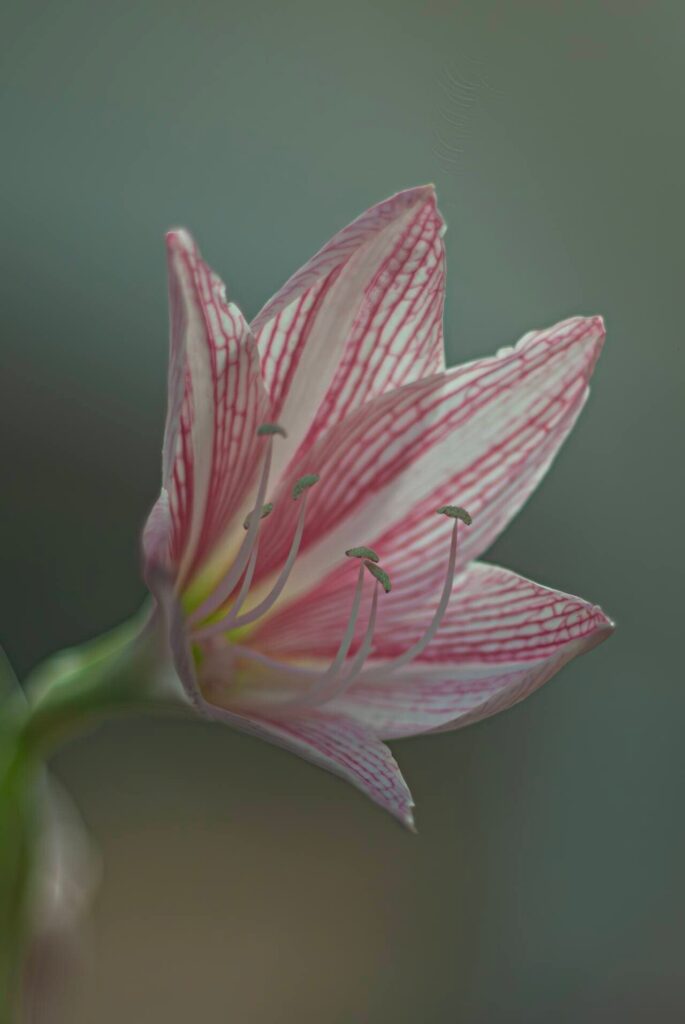
Propagating the Networked Amaryllis: A Guide to Hippeastrum reticulatum
Introduction:
Hippeastrum reticulatum, commonly known as the Networked Amaryllis, is a captivating bulbous plant prized for its delicate, reflexed flowers adorned with a striking network of veins. Its blooms, typically a soft pink to rose-red, appear in late summer or autumn, offering a delightful contrast to the usual spring flowering amaryllises. While admired for its beauty, propagating Hippeastrum reticulatum presents unique challenges, making successful cultivation all the more rewarding. Its popularity among gardeners stems from its unusual blooming season and its inherent charm, spurring interests in developing more plants.
Seed Germination:
Seed germination is a viable, albeit challenging, method for propagating Hippeastrum reticulatum. However, it’s significantly slower than other methods, and seedlings often take several years to reach flowering maturity.
Challenges: Seed viability can be variable, and germination rates are often low. Seeds require warm temperatures (around 20-25°C) and consistently moist conditions. Furthermore, seedlings are susceptible to damping-off diseases.
Practical Tips: Sow seeds in a well-draining seed-starting mix, maintaining even moisture but avoiding waterlogged conditions. A warm and bright location (not direct sunlight) is crucial. Consider using a fungicide to prevent fungal diseases. Gentle bottom heat can enhance germination. No stratification is typically required.
Rewards: Seed-grown plants offer the highest degree of genetic diversity, leading to potentially unique flower variations within the species. It also allows for large-scale propagation, if a high germination rate is achieved.
Cuttings:
Currently, there are no known reliable methods for propagation of Hippeastrum reticulatum via cuttings. Unlike some other amaryllis species, this species does not readily produce bulblets or offsets that can be used for propagation through cuttings.
Division:
Division of the bulb is a relatively straightforward and successful method for propagating Hippeastrum reticulatum.
Challenges: The bulb must be large enough to allow for division without significantly weakening the parent plant. Improper division can lead to rotting or poor growth in the divided sections.
Practical Tips: Divide the bulbs only when they are dormant. Use a sharp, sterilized knife or scalpel to separate the offsets (small bulbs attached to the main bulb). Ensure each division has healthy roots and a substantial portion of the basal plate. Plant the divisions in well-draining soil and water sparingly until new growth appears.
Rewards: Division produces plants that are genetically identical to the parent plant, ensuring consistent flower characteristics. It’s a relatively quick method to increase the number of plants.
Tissue Culture:
Tissue culture is a viable but specialized method for propagating Hippeastrum reticulatum.
Challenges: This technique requires sterile laboratory conditions, specialized equipment, and a high level of technical skill. It’s not a practical method for home gardeners.
Practical Tips: This method requires aseptic techniques, nutrient-rich media, and growth regulators to induce the growth of multiple plantlets from small tissue samples. This is best left to professionals in tissue culture labs.
Rewards: Tissue culture allows for rapid and large-scale propagation of genetically identical plants. It is useful for preserving rare or endangered cultivars.
Conclusion:
Propagating Hippeastrum reticulatum presents varying degrees of challenge across different methods. While seed germination offers genetic diversity but is slow and unpredictable, division is a more reliable and accessible choice for home growers. Cuttings have proven unreliable, and tissue culture remains a specialized technique. The rewards, however, are significant. Successfully coaxing these beautiful amaryllis into existence, whether through the painstaking process of seed germination or the more straightforward division of a mature bulb, offers a deep sense of accomplishment. The unique beauty and later blooming season of this species are ample reward for aspiring propagators willing to tackle the challenges. Persistence and attention to detail are key ingredients for success in cultivating this captivating plant.