
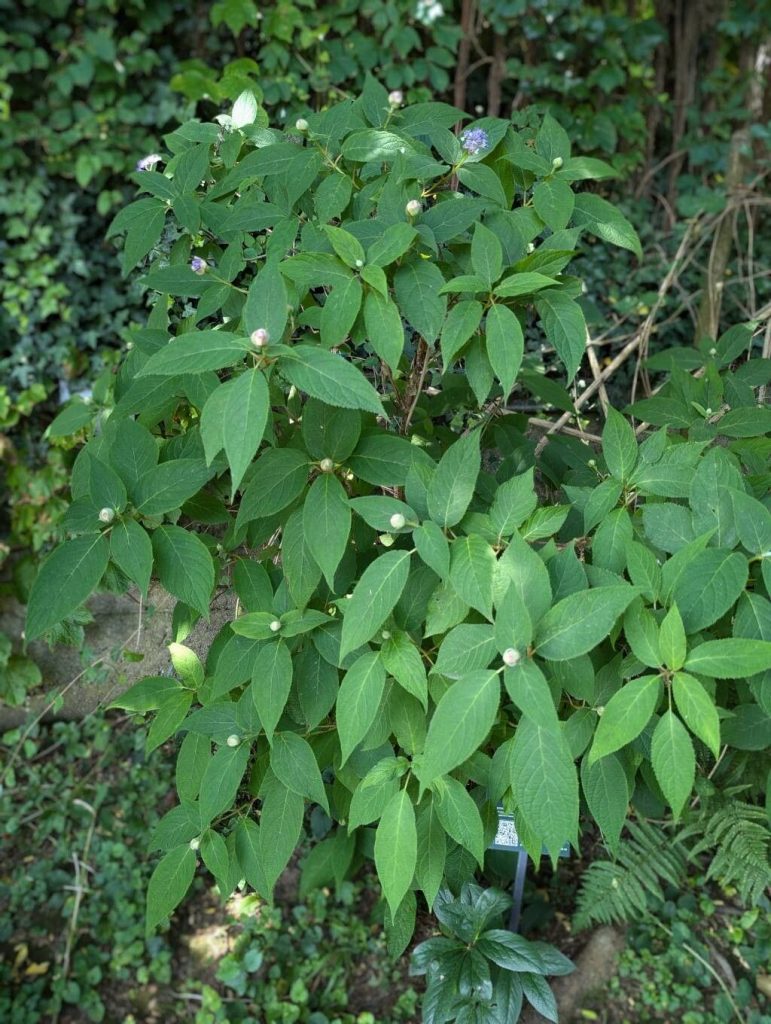
Propagating Hydrangea involucrata: A Gardener’s Guide
Introduction
Hydrangea involucrata, commonly known as the lacecap hydrangea, is a captivating shrub renowned for its unique flower structure. Unlike many hydrangeas boasting large, showy blooms, H. involucrata features delicate, lace-like flower heads where small fertile florets are surrounded by a halo of larger, sterile ray florets. This distinct characteristic, coupled with its relatively compact size and tolerance of shade, makes it a popular choice among gardeners seeking an elegant addition to their landscapes. However, propagating H. involucrata presents unique challenges, making successful propagation a rewarding endeavor for the dedicated plant enthusiast.
Seed Germination:
Currently, there are no known reliable methods for seed germination propagation of Hydrangea involucrata. While the plant does produce seeds, the germination rate is extremely low, and seedlings often exhibit unpredictable characteristics, deviating significantly from the parent plant. Therefore, seed propagation is not a practical method for cultivating this specific hydrangea.
Cuttings:
Cuttings offer a more reliable method for propagating Hydrangea involucrata.
Challenges: Root formation can be slow and inconsistent. Success rates improve with the use of rooting hormones and a controlled environment.
Practical Tips: Take semi-hardwood cuttings in late summer or early autumn. Use a sharp, clean knife or shears to collect 4-6 inch cuttings from healthy, non-flowering stems. Remove lower leaves to prevent rot, dip the cut ends in rooting hormone, and plant them in a well-draining propagation mix (e.g., perlite and peat moss). Maintain high humidity (e.g., using a humidity dome or propagator) and consistent moisture. Temperatures around 70-75°F (21-24°C) are ideal for root development.
Rewards: Cuttings produce genetically identical offspring, preserving desirable traits of the parent plant. This method is relatively straightforward once you master the technique.
Division:
Division is a viable propagation method for established Hydrangea involucrata plants.
Challenges: Requires mature plants with well-developed root systems. Improper division can damage the plant, potentially leading to its decline.
Practical Tips: Divide the plant in early spring or autumn when the soil is moist but not waterlogged. Carefully dig up the plant and gently separate the root ball into sections, ensuring each division has sufficient roots and stems. Replant the divisions immediately, ensuring proper soil drainage and watering.
Rewards: Division offers a quick method of increasing the number of plants, especially if a mature plant is already available.
Tissue Culture:
Tissue culture propagation is a possibility for Hydrangea involucrata, although it requires specialized equipment and sterile techniques.
Challenges: This method is complex, requiring a controlled laboratory environment and specialized knowledge. It is typically not a practical option for home gardeners.
Practical Tips: This technique is best left to professionals or experienced plant propagators with access to the necessary facilities and expertise.
Rewards: The potential to produce a large number of identical plants quickly and efficiently from a small amount of plant material.
Conclusion
Propagating Hydrangea involucrata presents both challenges and rewards. While seed propagation is impractical, cuttings and division provide reliable methods for successful propagation. Tissue culture offers a high-volume solution but necessitates specialized skills and resources. The unique satisfaction of cultivating Hydrangea involucrata from a cutting or division stems from overcoming the inherent difficulties involved. The delicate lacecap blooms, patiently nurtured from a small piece of the parent plant, become a testament to persistence and horticultural skill. Aspiring propagators should begin with cuttings, gradually mastering the technique before venturing into potentially more complex methods. With patience and attention to detail, the exquisite beauty of Hydrangea involucrata can be shared and celebrated in many gardens.