
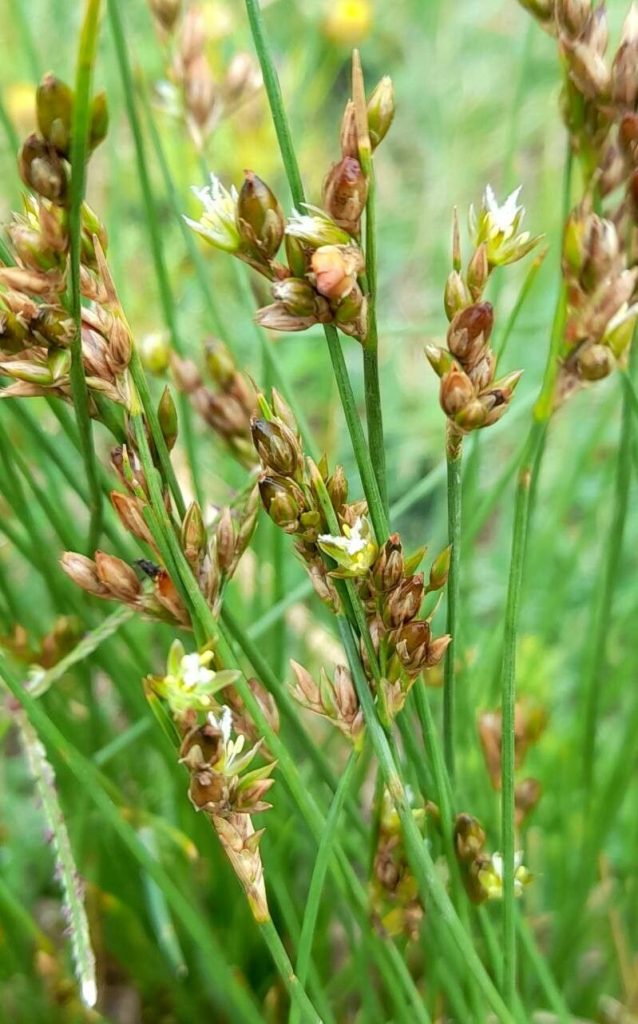
Propagating Juncus dichotomus: The Challenges and Rewards of Cultivating Forking Rush
Introduction:
Juncus dichotomus, commonly known as forking rush or dichotomous rush, is a charming, low-growing sedge-like plant prized for its delicate, arching stems that divide into two (hence the name "dichotomous"). Its fine texture and airy appearance make it a popular choice among gardeners for creating textural contrasts in borders, rock gardens, or containers. It thrives in moist, well-drained soils and enjoys full sun to partial shade, adding a touch of subtle elegance to various landscaping styles. While relatively easy to maintain once established, propagating this plant presents some unique challenges.
Seed Germination:
Currently, there are no known reliable methods for seed germination propagation of Juncus dichotomus. Extensive research has not yielded consistent success in germinating seeds. This is likely due to factors such as a low seed viability or highly specific germination requirements that haven’t yet been identified.
Cuttings:
Cuttings present a more viable method for propagating Juncus dichotomus than seed germination.
Challenges: Rooting cuttings can be slow and requires specific conditions. The success rate is not guaranteed, and some cuttings may rot before forming roots.
Practical Tips: Take cuttings in spring or early summer from healthy, non-flowering stems. Use a sharp, clean blade to take 4-6 inch cuttings, removing lower leaves to prevent rot. Dip the cut ends in rooting hormone for improved success. Plant in a moist, well-draining propagation mix and maintain high humidity – covering the cuttings with a plastic dome can help. Ensuring consistent moisture is crucial; the cuttings should be kept damp but not waterlogged.
Rewards: This method offers a relatively straightforward approach to increasing the number of plants, though success is not guaranteed without careful attention to detail. It allows for the propagation of genetically identical plants, preserving desirable characteristics.
Division:
Division is arguably the most reliable and widely practiced method for propagating Juncus dichotomus.
Challenges: The plant’s delicate root system can be easily damaged during division, potentially leading to plant loss if not handled carefully. It requires established, mature plants with sufficient root mass to be successfully divided.
Practical Tips: Divide established clumps in spring or autumn when the plant is actively growing or entering dormancy. Carefully dig up the entire clump and gently tease apart the roots, ensuring each division contains a healthy portion of roots and foliage. Replant the divisions immediately, keeping the soil consistently moist until they are established.
Rewards: Division offers a high success rate when executed correctly. It is a relatively quick and less technically demanding method compared to cuttings or tissue culture.
Tissue Culture:
Tissue culture propagation of Juncus dichotomus is a laboratory-based technique that remains largely unexplored.
Challenges: Establishing sterile culture conditions and determining the optimal growth medium and hormone combinations are significant hurdles. This technique requires specialized equipment and expertise and is therefore not feasible for most home gardeners.
Practical Tips: Research is needed to establish reliable protocols for tissue culture propagation of this plant.
Rewards: While presently unproven for Juncus dichotomus, tissue culture offers potential for large-scale propagation and the generation of disease-free plants.
Conclusion:
Propagating Juncus dichotomus presents both challenges and rewards. While seed germination is currently unreliable, division offers the most consistent success for the home gardener. Cuttings, although requiring care and patience, remain a viable option. Tissue culture holds future potential but requires specialized facilities and knowledge. The uniqueness of Juncus dichotomus, with its delicate form and airy grace, makes the effort involved in successful propagation particularly rewarding. The inherent difficulty adds to the sense of accomplishment experienced when a propagated plant flourishes. To aspiring propagators, we encourage persistence, careful observation, and attention to detail – the satisfaction of cultivating this charming plant is well worth the endeavor.