
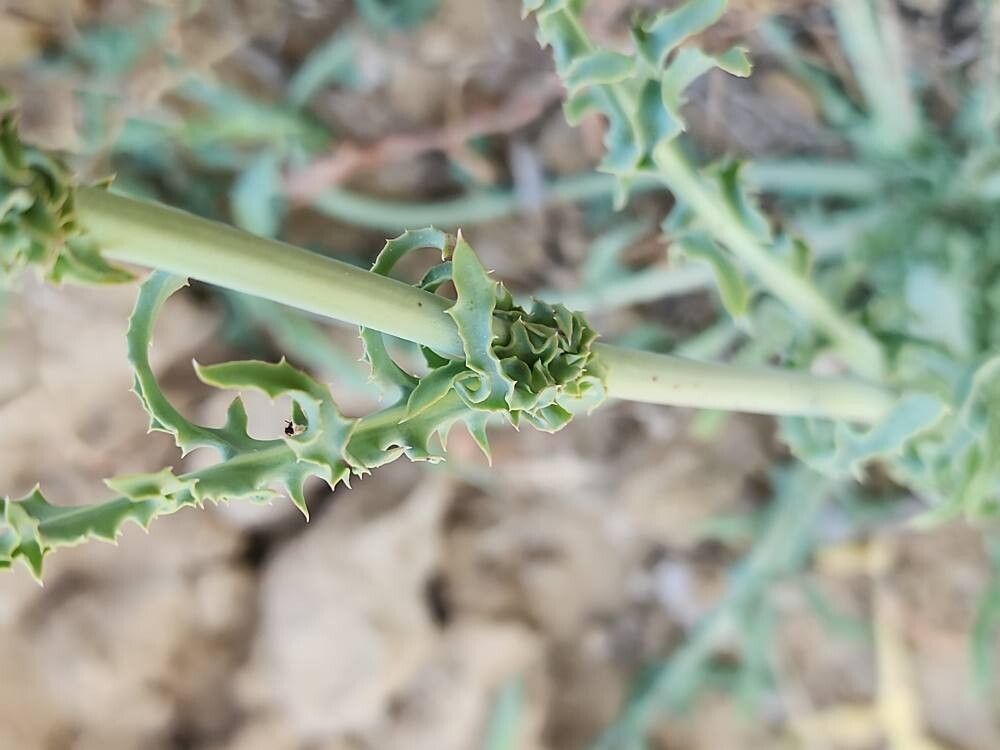
Propagating Launaea mucronata: A Guide to Cultivating the Spiny Lettuce
Launaea mucronata, commonly known as spiny lettuce or prickly lettuce, is a fascinating succulent plant gaining popularity among gardeners for its drought tolerance, attractive foliage, and unique, spiny appearance. Its ability to thrive in harsh conditions makes it a resilient addition to xeriscapes and rock gardens. However, propagating this intriguing plant presents some unique challenges and rewards. This article explores various propagation methods, examining their viability and offering practical advice for successful cultivation.
Seed Germination:
Currently, there are no known reliable methods for seed germination propagation of Launaea mucronata. While the plant does produce seeds, their germination rate is reportedly extremely low, and consistent success has not been documented in horticultural literature. Further research is needed to determine optimal germination conditions, if any exist.
Cuttings:
Cuttings offer a more viable propagation method for Launaea mucronata.
Challenges: The success rate can be variable depending on several factors including the time of year and the health of the parent plant. Cuttings may be prone to rotting if not properly prepared and positioned.
Practical Tips: Take stem cuttings of approximately 10-15cm in length from healthy, actively growing stems in spring or early summer. Remove lower leaves to prevent rotting. Allow the cut end to callous over for a few days before planting in a well-draining succulent potting mix. Maintain a slightly moist environment, but avoid overwatering. Rooting hormones can improve success rates. Propagation under humidity domes or misting systems can also increase survival chances.
Rewards: Cuttings provide a relatively quick means of propagation compared to others. They typically result in clones of the parent plant, preserving desirable traits.
Division:
Division is another suitable propagation method for Launaea mucronata, particularly for larger, established plants.
Challenges: Care must be taken to avoid damaging the roots during the division process. Each division needs to have sufficient root mass to establish itself.
Practical Tips: The best time to divide Launaea mucronata is during the spring or early summer, just before the plant enters its active growing phase. Gently dig up the plant and carefully separate it into smaller sections, ensuring each section has healthy roots and sufficient foliage. Plant the divisions immediately in well-draining soil, ensuring adequate space for growth. Water sparingly initially to allow the roots to recover.
Rewards: Division is a straightforward method, resulting in multiple plants quickly and efficiently. It is a good technique for maintaining larger clumps of the plant.
Tissue Culture:
Tissue culture offers the potential for large-scale propagation of Launaea mucronata.
Challenges: Tissue culture requires specialized equipment, sterile conditions, and expertise in plant tissue culture techniques. It is not a practical method for home gardeners.
Practical Tips: This method involves sterilizing plant material and growing it on a nutrient agar medium under controlled conditions. Specific media formulations and growth regulators may need optimization for Launaea mucronata.
Rewards: Tissue culture provides a way to propagate a large number of plants quickly and consistently from a small amount of starting material. It can also be used to eliminate diseases and maintain genetic uniformity.
Conclusion:
Propagating Launaea mucronata presents unique challenges, with seed germination currently proving unreliable. However, cuttings and division offer viable methods for the home gardener, while tissue culture presents a route for larger-scale propagation. While the process may require patience and some trial and error, the rewards of successfully cultivating this fascinating plant are significant. The satisfaction of nurturing a spiny lettuce from a cutting or division is a testament to the gardener’s skill and persistence, a reward that makes the effort all the more worthwhile. Don’t be discouraged by the initial difficulties; persevere, and you’ll soon enjoy the unique beauty and resilience of Launaea mucronata in your garden.