
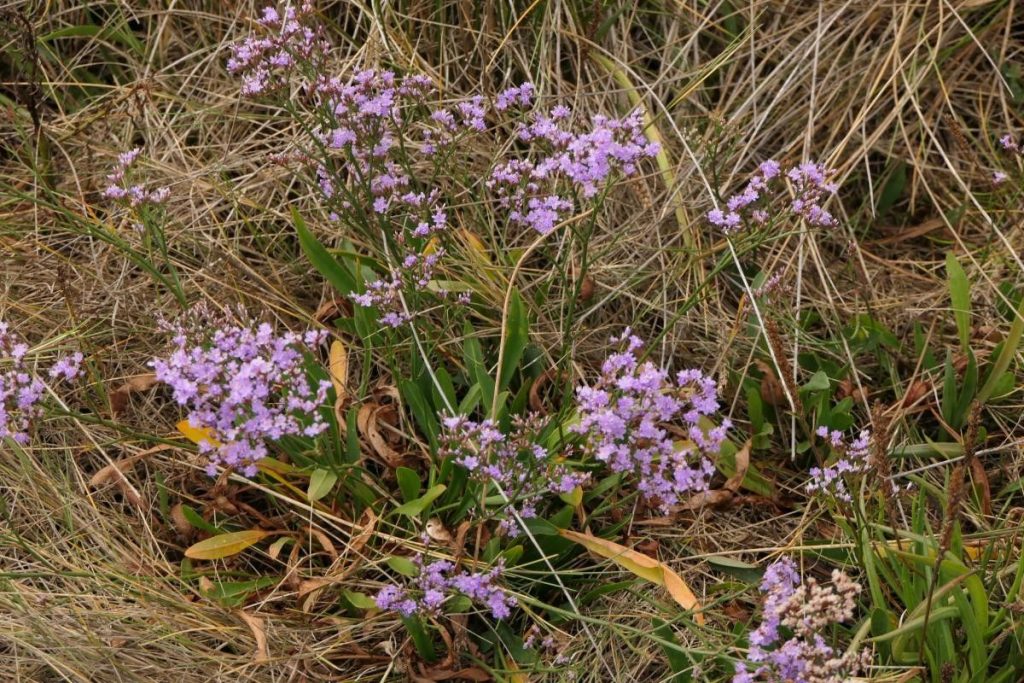
Propagating Limonium × neumanii: A Gardener’s Guide to Sea Lavender
Limonium × neumanii, commonly known as sea lavender, is a prized horticultural plant celebrated for its delicate, long-lasting flowers in shades of purple, pink, lavender, and white. These blooms, borne on tall, elegant stems, make it a favorite for cut flower arrangements, dried flower crafts, and adding texture and color to borders and containers. Its drought tolerance and adaptability contribute to its popularity among gardeners, but propagating sea lavender presents some unique challenges. This article explores various methods, highlighting their feasibility and offering practical advice for success.
Seed Germination:
Currently, there are no known reliable methods for seed germination propagation of Limonium × neumanii. Many commercially available Limonium species produce viable seeds; however, Limonium × neumanii, being a hybrid, often exhibits reduced or absent seed fertility. This makes seed propagation an unreliable method for the consistent production of this particular cultivar.
Cuttings:
Cuttings are a viable, and often preferred method for propagating Limonium × neumanii.
Challenges: Success with cuttings relies on using fresh, healthy material and providing optimal conditions. Overwatering can lead to rot, while insufficient humidity can hinder rooting. The timing also matters; taking cuttings during the active growing season generally yields better results.
Tips: Take semi-hardwood cuttings (partially mature stems) in late spring or early summer. Remove lower leaves to prevent rot, and dip the cut ends in a rooting hormone powder. Plant cuttings in a well-draining mix, such as a blend of perlite and vermiculite, keeping them consistently moist but not soggy. A humidity dome or propagation tray significantly improves success rates. Rooting can take several weeks.
Rewards: Cuttings offer a straightforward way to maintain the desirable characteristics of the parent plant, ensuring uniformity in the resulting offspring. This method is efficient for medium-scale propagation.
Division:
Division is another option for increasing your stock of Limonium × neumanii.
Challenges: Sea lavender doesn’t readily form clumping roots like some other perennials, limiting its suitability for division. Attempting to divide a plant that isn’t mature enough can damage it, hindering its growth or leading to its demise.
Tips: Division should only be attempted on established, well-rooted plants. Carefully dig up the plant and gently separate it into sections, ensuring each division has sufficient roots and foliage. Replant the divisions immediately in well-prepared soil, and water thoroughly. This method is best suited for smaller-scale propagation.
Rewards: Division produces genetically identical plants to the parent, maintaining desirable traits. This method is relatively simple compared to other forms of propagation.
Tissue Culture:
Tissue culture offers potential for large-scale propagation and the production of disease-free plants.
Challenges: This method requires specialized equipment, a sterile environment, and technical expertise. It’s generally not a practical approach for home gardeners. Furthermore, establishing successful tissue culture protocols for specific Limonium cultivars can be challenging and require significant research and development.
Tips: Tissue culture should be undertaken only by professionals with the right training and resources.
Rewards: Tissue culture allows for rapid multiplication of plants, providing a means for mass production of uniform plants, free from diseases. It’s employed primarily by commercial nurseries.
Conclusion:
Propagating Limonium × neumanii presents unique challenges due to its hybrid nature and the resulting difficulties with seed production. Cuttings offer a reliable method for home gardeners, providing a balance between feasibility and reward. Division is a possibility for smaller-scale multiplication of mature plants. Tissue culture is a superior method for mass production; however, it requires specialized knowledge and resources. While the process may entail obstacles, the satisfaction of successfully nurturing a sea lavender cutting from a small stem to a vibrant flowering plant, or successfully dividing a mature clump, brings a unique gardener’s pride and deepens the connection with this elegant species. Don’t be discouraged by potential setbacks. Experimentation, combined with patience and attention to detail, will ultimately lead to success, rewarding you with the beautiful blooms of Limonium × neumanii.