
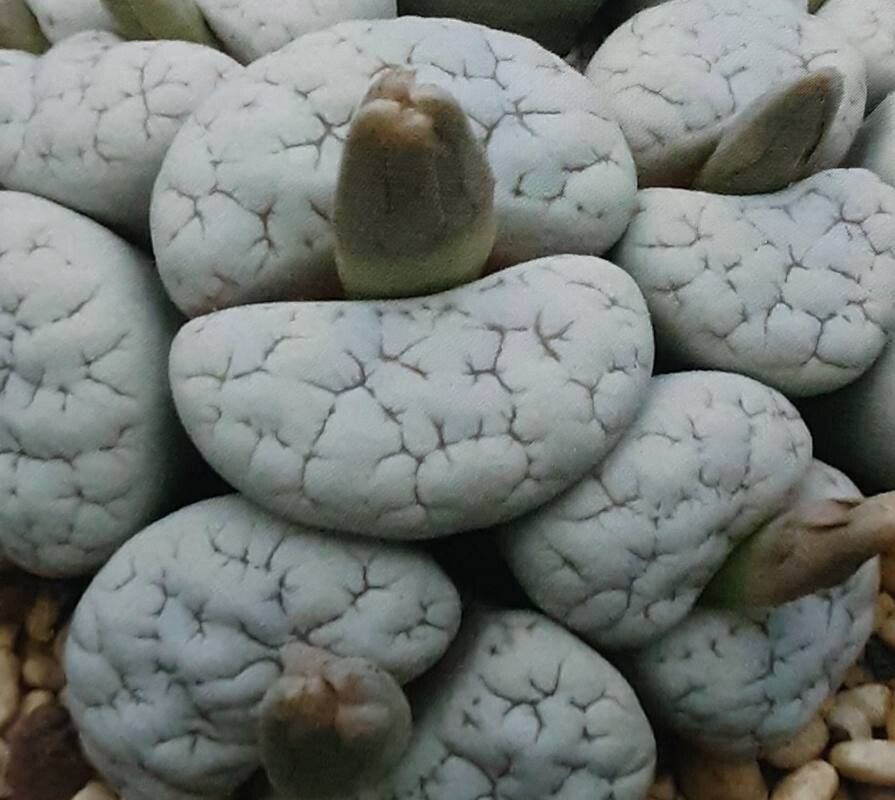
Propagating Lithops gracilidelineata: A ‘Split Rock’ Challenge
Introduction:
Lithops gracilidelineata, commonly known as a Split Rock or Pebble Plant, is a captivating succulent belonging to the Aizoaceae family. Its remarkable resemblance to small stones provides excellent camouflage in its native arid regions of South Africa. This mesmerizing mimicry, combined with its relatively easy care once established, has made it a highly sought-after plant among succulent enthusiasts. However, propagating these fascinating plants presents unique challenges. While visually stunning, successfully multiplying Lithops gracilidelineata requires patience and specific techniques. This article explores the various propagation methods, detailing their viability and associated difficulties.
Seed Germination:
Seed germination is a viable method for propagating Lithops gracilidelineata, offering the reward of increased genetic diversity within a collection. However, it presents several challenges. Lithops seeds are tiny and require meticulous care. Success hinges on creating optimal conditions for germination.
-
Challenges: Seeds are prone to fungal infections in damp conditions. Consistent moisture levels without overwatering are crucial. Germination rates can be low, and seedlings are delicate and require careful handling. Light requirements are also stringent; too much direct sun can scorch seedlings, while insufficient light leads to etiolation (weak, leggy growth).
-
Practical Tips: Sow seeds thinly onto a well-draining seed-starting mix (e.g., a mix of perlite, vermiculite, and coarse sand). Maintain consistently moist, but not soggy, conditions, ideally using bottom watering. Provide bright, diffused light. A simple propagator with a humidity dome can be helpful in maintaining humidity levels. Stratification (a period of cold treatment) is not generally necessary for Lithops gracilidelineata.
- Rewards: Successful seed germination provides a large number of plants, increased genetic variety, and the satisfaction of nurturing a plant from seed to maturity.
Cuttings:
Currently, there are no known reliable methods for propagation of Lithops gracilidelineata via cuttings. These plants do not readily root from leaf or stem cuttings.
Division:
Division is a feasible method, but with limitations. Lithops typically offsets (produces new plants) only infrequently.
-
Challenges: Lithops are slow-growing, and offsets may take years to develop to a size suitable for division. Care must be taken during separation to avoid damaging the delicate roots and leaves of both the parent plant and the offset. The risk of plant failure during and after division is significant.
-
Practical Tips: Division should only be attempted when offsets are clearly visible and sufficiently developed with their own root system. Use a sharp, sterile knife or scalpel to carefully separate the offset from the mother plant. Allow both plants to dry for a few days before planting in well-draining soil.
- Rewards: Successful division provides a relatively quick increase in the number of plants, preserving the genetic characteristics of the parent plant.
Tissue Culture:
Tissue culture is a potentially viable method for large-scale propagation of Lithops gracilidelineata, offering the potential for rapid multiplication of genetically identical plants. However, this method requires specialized equipment, skill, and sterile laboratory conditions.
-
Challenges: Establishing aseptic conditions is paramount to prevent contamination. Specific nutrient media formulations and growth regulators are necessary for optimal growth. This method is costly and requires specialized knowledge.
-
Practical Tips: Sterilization of all materials is crucial. Specific protocols for Lithops tissue culture may need to be developed or adapted from closely related species.
- Rewards: Rapid multiplication of plants, offering potential for commercial propagation or preservation of rare cultivars.
Conclusion:
Propagation of Lithops gracilidelineata is challenging but rewarding. Seed germination offers the most significant increase in plant numbers and genetic diversity, though it requires patience and precise techniques. Division allows for a more controlled increase in plants but limits the quantity and is dependent on offsets being present. Cuttings are not viable. Tissue culture presents an avenue for large-scale propagation but is complex and requires specialized equipment and expertise. The unique satisfaction comes from understanding the needs of this peculiar plant and successfully coaxing growth from seed or offset. Don’t be discouraged by setbacks – persistence and attention to detail will eventually lead to the joy of nurturing these captivating ‘living stones’.