
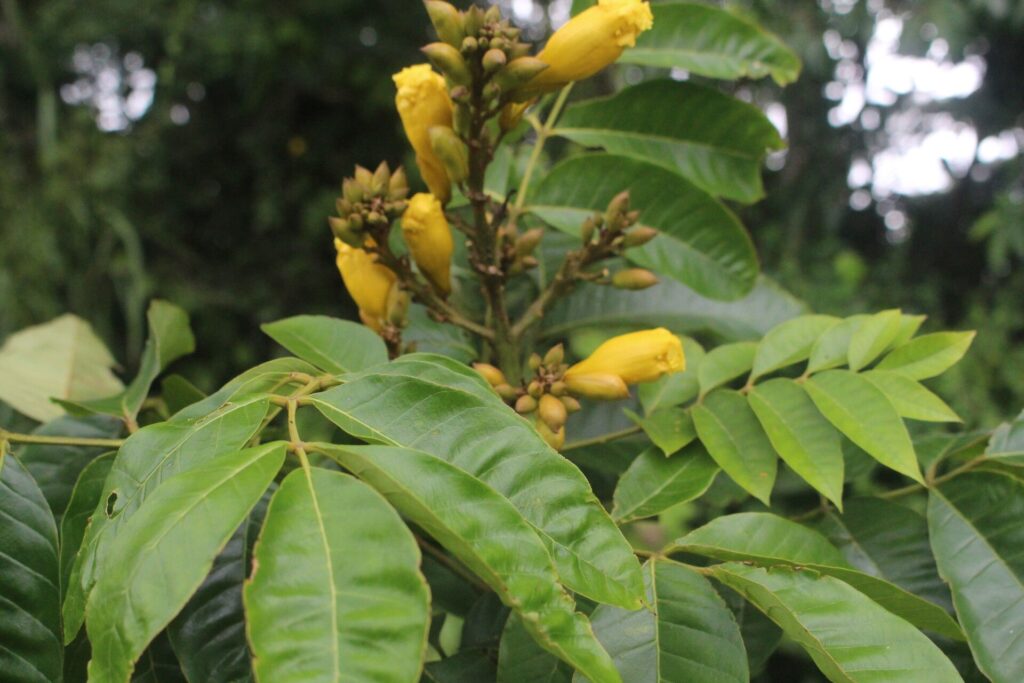
Spreading the Golden Joy: Propagating Markhamia lutea, the Yellow Bell Tree
The Markhamia lutea, also known as the Yellow Bell Tree, is a stunning sight with its vibrant yellow, bell-shaped blooms that attract a flurry of pollinators. You may be admiring one in your neighborhood or longing to bring its beauty into your own garden. The good news is that this tropical tree is relatively easy to propagate, allowing you to share the joy of the Yellow Bell Tree with others or simply expand your own botanical collection.
Methods of Propagation:
Markhamia lutea can be successfully propagated via seeds, cuttings, and air layering, each method offering its own advantages and challenges.
1. Seed Propagation:
- Harvesting Seeds: Collect the ripe seed pods from the tree. They will be brown and dry, and the seeds inside will be small and dark.
- Planting Seeds: Sow the seeds in a seed tray or pot filled with a well-draining seed-starting mix. Maintain a moist but not soggy environment and provide ample sunlight.
- Germination: With proper care, seeds should germinate within 2-4 weeks.
- Advantages: Seed propagation allows for a greater number of seedlings and offers some genetic diversity.
- Disadvantages: Germination rates can vary, and it may take more time for seeds to reach maturity compared to cuttings or air layering.
2. Cuttings:
- Time of Year: The ideal time for taking cuttings is during the spring or early summer when the plant is actively growing.
- Cuttings: Take 6-8 inch stem cuttings from healthy, mature branches. Make sure to remove any leaves from the bottom 2-3 inches and dip the cut end in rooting hormone.
- Rooting Medium: Plant the cuttings in a rooting medium such as perlite, vermiculite, or a mixture of peat moss and perlite. Maintain a warm, humid environment, and avoid direct sunlight.
- Rooted Cuttings: With the right care, cuttings should root within 4-6 weeks.
- Advantages: Cuttings result in a plant that is genetically identical to the parent tree and can bloom quicker than plants grown from seed.
- Disadvantages: Cuttings may require a bit more care and dedication to prevent them from drying out.
3. Air Layering:
- Choosing a Branch: Select a healthy, mature branch on your Yellow Bell Tree.
- Girdling: Gently scrape away a small section of bark from the branch, exposing the cambium layer.
- Air Layering: Surround the girdled area with moist sphagnum moss, wrapped in plastic to keep the moss moist.
- Roots: After several weeks, roots should develop in the moss. Once these roots are established, you can cut the branch below the rooted section and plant it in a pot.
- Advantages: Air layering is a reliable method of propagation, producing a robust plant with established roots.
- Disadvantages: This method can be slightly more time-consuming than cuttings.
Tips for Success:
- Quality Materials: Choose healthy, disease-free plants for propagation.
- Protection: Protect your new plants from pests and diseases.
- Gentle Care: Handle your seedlings and cuttings with care.
- Sunlight: Ensure your young trees receive ample sunlight.
- Patience: Be patient! It takes time for seedlings and cuttings to develop roots and become established.
Beyond Propagation:
Once the Markhamia lutea is established, you can enjoy its beauty and the many birds and butterflies it attracts. With its drought tolerance and ability to withstand moderate frost, this tree can add a vibrant touch to a variety of landscapes.
Sharing the Joy:
Whether you start your own Yellow Bell Tree from seed, cutting, or air layering, remember to share this beautiful tree with others. The vibrant yellow blossoms will bring a splash of color to any garden and spread a sense of joy and wonder.