
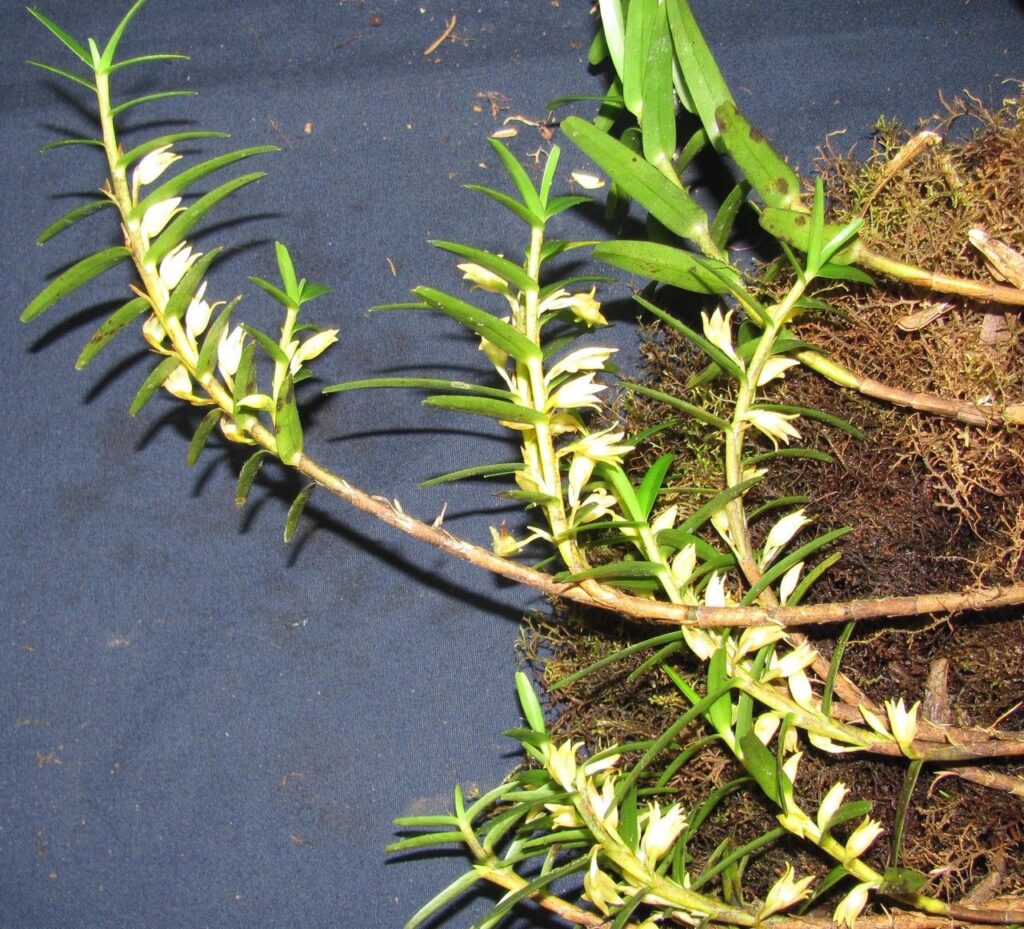
Multiply Your Maxillaria: A Guide to Propagating Maxillaria dendrobioides
Maxillaria dendrobioides, with its charming, delicate flowers and graceful, arching stems, is a true delight for any orchid enthusiast. But what if you wanted to share its beauty with others or simply expand your own orchid collection? The good news is, propagating Maxillaria dendrobioides is a rewarding and achievable goal even for beginners.
This guide will explore the two most common and successful methods for propagating this exquisite orchid: division and keiki propagation.
1. Division: A Quick and Easy Way to Double Your Plants
Division is the simplest way to multiply Maxillaria dendrobioides. It involves separating a mature plant into two or more smaller plants, each with its own root system. This method is best suited for plants that have grown into a dense clump with multiple growth points.
Here’s how to divide your Maxillaria dendrobioides:
- Choose the right time: Ideally, divide your plant during the dormant period, typically after flowering, when the plant is actively growing but not actively blooming.
- Prepare the plant: Gently remove the plant from its pot and carefully loosen the potting media around the roots.
- Separate the divisions: Identify the natural divisions in the plant, where new growth points have developed distinct root systems. Carefully use a sharp, sterile knife or pruning shears to separate the plant into individual divisions.
-
Repotting: Each division should be potted in a well-draining orchid potting medium, ensuring that the roots are well-spread and the plant is held upright. Water generously after repotting.
2. Keiki Propagation: Encouraging New Growth for Future Plants
Keikis, which are miniature versions of the original plant, are often produced by orchids, including Maxillaria dendrobioides. These adorable baby clones can be easily detached and grown into their own plants.
Here’s how to encourage and propagate keikis:
- Stimulate keiki growth: Sometimes, keiki development can be encouraged by applying a diluted cytokinin paste, a plant hormone, to the base of the orchid’s pseudobulbs. This encourages the plant to produce keikis.
- Patience is key: Keikis can take a few months to develop, but don’t worry; be patient and let nature take its course.
- Time for detachment: Once the keiki has at least three to four roots, about the length of an inch, it is ready to be detached.
- Repotting the keiki: The detached keiki should be planted in a small, shallow pot with well-draining potting mix, replicating the conditions of its parent plant.
Tips for Success:
- Sterilization: Always sterilize your tools before using them, especially when dealing with the delicate tissues of orchids. You can use a diluted bleach solution or rubbing alcohol to sterilize.
- Proper care: After propagating, be sure to provide the newly potted divisions or keikis with the same growing conditions as their parent plant. This includes proper watering, lighting, and humidity.
- Patience and observation: Propagation takes time. Be patient and observe the progress of your plants closely, making adjustments as needed.
By following these steps, you can confidently and successfully propagate your Maxillaria dendrobioides and fill your home with the beauty of its delicate blossoms or share this wonder with other orchid lovers. Happy propagating!