
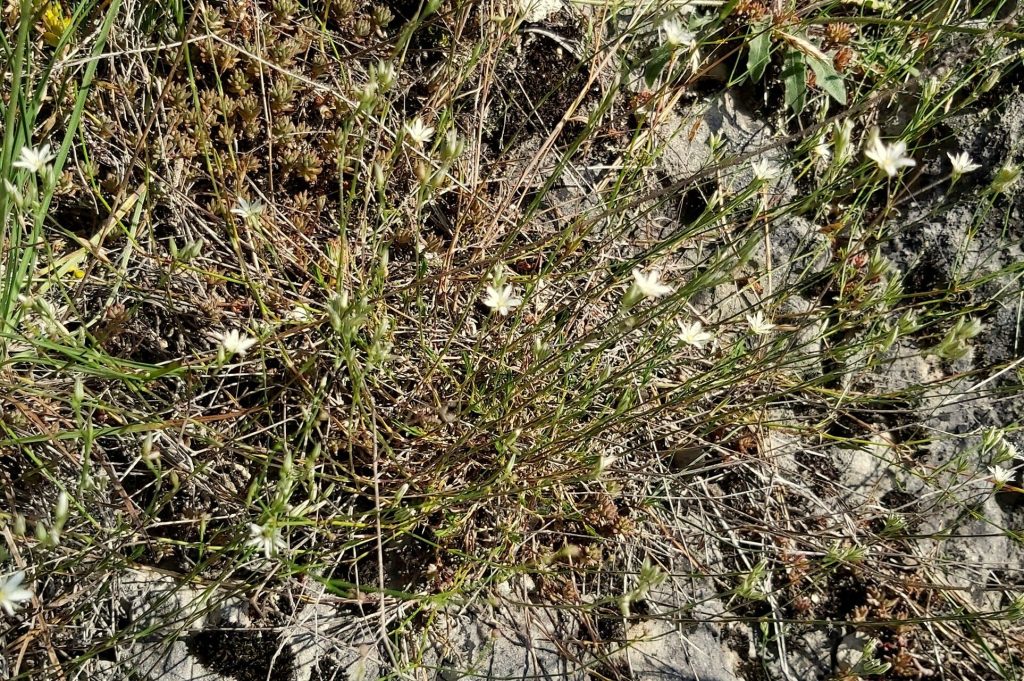
Propagating Minuartia setacea: A Gardener’s Challenge and Reward
Introduction
Minuartia setacea, also known as bristle sandwort, is a charming, low-growing alpine plant prized for its delicate, needle-like foliage and profusion of small, white flowers. Its diminutive stature and adaptability to well-drained soils make it a popular choice for rock gardens, alpine troughs, and as groundcover in sunny locations. However, its propagation presents a unique set of challenges, making success all the more rewarding for the dedicated gardener. While its compact size might suggest ease of propagation, the specifics require understanding and patience.
Seed Germination
Currently, there are no known reliable methods for seed germination propagation of Minuartia setacea. While seeds may be produced, their germination rate is notoriously low, and successful germination under controlled conditions has yet to be consistently documented. Further research into specific stratification techniques and potentially the use of growth hormones may be needed to unlock the potential of seed propagation.
Cuttings
Cuttings offer a more promising avenue for propagating Minuartia setacea.
Challenges: The success rate can be variable depending on timing and technique. Using semi-hardwood cuttings taken in late summer or early autumn generally yields the best results.
Practical Tips: Take cuttings of 5-7 cm, removing lower leaves to prevent rot. Use a well-draining rooting medium (a mixture of perlite and vermiculite works well) and maintain a high humidity environment, ideally under a humidity dome or propagator. Root hormone application can significantly improve the chances of success.
Rewards: Cuttings provide a relatively quick method of propagation, preserving the genetic characteristics of the parent plant. It is suitable for smaller-scale propagation.
Division
Division is another viable, albeit less scalable, method for propagating Minuartia setacea.
Challenges: Minuartia setacea forms compact clumps, and dividing them without damaging the delicate root system requires care and a sharp, clean tool. Over-division can result in plant stress and loss of vigor.
Practical Tips: Divide established plants in early spring or autumn. Carefully separate the root ball into smaller sections, ensuring each division has sufficient roots and foliage. Plant promptly into well-drained soil and water gently.
Rewards: Division is a straightforward method for propagating a limited number of plants, helping maintain a healthy existing population of a specific cultivar.
Tissue Culture
Tissue culture propagation is not a commonly employed method for Minuartia setacea. While theoretically possible, establishing sterile cultures and optimizing growth protocols may present significant challenges and require specialized knowledge and equipment. The cost and complexity outweigh the benefits for amateur gardeners, making it impractical.
Conclusion
Propagating Minuartia setacea successfully requires patience, attention to detail, and a willingness to experiment. While seed germination remains unreliable, cuttings and division represent viable options, with cuttings proving to be generally more effective for increasing plant numbers. The challenges inherent in propagating this delicate plant highlight the unique satisfaction derived from overseeing its successful cultivation. The dedication required reinforces the special bond between gardener and plant. For aspiring propagators, remember that even failed attempts offer valuable learning experiences. Start with cuttings, employing the suggested tips and meticulous care, and you’ll likely be rewarded with the delightful sight of new Minuartia setacea thriving in your garden.