
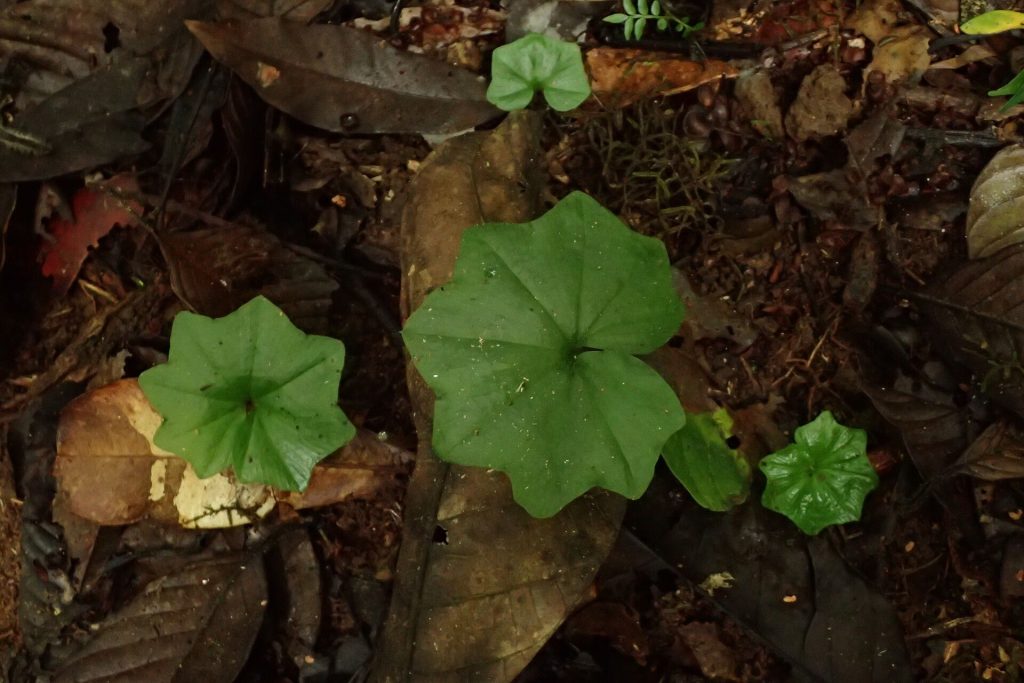
Propagating Nervilia subintegra: A Gardener’s Challenge and Reward
Introduction:
Nervilia subintegra, sometimes called the “nerveless nervilia” though this is not a widely used common name, is a captivating terrestrial orchid with striking foliage and delicate flowers. Its intricately veined leaves, often exhibiting a striking purplish hue, and relatively small, but charming blooms make it a highly sought-after plant amongst orchid enthusiasts and collectors. However, its propagation presents unique challenges, making successful cultivation a particularly rewarding experience. The difficulty lies primarily in its specific requirements for growth and the relatively limited accessibility of propagation methods compared to more common orchids.
Seed Germination:
Currently, there are no known reliable methods for seed germination propagation of Nervilia subintegra. The minute seed size and the orchid’s symbiotic relationship with specific mycorrhizal fungi in its natural habitat significantly hinder germination attempts in controlled environments. Further research into the specific fungal associations and the development of sterile germination techniques incorporating these fungi is necessary to explore this method.
Cuttings:
Cuttings are not a viable propagation method for Nervilia subintegra. This orchid, like many terrestrial orchids, lacks the ability to regenerate from stem or leaf cuttings. Attempts at propagation through this method have historically been unsuccessful.
Division:
Division is the most practical and commonly successful method for propagating Nervilia subintegra. This involves carefully separating the tubers (pseudobulbs) of a mature plant during its dormant period.
- Challenges: The tubers are relatively fragile and easily damaged during separation. Each division needs to have a healthy portion of rhizome and at least one viable growth bud to ensure successful establishment. Over-division can weaken the parent plant and the newly divided sections.
- Practical Tips: Division should be undertaken during the plant’s dormancy period, usually after the leaves have died back. A sharp, sterile knife or scalpel should be used for precise cuts. Each divided section should be planted in a well-draining substrate composed of orchid bark, perlite, and sphagnum moss, maintaining a moderately moist environment. Avoid overwatering which can lead to rot.
- Rewards: Division offers a relatively simple way to increase the number of plants, ensuring the continuation of a specific cultivar. It is less time-consuming compared to other methods and offers a high success rate when performed correctly.
Tissue Culture:
Tissue culture offers the potential for large-scale propagation and the creation of disease-free plantlets. However, it requires specialized equipment, sterile laboratory conditions, and a thorough knowledge of orchid tissue culture techniques.
- Challenges: Establishing a sterile culture from Nervilia subintegra tissue can be challenging, requiring extensive experimentation to find the optimal medium and growth hormones. Contamination is a serious risk, necessitating meticulous aseptic procedures. The specific hormonal requirements for optimal growth and plantlet development are not yet well-documented for this species.
- Practical Tips: Finding a reputable commercial laboratory with experience in orchid tissue culture is advisable for those lacking the necessary infrastructure and expertise. If attempting independently, rigorous sterilization procedures and meticulous media preparation are critical.
- Rewards: Successful tissue culture allows for the rapid proliferation of plants, particularly useful for conserving rare or endangered varieties, establishing disease-free stock, and producing a uniform population of plants.
Conclusion:
Propagating Nervilia subintegra presents unique difficulties. While seed germination and stem cuttings are currently not viable options, division is the most reliable method for the home grower. Tissue culture holds the most significant potential for large-scale production but requires advanced expertise or outsourcing. The rewards for successful propagation, however, are substantial. The satisfaction of nurturing these delicate orchids from a division, witnessing their recovery, and eventually blooming, far outweighs the associated challenges. For aspiring propagators, patience, attention to detail, and a thorough understanding of the plant’s needs are key factors in success. Don’t be discouraged by initial setbacks; persistence and careful observation are paramount to enjoying the unique beauty of this fascinating terrestrial orchid.