
Propagating Opuntia cespitosa: A Guide to the Plains Prickly Pear
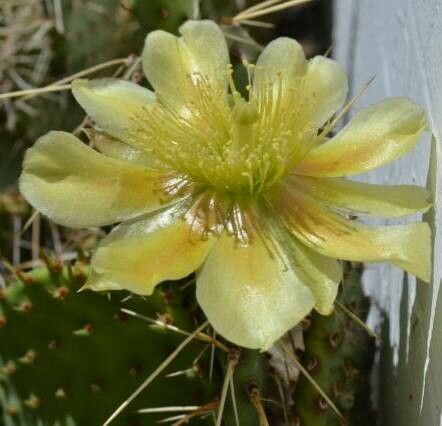
Opuntia cespitosa, commonly known as the Plains Prickly Pear, is a low-growing, sprawling cactus native to the prairies and plains of North America. Its flat, pad-like cladodes (stem segments) are typically small and numerous, forming dense mats that can spread several feet across. Its vibrant yellow flowers and subsequent red fruits add splashes of color to arid landscapes, making it a desirable addition to rock gardens, xeriscapes, and naturalistic plantings. Its unique tolerance to harsh conditions contributes to its increasing popularity among gardeners who appreciate low-maintenance, drought-tolerant plants. However, successful propagation can present some challenges.
Seed Germination:
Currently, there are no known reliable methods for seed germination propagation of Opuntia cespitosa. While seeds may be produced, their germination rate is notoriously low, and consistent success has proven elusive. The challenges likely stem from the inherent dormancy mechanisms in the seed and the specific environmental conditions required for successful germination. Further research may reveal specific techniques, but currently, this is not a practical method for propagating this species.
Cuttings:
Cuttings are the most reliable and widely used method for propagating Opuntia cespitosa.
Challenges: The main challenge is preventing rot before the cutting forms roots. The pad must be allowed to dry and callous over before planting.
Practical Tips: Select healthy, mature pads in late spring or early summer. Allow the cut end to callous for several days to a week in a dry, shaded area. Plant the pad in well-draining cactus potting mix or a mix of sand and perlite, burying only the basal portion. Ensure minimal watering during rooting. Propagation is best achieved by placing the cuttings in an area receiving bright, indirect light.
Rewards: Cuttings offer a relatively quick and easy way to increase the number of plants, ensuring genetic uniformity. This is ideal for preserving specific characteristics of a valued plant.
Division:
Division is another viable propagation method, especially for mature, established plants.
Challenges: Care must be taken to avoid injuring the plant during separation. Each division needs to have sufficient roots and cladodes to survive.
Practical Tips: Divide the plant in early spring or late autumn. Use a sharp, clean knife or spade to carefully separate portions of the plant, ensuring each section has a healthy root system and several pads. Plant the divisions immediately in similar conditions to cuttings, allowing time for establishment before heavy watering.
Rewards: Division offers a relatively simple way to propagate larger numbers of plants, utilizing the existing root system to promote faster growth.
Tissue Culture:
Tissue culture is a potential method for Opuntia cespitosa propagation, although it’s complex and requires specialized equipment and skills typically found in research laboratories or commercial nurseries.
Challenges: Requires specialized knowledge, sterile conditions, and expensive equipment. Establishing a suitable culture medium and sterilization protocols are critical factors affecting success.
Practical Tips: This method is best left to experienced tissue culturists. It involves culturing small sections of plant tissue in a sterile environment on a nutrient-rich medium and eventually transferring them to potting mix.
Rewards: Tissue culture provides the greatest potential for rapid propagation, disease-free plants, and clonal reproduction for conservation or commercial purposes.
Conclusion:
Propagating Opuntia cespitosa presents different levels of challenge depending on the chosen method. While seed germination remains unreliable, cuttings and division are readily feasible for most home gardeners. Tissue culture offers the potential for mass production requiring expertise. Despite the challenges, the unique satisfaction of successfully cultivating this resilient plant, from a small cutting or division to a thriving clump, is deeply rewarding. The hardiness of Opuntia cespitosa and its beauty make the effort well worth it for aspiring propagators armed with patience and the right techniques. Remember that providing well-draining soil and avoiding overwatering are critical for success with all methods.