
The Clandestine Life of the Bedstraw Broomrape: A Propagation Puzzle
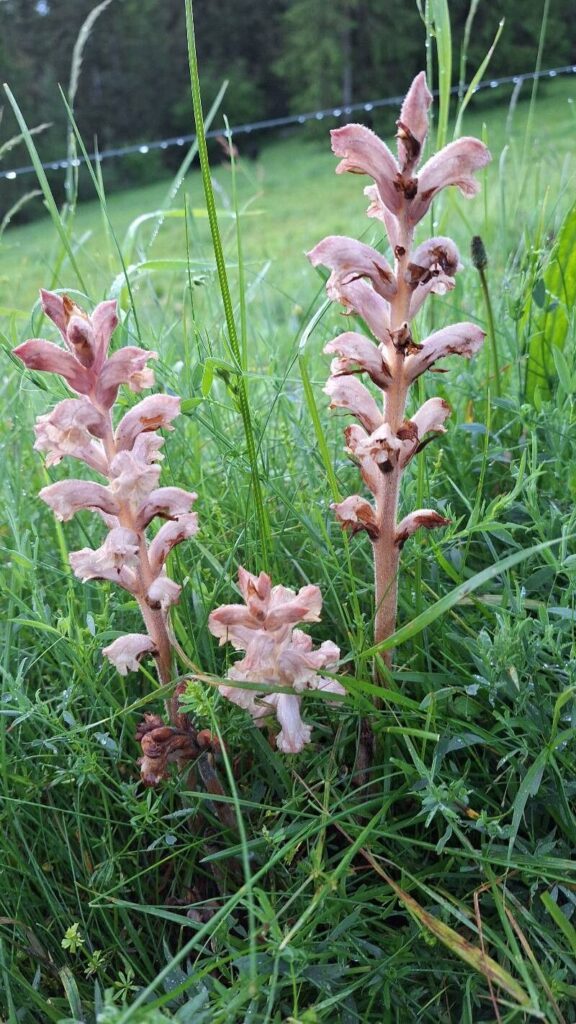
The plant world is full of surprises, and few are more intriguing than the curious case of Orobanche caryophyllacea, commonly known as the Bedstraw Broomrape. This peculiar plant, with its striking reddish-brown stems and lack of green leaves, might seem more alien than earthly. That’s because it belongs to a fascinating group of parasitic plants, completely reliant on specific hosts for survival and propagation.
Unlike most plants that get their energy from the sun through photosynthesis, Orobanche caryophyllacea has chosen a different path. It lacks chlorophyll, the green pigment essential for photosynthesis, and instead, it obtains nutrients by tapping into the roots of certain host plants. In this case, our bedstraw broomrape has a particular fondness for members of the Galium genus, commonly known as bedstraws.
This parasitic lifestyle has significant implications for the plant’s propagation. Forget about scattering seeds in hopes of them finding fertile ground independently. The seeds of Orobanche caryophyllacea require a more targeted approach. Here’s where it gets fascinating:
-
The Waiting Game: The tiny seeds of the broomrape can remain dormant in the soil for years, patiently waiting for the right conditions to germinate.
-
Chemical Cues: It’s not just any soil that triggers their growth. The presence of a suitable Galium host nearby releases specific chemicals into the soil. These chemical signals act as a “wake-up call” for the dormant broomrape seeds.
-
The Parasitic Embrace: Once stimulated, the seeds germinate and send out specialized roots called “haustoria.” These haustoria actively seek out the roots of the unsuspecting bedstraw host and penetrate them, establishing a physical connection.
-
A One-Sided Relationship: Now firmly attached, the broomrape begins siphoning off water and nutrients from the host, often to the detriment of the bedstraw’s own growth.
-
Flower Power: With a steady supply of nourishment, the broomrape flourishes, sending up its characteristic flowering stalks that emerge from the ground. These fascinating flowers are themselves a marvel, attracting pollinators with their fragrant scent.
- The Cycle Continues: After successful pollination, the broomrape produces a large number of tiny seeds, which are dispersed into the surrounding soil, ready to lie dormant until the cycle begins anew.
The complex propagation strategy of Orobanche caryophyllacea highlights the intricate relationships within ecosystems. While parasitic plants might seem like villains at first glance, they play an ecological role in controlling host populations and contributing to biodiversity.
So, the next time you encounter a patch of bedstraw, take a closer look. You might just find the intriguing stalks of Orobanche caryophyllacea emerging from the ground, a testament to the fascinating world of parasitic plants and their remarkable adaptations for survival.