
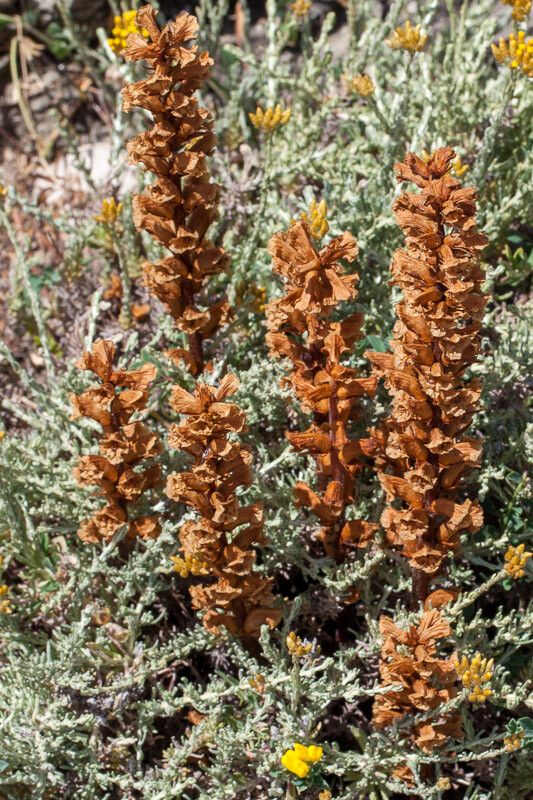
The Parasitic Plant You Don’t Want in Your Garden: Understanding Orobanche litorea Propagation
Have you ever noticed strange, yellowish-brown stalks popping up in your garden, seemingly out of nowhere? These could be the unwelcome presence of Orobanche litorea, commonly known as beach broomrape, a parasitic plant that feeds off other plants and can wreak havoc on your garden’s health. While it’s crucial for gardeners to understand how to control and prevent this invasive species, it’s equally important to understand how it propagates.
A Devious Reproduction Strategy:
Orobanche litorea employs a cunning strategy for propagation: it relies entirely on a host plant for survival. This sneaky plant lacks chlorophyll, the green pigment that allows most plants to photosynthesize and produce their own food. Instead, it taps into the host’s vascular system, stealing water and nutrients.
The Life Cycle of a Parasite:
- Seed Dispersal: The most common way Orobanche litorea spreads is through seeds. These tiny seeds can remain dormant in the soil for years, waiting for the right conditions to germinate.
- Host Plant Trigger: The seeds need a specific chemical signal from a host plant’s roots to trigger germination. This means that Orobanche litorea only germinates in close proximity to its target.
- Attachment and Invasion: Once a seed detects the right host, it sends out a root-like structure that attaches to the host’s root system. This connection allows the parasite to access the host’s water and nutrients.
- Emergence and Growth: Once established, Orobanche litorea starts to grow rapidly, producing its distinctive yellow-brown stems and flowers. The plant will continue to thrive as long as the host remains alive.
- Seed Production: Once mature, the Orobanche litorea will produce hundreds of thousands of seeds that can quickly spread throughout the soil, ensuring the continuation of the cycle.
Preventing the Spread:
Understanding Orobanche litorea propagation is crucial for preventing its spread in your garden. Here are some crucial tips:
- Monitor for signs: Regularly check your garden for any signs of Orobanche litorea plants, especially around vulnerable host plants.
- Control the source: If you find the parasite, remove it carefully, making sure to collect any fallen seeds. Be mindful as these plants can break off easily, leaving behind a piece that can continue to grow.
- Practice good hygiene: Always clean your gardening tools and equipment after handling Orobanche litorea.
- Avoid introducing the parasite: Be cautious when introducing new plants to your garden, as they can potentially carry seeds.
- Use resistant plants: Grow plants that are known to be resistant to Orobanche litorea infestation. Consult with local nurseries or gardening experts for recommendations.
The Challenges of Eradication:
While prevention is key, eradicating an established Orobanche litorea infestation can be challenging. The plant’s resilience and ability to produce vast quantities of seeds make it a difficult opponent.
The Importance of Collaboration:
It’s essential to remember that combating Orobanche litorea is a collaborative effort. Sharing information and best practices with other gardeners and local authorities can help prevent its spread and protect the community’s gardens.