
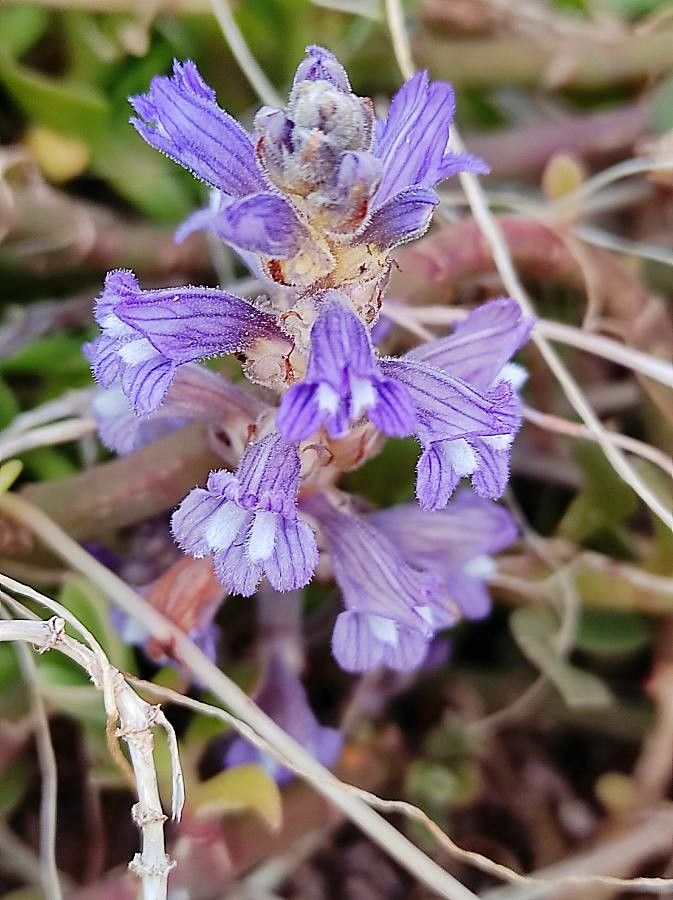
The Parasitic Plant You Won’t Propagate (But Should Know About): Unveiling the Secrets of Orobanche Nana
The world of plants is full of wonder, from towering redwoods to delicate orchids. Yet, some plants lurk beneath the surface, their beauty hidden underground. Today, we’re diving into the intriguing world of Orobanche nana, a plant that throws typical gardening wisdom out the window.
Forget lush leaves basking in sunlight; Orobanche nana, commonly known as the dwarf broomrape, is a holoparasite. This means it lacks chlorophyll and survives by siphoning nutrients from other plants. This might sound like the stuff of horror movies, but it’s a fascinating example of adaptation in the plant kingdom.
Orobanche nana specifically targets legumes, connecting to their roots and tapping into their vascular system. You won’t find this plant at your local nursery. In fact, you’re more likely to encounter it as an unwelcome guest in agricultural fields or gardens, where it can weaken valuable crops.
So, can you propagate Orobanche nana? The short answer is: you wouldn’t want to. Here’s why:
Propagation Challenges:
- Host Dependency: Unlike most plants that thrive on sunshine, water, and nutrients from the soil, Orobanche nana needs a living host to survive. That means successful propagation requires already having the specific legume species it prefers.
- Seed Dormancy: Orobanche nana produces an abundance of tiny seeds, but they have a unique characteristic – dormancy. These seeds can lie dormant in the soil for years, waiting for the chemical signals from a suitable host plant’s roots to germinate.
- Complex Lifecycle: After germinating, the seedling develops a structure called a haustorium, which penetrates the host’s root. This complex process, reliant on chemical communication and precise timing, makes traditional propagation methods ineffective.
Instead of Propagating, Let’s Appreciate:
While cultivating Orobanche nana isn’t feasible (or desirable in most cases), understanding its parasitic lifestyle offers valuable insights:
- Plant Interactions: It highlights the complex relationships between plants, showcasing that not all interactions are mutually beneficial.
- Agricultural Significance: Studying Orobanche nana and its relatives helps researchers develop strategies to combat parasitic weeds that threaten food crops.
- Ecological Balance: Parasitic plants, alongside decomposers and carnivorous plants, play a crucial role in maintaining biodiversity and ecosystem balance, even if they seem unusual.
In Conclusion:
Orobanche nana might not be gracing our windowsills any time soon, but this fascinating parasite offers valuable lessons about plant adaptation, the interconnectedness of nature, and the importance of even the smallest players in the grand ecological theatre. So next time you’re admiring a blooming flower, remember the hidden world below the surface, where plants like Orobanche nana are playing their own unique and vital roles.