
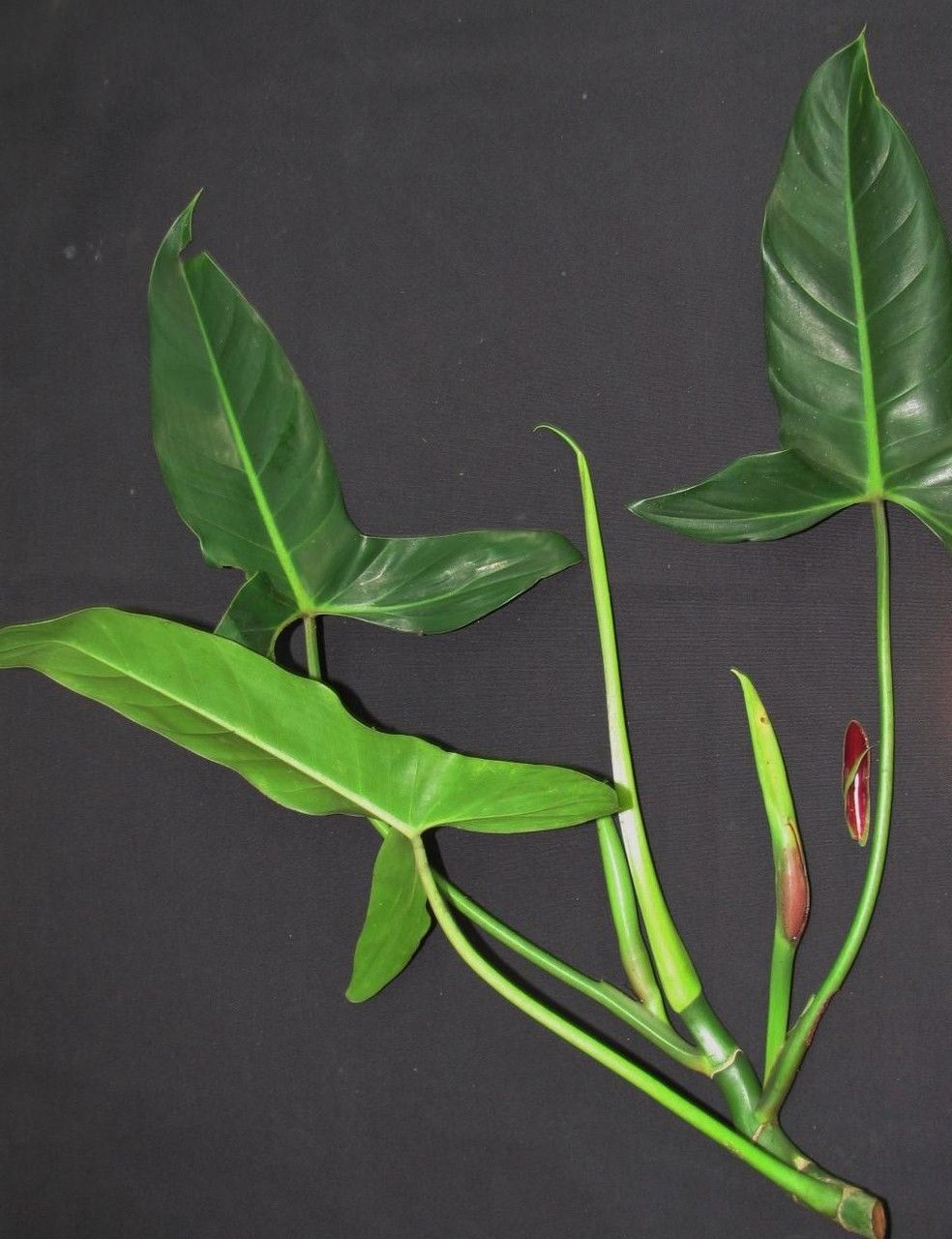
Propagating Philodendron deltoideum: A Guide to Growing the "Red Emerald"
Philodendron deltoideum, often called the "Red Emerald" due to its striking reddish-brown new growth and heart-shaped leaves, is a popular choice among plant enthusiasts. Its relatively easy care, attractive foliage, and vining habit make it an ideal addition to hanging baskets, shelves, or as a climbing plant with support. However, acquiring more of these beauties can sometimes prove challenging. This article explores various ways to propagate Philodendron deltoideum, discussing the challenges and rewards of each method.
Seed Germination:
Currently, there are no known reliable methods for seed germination propagation of Philodendron deltoideum. While Philodendrons generally produce seeds, obtaining viable seeds from P. deltoideum is extremely difficult due to the plant’s infrequent flowering and the complex pollination requirements often not met in home cultivation.
Cuttings:
This is undoubtedly the most successful and commonly used method for propagating Philodendron deltoideum.
Challenges: While relatively straightforward, success depends on providing the right conditions for rooting. Root rot is a primary concern if the cuttings are kept too wet.
Practical Tips: Take stem cuttings of 4-6 inches long, each with at least 2-3 nodes. Remove lower leaves to prevent rotting. Dip the cut ends in rooting hormone for improved results. Plant in a well-draining potting mix (e.g., perlite and peat moss), keeping the soil consistently moist but not soggy. Provide high humidity, ideally using a humidity dome or propagation tray. Rooting usually takes 4-6 weeks under ideal conditions.
Rewards: Cuttings are the easiest method, offering a quick and efficient way to increase your collection. It maintains the genetic characteristics of the parent plant.
Division:
Philodendron deltoideum can be propagated by division, but this method is only suitable when the plant is already quite mature and has developed numerous stems.
Challenges: Division is far less reliable than cuttings and only feasible with larger, well-established plants. Dividing the root ball too aggressively can damage the plant, reducing its chances of survival.
Practical Tips: Carefully remove the plant from its pot. Gently separate the root ball into smaller sections, ensuring each section has its own healthy root system and several stems. Replant immediately into fresh, well-draining potting mix.
Rewards: Division creates multiple plants at once, albeit only when the parent plant is large enough.
Tissue Culture:
Tissue culture is a sophisticated method for propagating plants, offering the possibility of producing many plants from a small amount of starting material.
Challenges: This method requires specialized equipment, sterile techniques, and a good understanding of plant tissue culture protocols. It is not a beginner-friendly option and requires significant investment in equipment and supplies.
Practical Tips: This method is best left to experienced plant propagators or commercial nurseries. It involves sterilizing plant tissue (typically from the shoot tips) and growing it in a nutrient-rich agar medium under sterile conditions.
Rewards: Tissue culture offers the potential for rapid multiplication of plants, producing disease-free clones, and preserving rare or endangered varieties.
Conclusion:
Propagating Philodendron deltoideum presents various challenges depending on the chosen method. While seed germination is practically impossible at home, cuttings provide the most reliable and accessible approach for the average gardener. Division works, but only for larger plants. Tissue culture, while offering high potential, is a more advanced and resource-intensive technique. The satisfaction derived from successfully propagating any plant, let alone a species as visually appealing as Philodendron deltoideum, is immense. The effort invested, with a little patience and the right techniques, is always rewarded with a thriving extension of your "Red Emerald" collection. Don’t be discouraged by initial setbacks—persistence is key!