
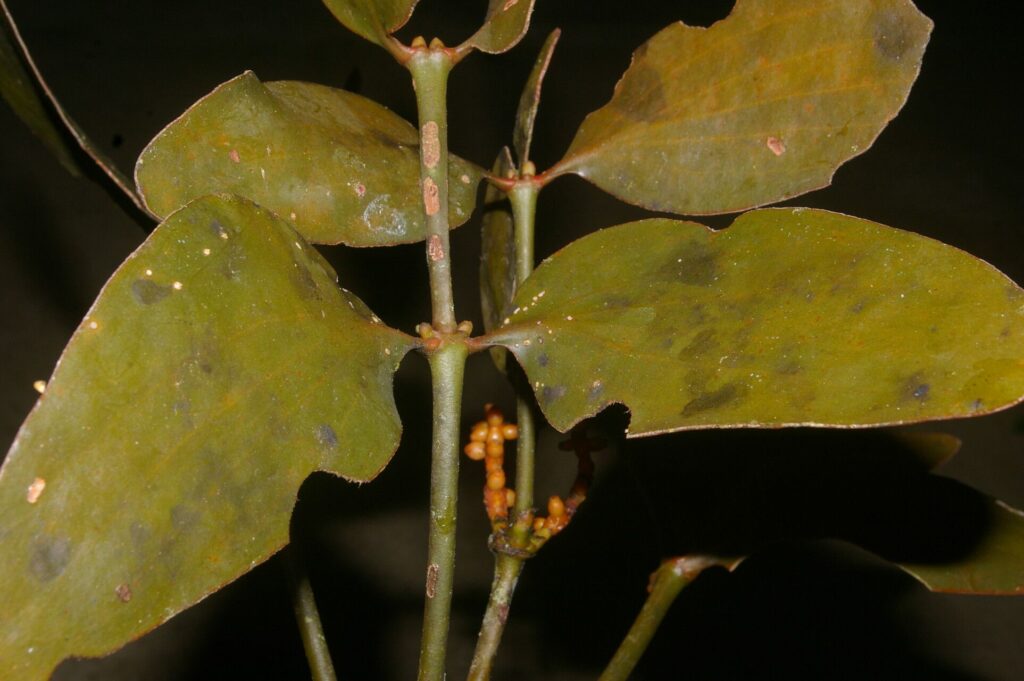
Kissing Under the Glittering Mistletoe: Propagating Phoradendron nitens
Most people know mistletoe as that festive plant we hang up during the holidays, prompting stolen kisses beneath its leafy boughs. But did you know there are many types of mistletoe, each with its own unique characteristics? Today, we’re diving into the world of a particularly stunning variety, the Phoradendron nitens, also known as the “glittering mistletoe.” This semi-parasitic plant, with its vibrant red berries and glossy leaves, isn’t just visually appealing – it’s a fascinating example of plant adaptation and propagation.
Unlike most plants that sprout from the ground, Phoradendron nitens takes root on the branches of trees. It’s considered a “hemiparasite” because while it draws nutrients and water from its host tree, it also performs photosynthesis to produce its own energy.
But how does this unusual plant reproduce and spread to new trees? Here’s where things get truly captivating:
The Birds and the Berries: A Symbiotic Relationship
The story of Phoradendron nitens propagation is a tale of symbiotic partnership, primarily with birds. The plant’s vibrant red berries, ripening in the fall, are a delicious treat for various bird species. These feathered friends, particularly phainopeplas and euphonias, feast on the fruit, unknowingly playing a crucial role in the mistletoe’s life cycle.
- Sticky Situation: The berries of Phoradendron nitens contain sticky seeds. When a bird enjoys its berry meal, these seeds often get stuck to their beaks.
- Spreading the Seed: In an attempt to clean themselves, the birds wipe their beaks on tree branches, unknowingly depositing the sticky seeds onto potential new hosts.
- Taking Root: If the seed lands on a suitable host tree, it germinates, sending out root-like structures that penetrate the tree bark and access the host’s resources.
- A New Generation: The young mistletoe plant then begins to grow, eventually producing its own berries and continuing the cycle of propagation with the help of its avian partners.
Can You Grow Your Own Glittering Mistletoe?
While technically possible, propagating Phoradendron nitens yourself can be quite challenging. The success rate is low, and the process requires patience and specific conditions:
- Finding a Source: Obtaining viable seeds can be tricky, as most commercially available mistletoe belongs to different species. Look for a reputable source that specializes in native plants.
- Selecting a Host: Not all trees are suitable hosts for Phoradendron nitens. Research its preferred species in your region, usually oaks and other hardwoods.
- The Planting Process: Gently press the sticky seed onto a young, healthy branch of the chosen host tree. It’s crucial to ensure good contact between the seed and the branch’s bark for successful germination.
- Patience is Key: It can take months, even years, for the seed to germinate and for the mistletoe plant to become established. Consistent monitoring and care are essential.
Admiring Nature’s Ingenuity
Whether you succeed in cultivating your own Phoradendron nitens or not, understanding its fascinating propagation process adds another layer of appreciation for this unique plant. So, the next time you encounter a glittering mistletoe, take a moment to admire not just its beauty but also the remarkable symbiotic relationship it shares with its feathered friends, ensuring its continued survival and spread within its ecosystem.