
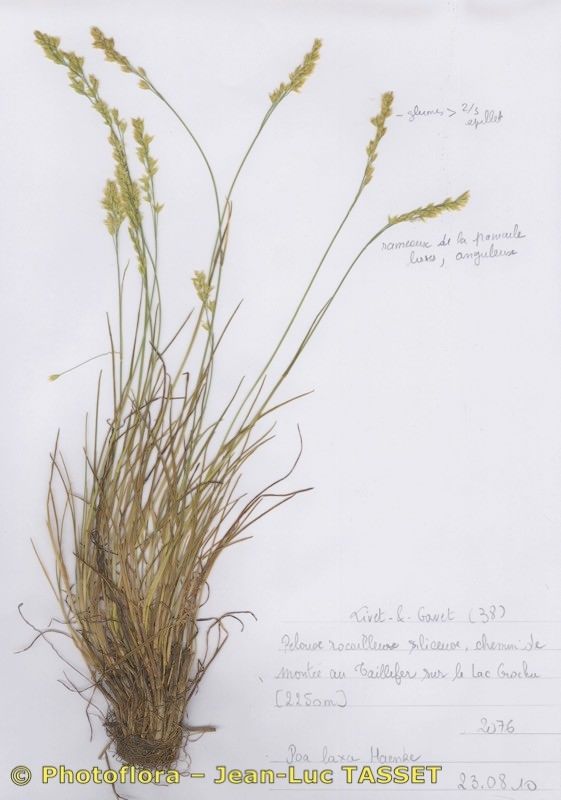
Propagating Poa laxa: A Guide to Cultivating the Smooth Meadow-grass
Introduction:
Poa laxa, commonly known as smooth meadow-grass, is a charming and versatile grass prized for its fine texture, delicate foliage, and adaptability to various environments. Its clump-forming habit and tolerance of shade make it a popular choice for rock gardens, woodland borders, and even as a low-maintenance lawn alternative in suitable locations. However, propagating Poa laxa can present unique challenges due to its relatively slow growth rate and the complexities of seed germination. This article will explore several propagation methods, analyzing their viability and offering practical advice for successful cultivation.
Seed Germination:
Currently, there are no known reliable methods for seed germination propagation of Poa laxa. While seeds are produced, their germination rate is notoriously low, and even under optimal conditions, consistent successful germination is rarely achieved. The small seed size, potential dormancy mechanisms, and the need for very specific environmental conditions contribute to this difficulty. Therefore, relying on seed germination for propagating Poa laxa is generally not recommended.
Cuttings:
Cuttings are also not a viable method for propagating Poa laxa. This grass doesn’t readily root from stem cuttings, unlike some other grasses that can be propagated vegetatively through this method. Attempts at propagation using cuttings will likely result in failure.
Division:
Division is the most practical and reliable method for propagating Poa laxa. This involves carefully separating established clumps into smaller sections, each containing sufficient roots and foliage.
Challenges: The main challenge lies in ensuring each division has a healthy root system. Divisions too small may struggle to establish themselves. Timing is also crucial; spring or early autumn, when the grass is actively growing, offers the best chance of success.
Practical Tips: Use a sharp, clean spade or knife to divide the clump. Handle the divisions gently to avoid damaging the roots. Plant the divisions immediately into well-prepared, moist soil, ensuring good soil contact around the roots. Water thoroughly after planting.
Rewards: Division offers high success rates, resulting in genetically identical plants, preserving desirable traits. It allows for relatively rapid increase of stock compared to other methods.
Tissue Culture:
Tissue culture could potentially provide a means for large-scale propagation of Poa laxa, overcoming the limitations of other methods. However, this method requires specialized equipment, sterile conditions, and expertise in plant tissue culture techniques.
Challenges: Establishing and maintaining aseptic conditions is critical to prevent contamination. Developing optimal nutrient media and growth hormone regimes for Poa laxa requires experimentation and specialized knowledge. Costs associated with equipment, materials and expertise can be significant.
Practical Tips: This method should only be attempted by those with experience in plant tissue culture. Reliable protocols are not readily available and require development specific to Poa laxa.
Rewards: Large-scale propagation, consistent plant quality, and the ability to produce disease-free plants are potential rewards associated with tissue culture.
Conclusion:
Propagating Poa laxa effectively presents unique challenges. While seed germination and cuttings are impractical, division offers the most reliable and accessible method for the home gardener. Tissue culture represents a potential avenue for larger-scale propagation but demands specialized knowledge and resources. The rewards—a flourishing clump of this delicate and beautiful grass—are worth the effort, especially when achieved through division, a testament to the gardener’s patience and skill. While the journey may be challenging, the satisfaction of successfully cultivating this graceful grass speaks to the enduring connection between gardener and plant. For aspiring propagators, remember to start small, prioritize a healthy root system when dividing, and enjoy the process of nurturing this rewarding addition to your garden.