
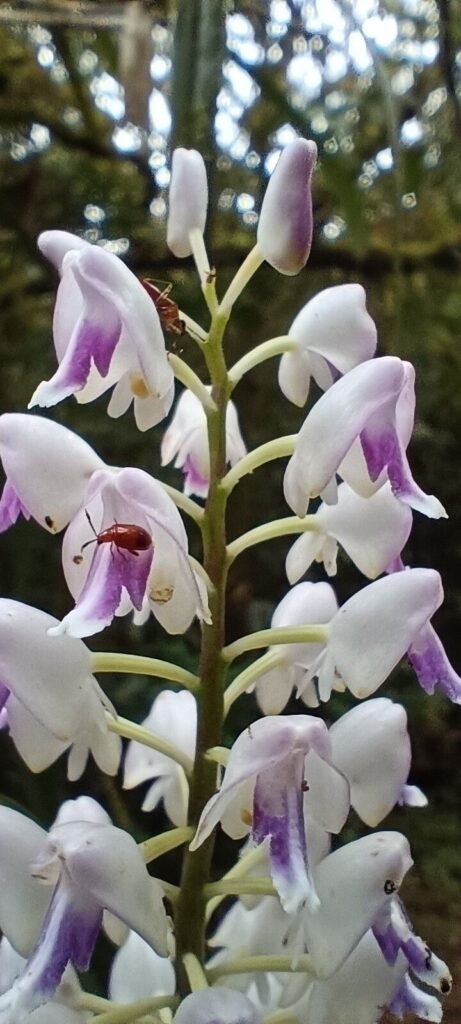
Propagating Polystachya bifida: A Guide to Multiplying the "Forked Polystachya"
Introduction:
Polystachya bifida, commonly known as the "Forked Polystachya," is a captivating orchid species prized for its distinctive, often pendulous inflorescences bearing small, densely packed flowers. The flowers, typically yellowish-green with reddish-brown markings, contribute to its popularity among orchid enthusiasts. Its relatively compact growth habit makes it suitable for both terrariums and mounted displays. While relatively easy to grow, propagation presents some unique challenges, explored further below. The unique opportunity to increase genetic diversity, especially in rarer forms, makes propagation a rewarding endeavor for the dedicated orchid grower.
Seed Germination:
Currently, there are no known reliable methods for seed germination propagation of Polystachya bifida. Orchid seeds, including those of Polystachya bifida, are extremely fine and lack endosperm, necessitating a symbiotic relationship with mycorrhizal fungi for germination. Replicating these conditions in a home or even a professional laboratory setting is exceptionally difficult, particularly for this specific species. Further research might reveal viable techniques in future, but for now, seed germination is not a practical method.
Cuttings:
Propagating Polystachya bifida through cuttings is also generally not viable. Unlike some orchids, this species doesn’t readily produce new plants from stem or leaf cuttings. The lack of easily separable nodes or adventitious buds prevents successful rooting and development of new plants from cuttings.
Division:
Division is the most reliable and practical method for propagating Polystachya bifida. Mature, well-established plants can be carefully divided into multiple sections, each containing several pseudobulbs and healthy roots.
- Challenges: The delicate nature of the roots requires careful handling to avoid damage. Dividing too aggressively can stress the plant, resulting in loss of some sections. The success rate depends on the health of the parent plant and the skill of the propagator.
- Practical Tips: Divide during the active growing season (spring or early summer) after flowering. Use a sharp, sterilized knife or shears. Ensure each division has a sufficient number of pseudobulbs and roots. Plant each division in a well-draining potting mix suitable for orchids. Potting should be firm enough to support the plant but not too compacted to obstruct drainage. Maintain high humidity and even watering until new growth appears.
- Rewards: Division offers an easy method to increase your collection relatively quickly compared to other methods. It preserves the genetic characteristics of the parent plant.
Tissue Culture:
Tissue culture offers a potential, albeit specialized, method for propagating Polystachya bifida.
- Challenges: This technique requires specialized equipment, sterile conditions, and a detailed knowledge of orchid tissue culture protocols. Laboratories specializing in orchid propagation are typically required. Contamination is a major risk. The establishment of a sterile culture and subsequent growth optimization will be species-specific and require expertise and experimentation.
- Practical Tips: Sourcing a reputable laboratory specializing in orchid propagation is crucial. Genetic uniformity may be a consideration, contrasting with the genetic diversity attained via seed propagation.
- Rewards: Tissue culture enables rapid and large-scale propagation, ideal for conservation efforts or commercial production. It offers the opportunity to produce many clones from a single parent plant.
Conclusion:
While seed germination and cuttings are currently impractical for Polystachya bifida, division remains the most accessible method for the home propagator. Tissue culture presents a more complex but potentially high-yield alternative, best suited to commercial operations or research settings. The challenges associated with propagation highlight the unique satisfaction derived from successfully growing this orchid. The effort, care, and attention to detail required are handsomely rewarded by witnessing the flourishing of a new plant, reflecting both your skill and dedication. Don’t be discouraged by initial setbacks—persistence and meticulous observation are key to successfully propagating the beautiful Polystachya bifida.