
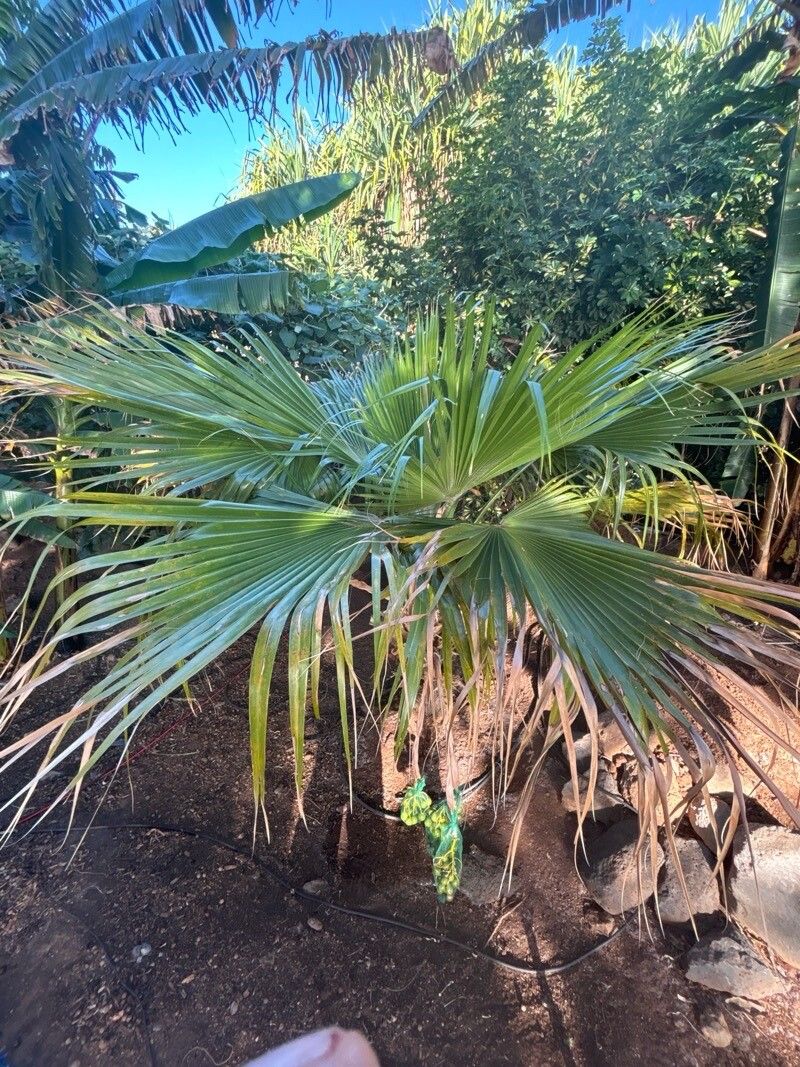
Propagating the Loulu Palm (Pritchardia lowreyana): A Gardener’s Guide
Introduction:
Pritchardia lowreyana, commonly known as the Loulu palm, is a captivating Hawaiian endemic species prized for its graceful, silvery-green leaves and stately appearance. Its popularity among gardeners stems from its relatively fast growth rate (compared to other Pritchardia species), tolerance of partial shade, and overall hardiness. However, its propagation presents unique challenges, making successful cultivation all the more rewarding. While seed germination is possible, other methods like cuttings and division are less reliable, pushing many to explore tissue culture techniques.
Seed Germination:
Seed germination for Pritchardia lowreyana is a viable, albeit sometimes challenging, method of propagation. The primary challenge lies in obtaining fresh, viable seeds. Seeds rapidly lose viability after ripening, requiring immediate sowing. Furthermore, pre-sowing treatment can significantly improve germination rates.
Challenges: Seed dormancy is minimal, but ensuring freshness is crucial. Fungal diseases can be a significant problem in damp seed starting mixes.
Practical Tips: Sow fresh seeds directly into a well-draining seed-starting mix consisting of a blend of perlite, vermiculite, and a peat-based component. Maintain high humidity (around 80%) and consistently warm temperatures (25-30°C) using a propagator or humidity dome. Avoid overwatering, which promotes fungal growth. Gentle bottom watering is preferable. Germination can take several weeks to several months.
Rewards: Seed propagation offers the highest level of genetic diversity, leading to a more robust and resilient population of plants. It also presents an opportunity for large-scale propagation, vital for conservation efforts.
Cuttings:
Currently, there are no known reliable methods for propagation of Pritchardia lowreyana using cuttings. The palm’s physiology makes it difficult to root stem or leaf cuttings successfully.
Division:
Propagation of Pritchardia lowreyana via division is generally not recommended. Loulu palms do not readily produce offsets or suckers that can be separated and grown independently. Attempting division can seriously injure the mother plant without producing viable offspring.
Tissue Culture:
Tissue culture offers a promising, albeit sophisticated, approach to Pritchardia lowreyana propagation.
Challenges: This method requires specialized equipment, sterile laboratory conditions, and expertise in plant tissue culture techniques. The establishment of sterile cultures and the optimization of growth media can be complex and demand significant experimentation.
Practical Tips: Successful tissue culture relies heavily on the selection of appropriate explant material (meristematic tissue or leaf segments), the use of optimal growth regulators, and the maintenance of a contamination-free environment.
Rewards: Tissue culture enables rapid and large-scale propagation of genetically identical plants, preserving desirable traits. It also allows for the production of disease-free plants, boosting survivability.
Conclusion:
Propagating Pritchardia lowreyana presents a spectrum of challenges and rewards. While seed germination offers genetic diversity but requires patience and careful technique, tissue culture provides a route to large-scale propagation, demanding specialized skills and resources. Cuttings and division are generally not viable methods. The unique satisfaction of successfully cultivating this stunning Hawaiian palm lies precisely in overcoming these hurdles, transforming a seemingly daunting task into a testament to perseverance and horticultural expertise. Aspiring propagators should begin with fresh seeds and a commitment to careful attention to detail. With dedication, the rewards of a flourishing Loulu palm will undoubtedly make the effort worthwhile.