
Propagating Psiadia punctulata: A Gardener’s Guide
Introduction:
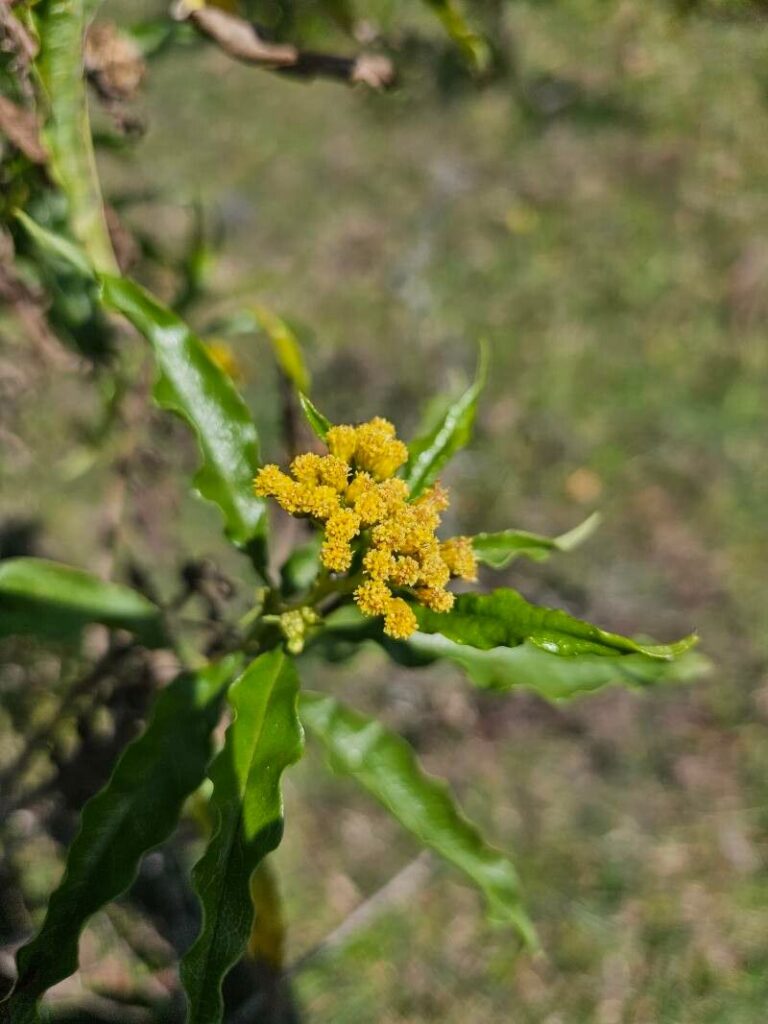
Psiadia punctulata, commonly known as the Dotted Psiadia, is a fascinating shrub native to the coastal regions of Southern Africa. Characterized by its attractive, aromatic foliage and clusters of small white or pale yellow flowers, it holds a growing appeal amongst gardeners seeking drought-tolerant and uniquely textured plants. Its resilience and attractive features make it a desirable addition to xeric gardens and landscaping projects. However, propagating Psiadia punctulata can present some unique challenges, making successful cultivation all the more rewarding.
Seed Germination:
Currently, there are no known reliable methods for seed germination propagation of Psiadia punctulata. While the plant produces seeds, germination rates are reportedly extremely low, and reliable techniques for enhancing germination success remain elusive. Further research into specific germination requirements, such as light exposure, temperature fluctuations, and potential pre-treatment methods (e.g., scarification), is needed.
Cuttings:
Cuttings present a more viable option for propagating Psiadia punctulata.
Challenges: Root development can be slow and inconsistent. The success rate depends heavily on the timing of the cuttings (ideally semi-hardwood cuttings taken in late spring or early summer), the use of rooting hormone, and providing optimal conditions for humidity and warmth.
Practical Tips: Take 8-10cm cuttings from non-flowering stems, removing lower leaves to prevent rot. Dip the cut ends in rooting hormone powder before planting in a well-draining, moist propagation mix (e.g., a blend of perlite and peat moss). Cover the cuttings with a clear plastic bag or humidity dome to maintain high humidity levels. Keep the propagation mix consistently moist but not waterlogged. Place the cuttings in bright, indirect light.
Rewards: Cuttings offer a relatively fast method of propagation compared to other methods, producing genetically identical plants to the parent plant. This ensures continuity of desirable traits.
Division:
Division is generally not a practical method for propagating Psiadia punctulata. The plant typically does not develop readily divisible root systems suitable for this technique.
Tissue Culture:
Tissue culture is a potentially promising method, though it requires specialized laboratory equipment and expertise.
Challenges: Establishing sterile culture conditions and developing appropriate media formulations specific to Psiadia punctulata are crucial factors determining success. This method is generally more expensive and resource-intensive than other propagation methods.
Practical Tips: This method would require the expertise of a tissue culture laboratory, where small pieces of plant tissue (e.g., shoot tips or nodal segments) are cultured on a nutrient-rich medium to stimulate growth.
Rewards: Tissue culture offers the potential for rapid, large-scale propagation of genetically uniform plants, ideal for commercial or large-scale landscaping projects. It also provides a way to propagate plants from diseased or damaged specimens that cannot be propagated using other methods.
Conclusion:
Propagating Psiadia punctulata presents challenges, with cutting propagation proving the most accessible and reliable method for home gardeners. While seed germination and tissue culture offer potential avenues for future investigation and large-scale propagation, they require further research and specialized resources respectively. The rewards, however, are worth the effort: successfully cultivating this resilient and beautiful shrub brings a unique sense of accomplishment and the satisfaction of creating a thriving, fragrant addition to your garden. For beginners, focusing on the cutting propagation method, with meticulous attention to detail and patience, provides the highest likelihood of success. Don’t be discouraged by initial setbacks – persistence is key to mastering the propagation of this fascinating plant.