
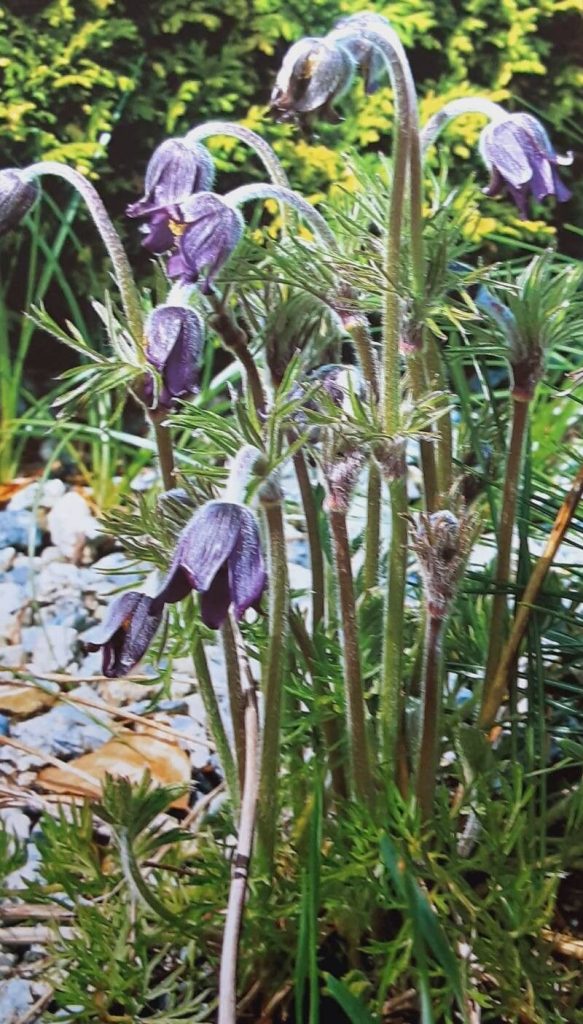
Propagating Pulsatilla montana: A Gardener’s Guide to the Mountain Anemone
Introduction
Pulsatilla montana, commonly known as the Mountain Anemone or Pasque Flower, is a captivating perennial prized for its exquisite, bell-shaped flowers that bloom in shades of purple, lilac, or white, often appearing before the foliage emerges in spring. Its delicate, feathery foliage adds further charm throughout the growing season. The plant’s beauty and relative rarity have led to its increasing popularity amongst gardeners, but its propagation proves challenging, requiring patience and specific techniques. This article explores various methods for propagating Pulsatilla montana, outlining the challenges, rewards, and practical advice for achieving success.
Seed Germination
Seed germination is a viable, yet challenging, method for propagating Pulsatilla montana. The primary challenge lies in the seeds’ dormancy and the need for specific conditions to break it. These seeds exhibit a double dormancy, requiring both a period of cold stratification (mimicking winter conditions) and a period of warm stratification (mimicking spring conditions).
Challenges: Achieving consistent germination rates is notoriously difficult. Improper stratification or incorrect sowing techniques often result in low germination percentages or complete failure. The tiny seeds are also susceptible to fungal diseases.
Practical Tips: Collect seeds immediately after they mature and turn fluffy, ensuring they are fully ripe. The first stratification period should involve storing the seeds in moist peat moss or vermiculite at temperatures between 2-5°C (35-41°F) for approximately 12 weeks. After this cold-stratification, transfer the seeds to a warm (around 20°C/68°F) environment for another 6-8 weeks. Sow the seeds shallowly in a well-draining seed-starting mix, ensuring consistent moisture but avoiding waterlogging. Good air circulation is crucial to prevent fungal growth.
Rewards: Germination from seed offers the potential for genetic diversity within a population, opening doors to unique variations and colors. It’s also a practical method for large-scale propagation, though achieving reasonable success rates requires significant effort and patience.
Cuttings
Currently, there are no known reliable methods for propagating Pulsatilla montana from cuttings. Attempts at softwood, semi-hardwood, or hardwood cuttings have consistently yielded poor results. The plant’s physiology makes it particularly resistant to rooting from cuttings.
Division
Division is a possible propagation method for Pulsatilla montana, though it’s limited by the plant’s relatively slow growth and the risk of damaging the delicate root system.
Challenges: Carefully dividing the root crown without causing damage is crucial. Divisions should be large enough to contain sufficient roots and buds to ensure establishment. Over-division weakens the parent plant and may compromise survival rates.
Practical Tips: The best time to divide Pulsatilla montana is in early autumn or late spring, after flowering. Lift the entire clump carefully, ensuring minimal disturbance of the soil around the roots. Use a sharp, clean knife or spade to separate the crown into sections, each with a viable section of root and several buds. Replant immediately, ensuring the root crown is at the soil level.
Rewards: Division offers a fairly quick way to increase the number of plants, preserving the genetic characteristics of the parent plant. However, this method is limited by the size and age of the parent plant.
Tissue Culture
Tissue culture is a potentially viable method for large-scale propagation of Pulsatilla montana, though it requires specialized equipment, expertise, and a sterile laboratory environment. Limited research exists in this area.
Challenges: Developing a reliable protocol for Pulsatilla montana tissue culture requires significant experimentation to determine optimal media, hormones, and sterilization techniques. This process is complex, costly, and requires specialized training.
Practical Tips: This approach is best left to professional plant propagation laboratories due to the highly specialized nature of the process.
Rewards: Successful tissue culture offers the potential for rapid and large-scale propagation, leading to uniformity amongst the resulting plants, valuable for commercial operations.
Conclusion
Propagating Pulsatilla montana presents distinct challenges across all methods. While seed germination offers genetic diversity but requires patience and specialized knowledge, division is limited by the plant’s growth rate and sensitivity to root disturbance. Cuttings are ineffective, and tissue culture remains largely unexplored. However, the rewards of successfully cultivating this exquisite plant are immense. The unique satisfaction of nurturing a Pulsatilla montana from seed or a carefully divided root crown outweighs the difficulties involved. For aspiring propagators, patience, careful observation, and meticulous attention to detail are key to unlocking the secrets of successfully cultivating this beautiful and cherished species. Remember to prioritize the health and well-being of the plant at all stages of propagation.