
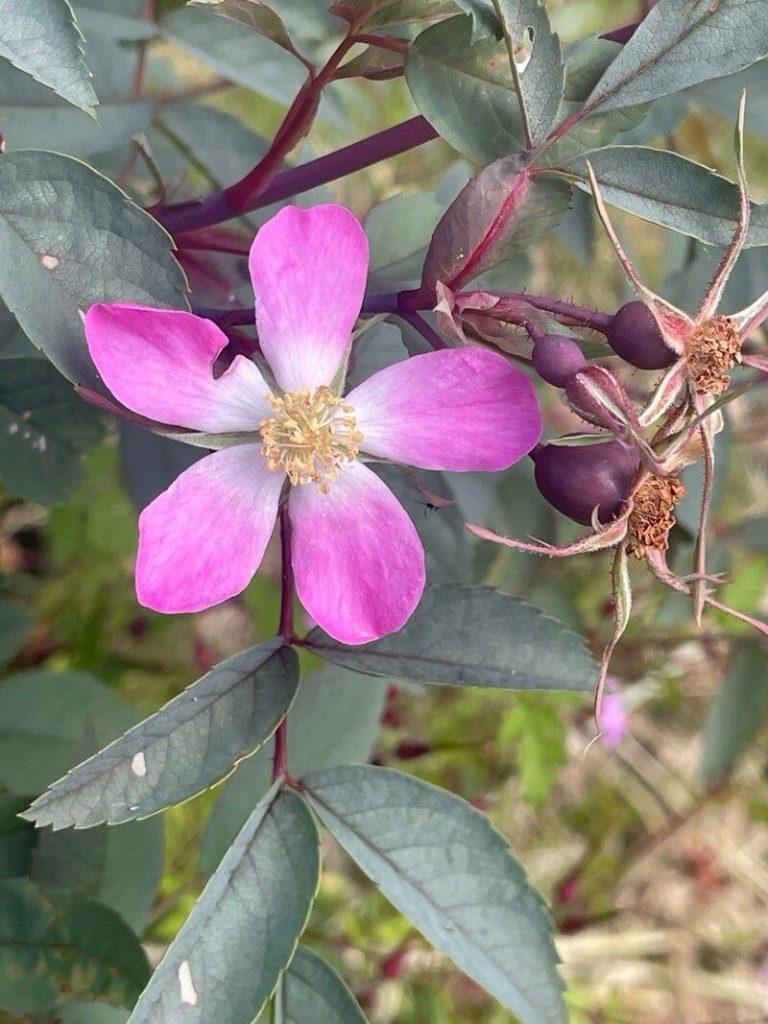
Propagating the Red-leaved Rose: A Guide to Cultivating Rosa glauca
Rosa glauca, better known as the Red-leaved Rose or sometimes the Apple Rose, is a captivating shrub rose prized for its striking bluish-purple foliage and charming, lightly fragrant pink flowers. Its unique foliage provides year-round interest in the garden, making it a popular choice amongst rose enthusiasts. However, propagating this beauty presents certain challenges, making success all the more rewarding. This article explores the various methods of propagation, outlining the difficulties and rewards associated with each.
Seed Germination:
Currently, there are no known reliable methods for seed germination propagation of Rosa glauca. While seeds may be produced, their germination rate is notoriously low, and the resulting seedlings often exhibit significant variation from the parent plant, potentially losing the desired bluish foliage. The complexities of seed dormancy and the long germination time render this method impractical for the average gardener.
Cuttings:
Cuttings offer a more reliable method for propagating Rosa glauca. However, success hinges on careful technique and appropriate timing.
-
Challenges: Rosa glauca, like many roses, can be somewhat recalcitrant to rooting from cuttings. The success rate is dependent upon using semi-hardwood cuttings taken in late summer or early autumn. Improper sanitation can lead to fungal diseases.
-
Tips: Take cuttings of approximately 4-6 inches long, removing lower leaves to prevent rotting. Use a rooting hormone to enhance success. Plant in a well-draining, moist propagation mix (e.g., perlite and peat moss) and maintain high humidity, ideally using a propagator or covering the cuttings with a plastic bag. It may take several weeks or even months to see root development.
- Rewards: Cuttings produce genetically identical plants to the parent, preserving the desirable bluish foliage. This method is relatively straightforward and cost-effective for small-scale propagation.
Division:
Division is generally not a practical method for propagating Rosa glauca. Unlike some clump-forming roses, Rosa glauca doesn’t readily lend itself to being divided into separate, viable plants. Attempts at division often damage the root system, compromising the plant’s health and significantly reducing the chances of success.
Tissue Culture:
Tissue culture offers a sophisticated and potentially high-yield propagation method, especially for large-scale commercial propagation.
-
Challenges: Tissue culture requires specialized equipment, expertise, and a sterile environment. It is a technically demanding process requiring significant investment in materials and equipment.
-
Tips: This method requires specialized knowledge and access to a laboratory setting. Sterile conditions are paramount to prevent contamination.
- Rewards: Tissue culture allows for rapid and large-scale multiplication of Rosa glauca, producing numerous genetically identical plants quickly. This is particularly useful for nurseries or rose breeders.
Conclusion:
Propagating Rosa glauca presents a unique set of challenges. While seed germination proves unreliable, cuttings offer a relatively accessible method for home gardeners, albeit one that requires patience and attention to detail. Division is not recommended, and tissue culture, though efficient, is best suited for commercial settings. The rewards, however, are substantial. Successfully propagating this stunning rose, whether through cuttings or tissue culture, yields a profound sense of accomplishment, a testament to perseverance and horticultural skill. Don’t be discouraged by the initial hurdles; the unique beauty of Rosa glauca, its striking foliage and charming blooms, makes the effort well worth the reward. So, embrace the challenge and enjoy the journey of cultivating this remarkable rose.