
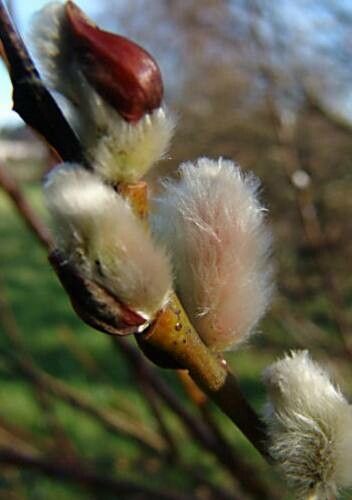
Propagating Salix × fragilis: Crack Willow’s Clonal Conundrums and Cultivating Success
Introduction:
Salix × fragilis, commonly known as crack willow, is a hybrid willow prized for its rapid growth, elegant weeping form, and tolerance of various soil conditions. Its popularity among gardeners stems from its ability to quickly establish itself, providing shade and attracting wildlife. However, its hybrid nature presents unique challenges when it comes to propagation, as seed viability can be unpredictable, making vegetative methods more reliable. This article explores different methods of propagating crack willow, outlining their effectiveness and associated difficulties.
Seed Germination:
Currently, there are no known reliable methods for seed germination propagation of Salix × fragilis. While crack willow produces seeds, their viability is extremely low due to the hybrid nature of the plant. Furthermore, even if germination occurred, the resulting seedlings may exhibit significant variation from the parent plant, making this method unsuitable for maintaining desirable traits.
Cuttings:
This is the most reliable and commonly used method for propagating Salix × fragilis.
- Challenges: While relatively straightforward, success depends on timing and technique. Improper handling can lead to fungal infections or rotting.
- Practical Tips: Hardwood cuttings taken in late autumn or early winter, approximately 15-20cm long, are ideal. Dip the base in rooting hormone prior to planting in moist, well-drained propagation mix (a mix of perlite and peat moss is recommended). Keep the cuttings consistently moist but not waterlogged. A humid environment, achieved using a propagator or plastic bag, improves success rates. Propagation should be undertaken outdoors in a relatively shaded area.
- Rewards: Cuttings produce genetically identical clones of the parent plant, ensuring consistency in growth habit and appearance. This method is ideal for large-scale propagation of specific cultivars.
Division:
Division of established crack willows can be attempted, but it is not ideal.
- Challenges: Mature crack willows develop extensive root systems making division difficult and potentially damaging to the parent plant. Larger divisions may also struggle to establish themselves effectively. It is also likely to damage the root system, jeopardizing survival of both the mother plant and the divisions.
- Practical Tips: This method should only be attempted on younger, smaller willows. The plant should be carefully dug up, the root ball divided with a sharp, clean spade, ensuring each section has sufficient root mass and shoots. These sections are then replanted immediately.
- Rewards: It provides an opportunity to propagate multiple plants from a single specimen, simplifying reproduction for a limited number of plants compared to cuttings.
Tissue Culture:
Tissue culture offers a potentially efficient method for large-scale propagation of Salix × fragilis.
- Challenges: This is a highly specialized technique requiring specialized equipment, sterile conditions, and expertise in plant tissue culture procedures. It is not a feasible method for the average home gardener.
- Practical Tips: This method necessitates a controlled environment with specific nutrient media and growth hormones. Success depends heavily on maintaining sterility throughout the process to prevent contamination.
- Rewards: Tissue culture allows for rapid and large-scale propagation producing numerous genetically identical plants from a small amount of source material. This is particularly useful for preserving rare or desirable cultivars.
Conclusion:
Propagating Salix × fragilis presents unique challenges depending on the chosen method. While seed propagation is largely ineffective, cuttings offer a reliable and accessible method for the home gardener, providing genetically consistent plants. Division offers a simpler strategy for limited propagation of younger plants. Tissue culture, although highly efficient, requires specialized knowledge and resources. The rewards of successfully cultivating this rapid-growing and aesthetically pleasing tree are significant, offering a sense of accomplishment that outweighs the difficulties. For the average gardener, mastering the art of crack willow propagation through cuttings is a rewarding experience, demonstrating the power of patience and careful technique in nurturing life. Therefore, aspiring propagators are encouraged to begin with the cutting method, building confidence and skills before exploring more advanced propagation methodologies.