
Propagating Santolina benthamiana: A Gardener’s Guide
Introduction:
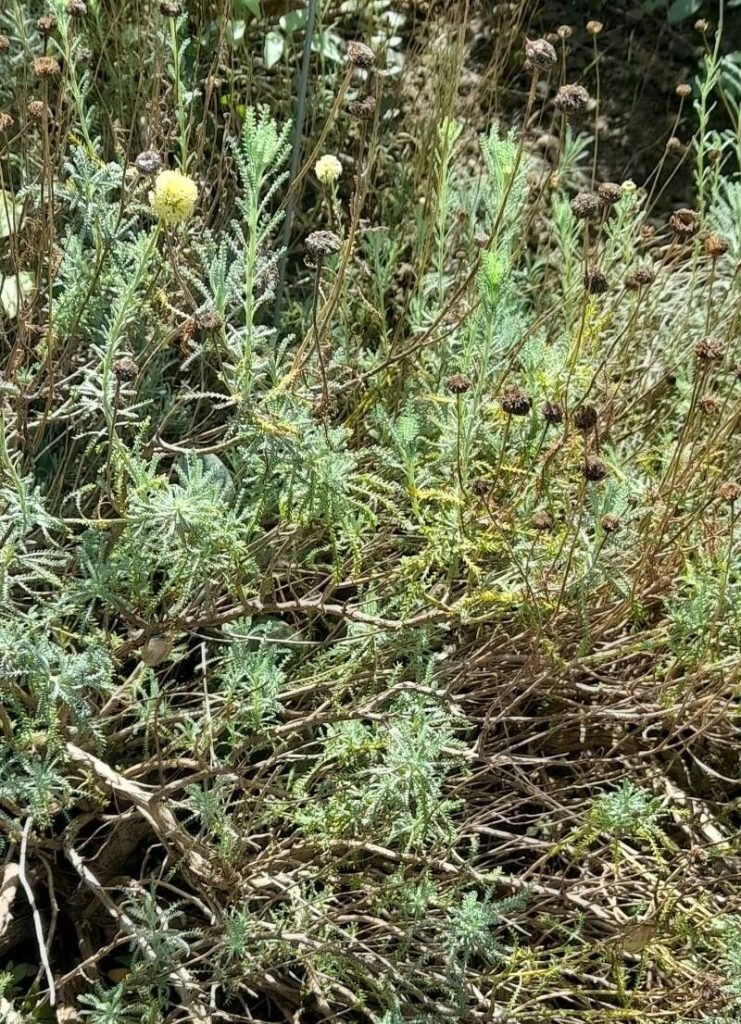
Santolina benthamiana, commonly known as lavender cotton, is a charming, low-growing shrub prized for its silvery-grey foliage and button-like yellow flowers. Its drought tolerance, resilience to poor soils, and attractive appearance make it a popular choice for rock gardens, borders, and even container gardening. While relatively easy to maintain, propagating Santolina benthamiana can present some unique challenges, making success all the more rewarding. Its compact nature and relatively slow growth rate means that propagation plays a key role in increasing stock for gardeners.
Seed Germination:
Currently, there are no known reliable methods for seed germination propagation of Santolina benthamiana. While seeds may be produced, germination rates are extremely low, and seedling establishment is unreliable. This is likely due to factors such as dormancy mechanisms within the seeds that are not easily overcome.
Cuttings:
Cuttings are the most commonly used and reliable method for propagating Santolina benthamiana.
- Challenges: While effective, success with cuttings depends on careful timing and technique. Using older, semi-hardwood cuttings improves rooting success, but overly woody cuttings may struggle.
- Practical Tips: Take 4-6 inch cuttings in late spring or early summer from non-flowering stems. Remove lower leaves, dip the cut end in rooting hormone, and plant in a well-draining propagation mix (e.g., a mixture of perlite and peat moss). Maintain a consistently moist (but not waterlogged) environment, ideally with the use of a humidity dome or propagator. Rooting can take several weeks.
- Rewards: This method offers a simple and effective way to produce genetically identical clones of the parent plant, preserving desirable traits. It’s ideal for smaller-scale propagation.
Division:
Division is another viable, albeit less frequently employed method for propagating Santolina benthamiana.
- Challenges: This method is best suited for established, larger plants. Care must be taken to avoid damaging the root system during the process.
- Practical Tips: Divide the plant in early spring or autumn, carefully separating the root ball into several sections, each with its own root system and healthy foliage. Replant the divisions immediately, ensuring good soil contact and watering gently.
- Rewards: Division offers a relatively quick way to increase the number of plants, preserving the genetic characteristics of the mother plant. It is most successful when the plant is healthy and actively growing.
Tissue Culture:
Tissue culture propagation is a more advanced technique that is not typically used for Santolina benthamiana by home gardeners.
- Challenges: Tissue culture requires specialized equipment, sterile conditions, and a detailed understanding of plant tissue culture protocols. It is more expensive and time-consuming than other methods.
- Practical Tips: This method would involve culturing sterile plant tissues in a nutrient-rich medium to induce the development of new plantlets. This is usually pursued under laboratory conditions.
- Rewards: Tissue culture permits rapid and large-scale propagation, allowing for the production of many plants from a small amount of source material. It offers the potential to produce disease-free plants.
Conclusion:
Propagating Santolina benthamiana presents unique challenges, with seed propagation proving largely impractical. Cuttings and division offer reliable alternatives for the home gardener, with cuttings being the most widely recommended method. While tissue culture provides the potential for mass production, its complexity leaves it largely in the domain of professional propagation. Despite these challenges, the process of successfully propagating this lovely plant provides a unique sense of achievement, a testament to one’s horticultural skills. Through patience and attention to detail, aspiring propagators can experience the satisfaction of cultivating and expanding their own collections of this resilient and beautiful shrub. Remember to select healthy mother plants and start with small, manageable propagation goals to boost success.