
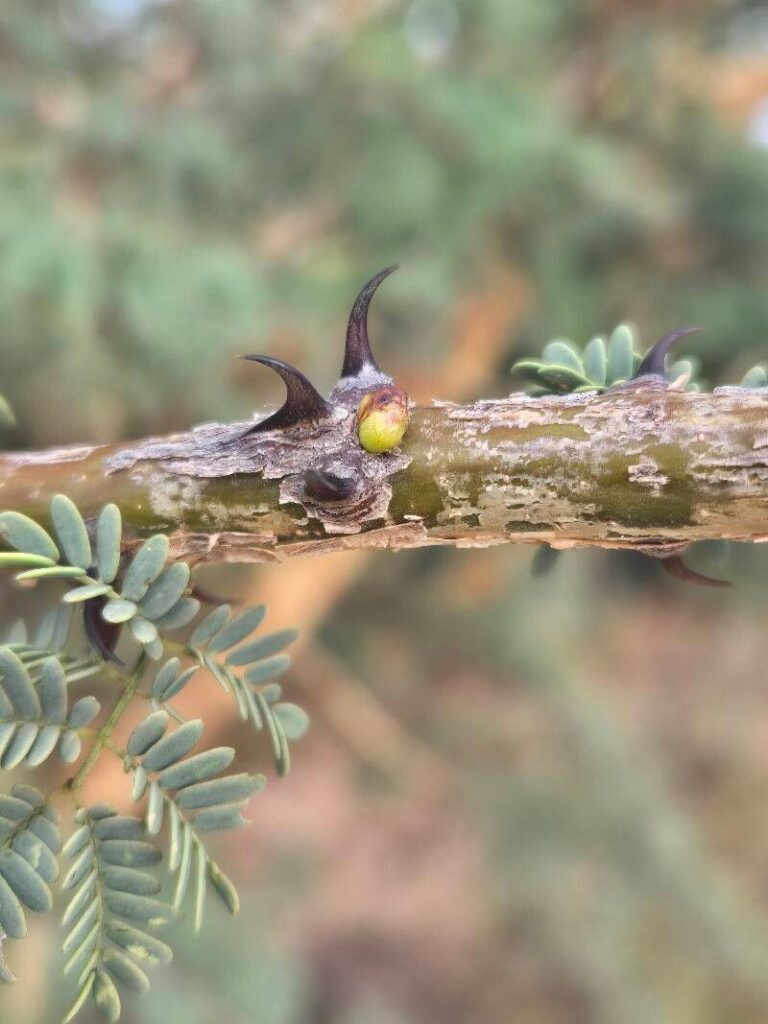
Propagating Senegalia thomasii: A Gardener’s Guide
Introduction
Senegalia thomasii, commonly known as the Christmas Wattle (though this common name can be applied to other Senegalia species), is a striking evergreen shrub or small tree prized for its vibrant, golden-yellow flower sprays that typically appear around Christmas time. Its attractive foliage and relatively low maintenance requirements have made it a popular choice among gardeners, particularly in warmer climates. However, its propagation presents unique challenges, making successful cultivation a rewarding endeavor. This article explores various propagation methods for Senegalia thomasii, assessing their viability and providing practical guidance.
Seed Germination
While Senegalia thomasii produces seeds, seed germination presents significant challenges. Currently, there are no known reliable methods for seed germination propagation of Senegalia thomasii. The seeds may possess a hard seed coat, requiring scarification (mechanical or chemical) to improve imbibition and germination rates. Further research is needed to determine optimal germination conditions, including specific temperature and moisture requirements, and to overcome the apparent dormancy mechanisms.
Cuttings
Propagating Senegalia thomasii from cuttings holds more promise than seed germination. However, success isn’t guaranteed and requires careful attention to detail.
Challenges: The success rate of cuttings can be low. Hardwood cuttings are generally less successful than semi-hardwood or softwood cuttings taken from the current season’s growth. The plant’s propensity to easily succumb to fungal diseases makes maintaining sterile propagation conditions crucial.
Practical Tips: Semi-hardwood cuttings, taken in late summer or early autumn, are generally the most successful. Use a sharp, clean knife or shears to take 4-6 inch cuttings. Remove lower leaves, dip the cut end in rooting hormone, and plant in a well-draining propagation mix, maintained consistently moist but not waterlogged. A propagation chamber or misting system can significantly increase success rates by maintaining humidity.
Rewards: Successfully propagating from cuttings offers clones of the parent plant, preserving desirable traits. This method is practical for smaller-scale propagation.
Division
Division is generally not a practical method for propagating Senegalia thomasii. This plant typically develops a strong taproot and is not easily divided without severely damaging the plant.
Tissue Culture
Tissue culture could potentially be a highly effective method for propagating Senegalia thomasii, allowing for large-scale production of genetically uniform plants.
Challenges: Establishing a successful protocol for tissue culture requires specialized knowledge, equipment, and sterile laboratory conditions. It necessitates considerable investment in time and resources. Contamination issues can easily lead to failure.
Practical Tips: A well-equipped laboratory and a skilled technician are crucial for the successful establishment and maintenance of sterile plant cultures. Specific media formulations and growth regulators need to be optimized for this species.
Rewards: Tissue culture offers the potential to rapidly produce large numbers of genetically identical plants, offering superior consistency compared to other methods. It is the most effective approach for mass propagation.
Conclusion
Propagating Senegalia thomasii presents different levels of challenge depending on the chosen method. While seed germination is currently unreliable, cuttings offer a more viable, although still less-than-guaranteed, pathway for smaller-scale propagation. Tissue culture emerges as the most promising avenue for large-scale cultivation. However, it requires considerable technical expertise and resources. The successes, however – whether a single plant successfully rooted from a cutting or a thriving batch from a tissue culture experiment – offer immense satisfaction, a testament to the perseverance and skill required to nurture this beautiful plant. Aspiring propagators should choose the method that aligns with their resources and expertise, embracing the learning process and relishing the rewards of their endeavors. The unique beauty of Senegalia thomasii makes even overcoming these significant hurdles entirely worth it.