
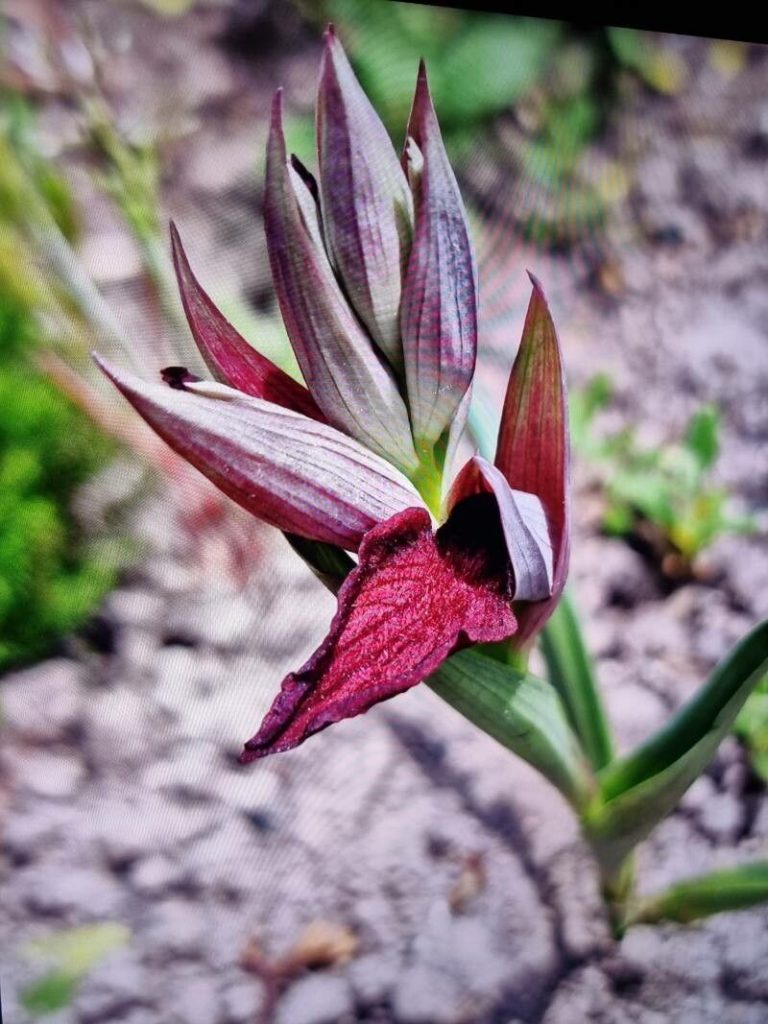
Propagating the Heart-Leaved Serapias: A Gardener’s Challenge
Introduction:
Serapias cordigera, commonly known as the Heart-leaved Serapias, is a captivating terrestrial orchid native to the Mediterranean region. Its striking flowers, characterized by a heart-shaped labellum (lip petal) and a delicate maroon and purplish-brown color scheme, make it a sought-after addition to specialist orchid collections and naturalistic gardens. While its beauty is undeniable, propagating this species presents unique horticultural challenges. Its popularity amongst orchid enthusiasts, combined with its relatively slow growth rate in the wild, makes exploring effective propagation methods highly desirable.
Seed Germination:
Currently, there are no known reliable methods for seed germination propagation of Serapias cordigera. These orchids are known for exhibiting extremely specialized and often symbiotic relationships with mycorrhizal fungi in the wild, necessary for seed germination. Replicating these conditions in a controlled environment has proven remarkably difficult. Extensive research into the specific fungal partners and their cultivation would be required before successful seed germination becomes a viable option.
Cuttings:
Cuttings are not a feasible method for propagating Serapias cordigera. Unlike some other plants, orchids do not readily root from stem or leaf cuttings. The plant’s structure and physiology are simply not conducive to this type of vegetative propagation.
Division:
Division is a potentially viable, though limited, method for propagating Serapias cordigera. Mature, established plants may occasionally produce offsets – smaller plants developing near the base of the mother plant. These can be carefully separated during the dormant period (late summer/early autumn), ensuring each division possesses a healthy root system and several pseudobulbs.
Challenges: The success of division depends heavily on the age and health of the parent plant. Dividing too aggressively can severely weaken or kill the mother plant. Accurate and gentle separation of the offsets, minimizing root disturbance, is crucial.
Practical Tips: Ideally, choose a well-established plant that has naturally produced multiple offsets. Sterilize cutting tools before and after the process to prevent disease. Replant divisions in a well-draining, orchid-specific potting mix, maintaining consistent moisture levels but avoiding waterlogging.
Rewards: Division offers a relatively straightforward way to increase the number of plants. However, the rate of increase is slow, and the method is limited by the number of offsets a plant produces.
Tissue Culture:
Tissue culture offers the most promising (though technically demanding) route to propagate Serapias cordigera. While challenging, it provides the potential for large-scale multiplication and the production of disease-free plants. The process involves cultivating plant tissues in a sterile environment on a nutrient-rich medium.
Challenges: Establishing a suitable medium that replicates the orchid’s specific nutritional and hormonal requirements is crucial but complex. This requires specialized expertise and laboratory facilities. The process is time-consuming and requires strict aseptic techniques to prevent contamination.
Practical Tips: A literature review on orchid tissue culture techniques, specifically focusing on related Serapias species, is essential before attempting this method. Professional guidance from an experienced tissue culturist is strongly recommended.
Rewards: Successful tissue culture offers the opportunity for mass production of Serapias cordigera, enabling the conservation of this species and wider distribution among enthusiasts.
Conclusion:
Propagating Serapias cordigera presents significant challenges across all common methods. While division offers a manageable approach for small-scale propagation, its limitations are apparent. Seed germination and cutting propagation are currently unfeasible. Tissue culture holds the greatest potential for large-scale propagation, but demands specialized knowledge and resources.
The unique satisfaction of successfully propagating this beautiful orchid lies precisely in overcoming those challenges. The patience required, combined with the level of specialized understanding needed, turns the cultivation of each plant into a rewarding journey of horticultural triumph. For those aspiring to propagate Serapias cordigera, we advise starting with research, gaining experience with simpler orchid propagations first, and acknowledging that setbacks are a part of the process. The rewards of successfully flowering a plant propagated by your efforts will make it all worthwhile.