
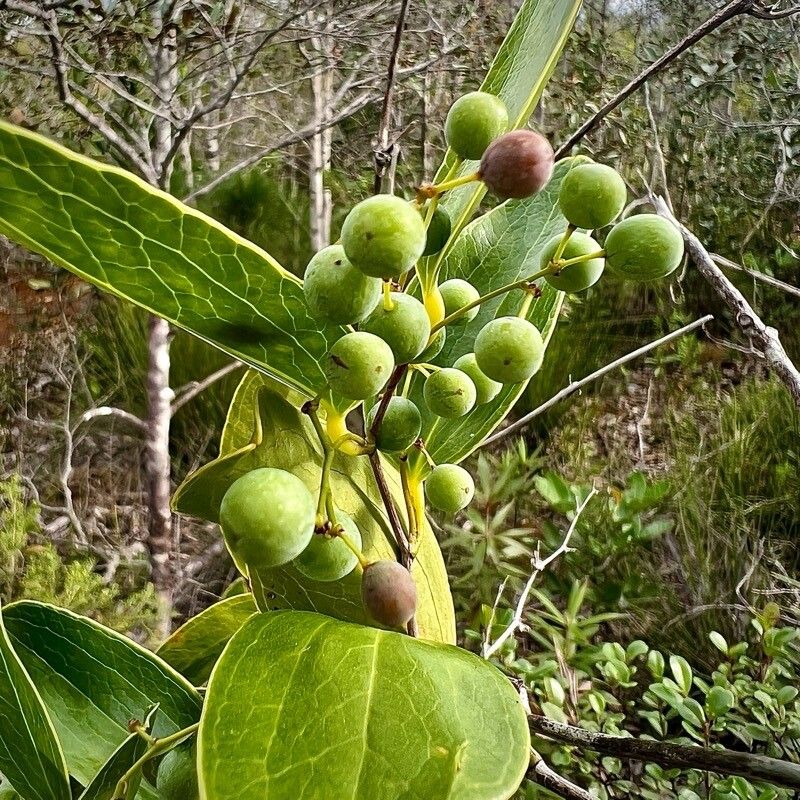
Propagating Smilax neocaledonica: A Gardener’s Guide
Introduction:
Smilax neocaledonica, commonly known as New Caledonian Smilax, is a captivating climbing plant native to, as its name suggests, New Caledonia. Characterized by its glossy, heart-shaped leaves and delicate, often fragrant flowers, it offers a unique textural and visual element to gardens. Its vigorous growth habit makes it a popular choice for covering walls, fences, or trellises, though its somewhat specialized requirements present propagation challenges fascinating to the dedicated gardener. Its rarity in cultivation only adds to its allure and the satisfaction of successful propagation.
Seed Germination:
Currently, there are no known reliable methods for seed germination propagation of Smilax neocaledonica. While the plant produces seed, germination rates are reportedly extremely low, even under optimal conditions. Further research is needed to determine if specific pre-treatment techniques (such as scarification or stratification) could improve germination success. The challenges associated with seed propagation include the unpredictable germination rates and considerable time required to reach maturity.
Cuttings:
Propagating Smilax neocaledonica from cuttings offers a more promising approach than seed germination.
Challenges: Successful rooting of cuttings requires attention to detail. The plant can be somewhat sensitive to fungal infections, particularly in humid conditions. Finding the optimal balance of humidity and aeration is critical.
Practical Tips: Semi-hardwood cuttings taken in late summer or early autumn are generally recommended. The cuttings should be approximately 10-15 cm long, with several nodes included. Use a well-draining propagation mix, and consider the use of rooting hormone to stimulate root development. Maintain high humidity through misting or propagation domes.
Rewards: Cuttings offer a faster route to increase the number of plants compared to seed propagation. This method ensures that the new plants retain the exact genetic characteristics of the mother plant.
Division:
Division of established Smilax neocaledonica plants is a relatively simple method for propagation.
Challenges: Dividing the plant requires careful handling to avoid damaging the delicate roots. The success of division heavily depends on the size and health of the parent plant. The plant might not be suitable for frequent division as it needs to become well established.
Practical Tips: Ideally, division should be carried out during the dormant season (late autumn or early winter). Ensure each division contains healthy roots and sufficient stems. Plant the divisions immediately after separation into similar soil conditions to the parent plant.
Rewards: Division is a quick and efficient method to increase plant numbers, especially useful for established plants.
Tissue Culture:
Tissue culture offers a potential avenue for large-scale propagation of Smilax neocaledonica.
Challenges: Establishing a sterile tissue culture laboratory and mastering the nuances of in vitro cultivation requires specialized knowledge, equipment, and aseptic conditions. Optimizing the culture media to ensure optimal shoot and root development may also prove challenging, requiring experimentation with different hormone concentrations and nutrient compositions.
Practical Tips: Initial experiments might focus on establishing aseptic culture from actively growing shoot tips or nodal segments. Once established, the protocol can be optimized for micropropagation, generating a large number of plantlets under controlled conditions.
Rewards: Tissue culture provides a reliable method for mass production of genetically identical plants, maintaining uniformity and ensuring disease-free stock.
Conclusion:
Propagating Smilax neocaledonica presents unique challenges, with cuttings and division offering more immediate and reliable success than seed germination. Tissue culture holds considerable potential for large-scale production, though this method requires greater investment and expertise. The unpredictable nature of seed germination underscores the importance of exploring alternative methods, such as cuttings and division for the hobby gardener. Successfully propagating this beautiful, yet slightly temperamental plant, however challenging, offers a profound sense of accomplishment. The rewards far outweigh the effort; the unique beauty of Smilax neocaledonica gracing your garden will serve as a testament to your horticultural skill and patience. Keep experimenting, stay persistent, and enjoy the journey of cultivating this rare and rewarding plant!