
Propagating Sorbus kurzii: A Gardener’s Challenge and Reward
Introduction
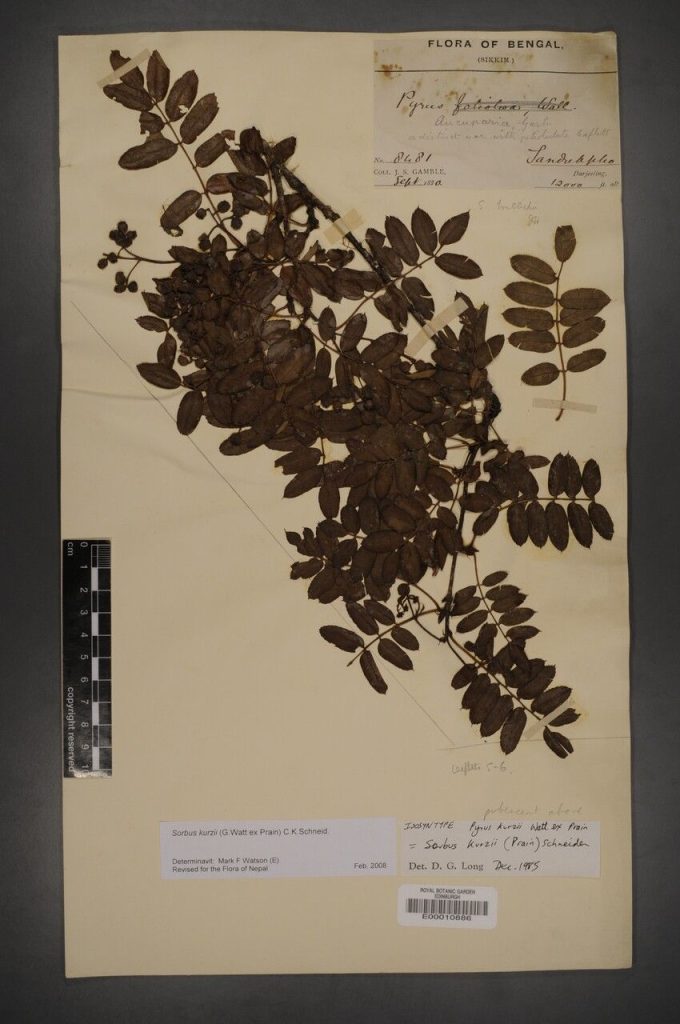
Sorbus kurzii, also known as Kurz’s Rowan or Kurz’s Whitebeam, is a relatively uncommon but highly prized small tree or large shrub. Native to the eastern Himalayas, it boasts striking features: elegant, pinnate leaves that turn vibrant shades of red and orange in autumn, and clusters of creamy-white flowers followed by attractive, orange-red berries. These characteristics, combined with its adaptability to various soil types and its relatively compact size, make it a sought-after addition to gardens, particularly those with a focus on autumn color or native plant collections. However, propagating Sorbus kurzii can prove challenging, requiring patience and understanding of its specific needs.
Seed Germination
Seed germination for Sorbus kurzii is possible but presents significant challenges. The seeds possess a hard seed coat requiring stratification to break dormancy. This process mimics the natural winter conditions necessary for germination.
Challenges: Low germination rates are common even with stratification. Seed viability can decline rapidly after collection, making fresh seed crucial.
Practical Tips: Seeds should be collected in autumn and immediately stratified. A period of moist cold stratification (3-4 months at around 4°C) is essential. Sow the stratified seeds outdoors in a seed tray using a well-drained, slightly acidic seed compost. Keep the compost moist but not waterlogged. Germination usually occurs in spring.
Rewards: Successful germination offers the reward of high genetic diversity, potentially leading to plants with unique characteristics. Seed propagation also offers a cost-effective method for large-scale propagation if successful.
Cuttings
Propagating Sorbus kurzii from cuttings is generally considered more reliable than seed germination.
Challenges: The success rate still varies greatly depending on the timing, technique, and rooting hormone used. Hardwood cuttings are generally preferred but even these can prove difficult.
Practical Tips: Semi-hardwood cuttings taken in late summer or early autumn, using basal cuttings from young shoots, are recommended. Treat cuttings with a rooting hormone and place them in a humid environment with bottom heat. Misting regularly will help maintain high humidity.
Rewards: Cuttings produce genetically identical plants to the parent, preserving desirable traits. Compared to seed germination, cuttings offer a faster and more predictable propagation method.
Division
Division, separating existing plants into smaller portions, is not a practical propagation method for Sorbus kurzii. This species does not readily form clumps or suckers making division infeasible.
Tissue Culture
Tissue culture offers the potential for mass propagation of Sorbus kurzii.
Challenges: This method requires specialized equipment, a sterile environment, and expertise in plant tissue culture techniques. Establishing suitable protocols for Sorbus kurzii may take considerable research and experimentation.
Practical Tips: Success depends heavily on using surface sterilized explants and employing appropriate nutrient media with plant growth regulators.
Rewards: Tissue culture offers the potential to rapidly produce a large number of genetically uniform plants and is an efficient method for conservation and mass propagation.
Conclusion
Propagating Sorbus kurzii presents unique challenges across all methods. Seed germination, while offering genetic diversity, is unpredictable. Cuttings offer a more reliable path but require careful technique. Division is impractical, while tissue culture, although capable of mass propagation, demands specialized knowledge and resources.
The rewards, however, are significant. Successfully cultivating this beautiful tree, overcoming the propagation hurdles, yields a particular sense of accomplishment. The vibrant autumn foliage and the elegant form of Sorbus kurzii are testament to the gardener’s patience and dedication. For the aspiring propagator, we recommend starting with either hardwood cuttings or carefully stratifying fresh seeds. While success isn’t guaranteed, the effort invested is undoubtedly rewarded by the presence of this striking plant in your garden. Remember that experimentation is key; don’t be discouraged by initial setbacks – the beauty of the mature Sorbus kurzii makes the challenges worthwhile.