
Propagating the "Bucket Orchid": Unveiling the Secrets of Stanhopea saccata
Introduction:
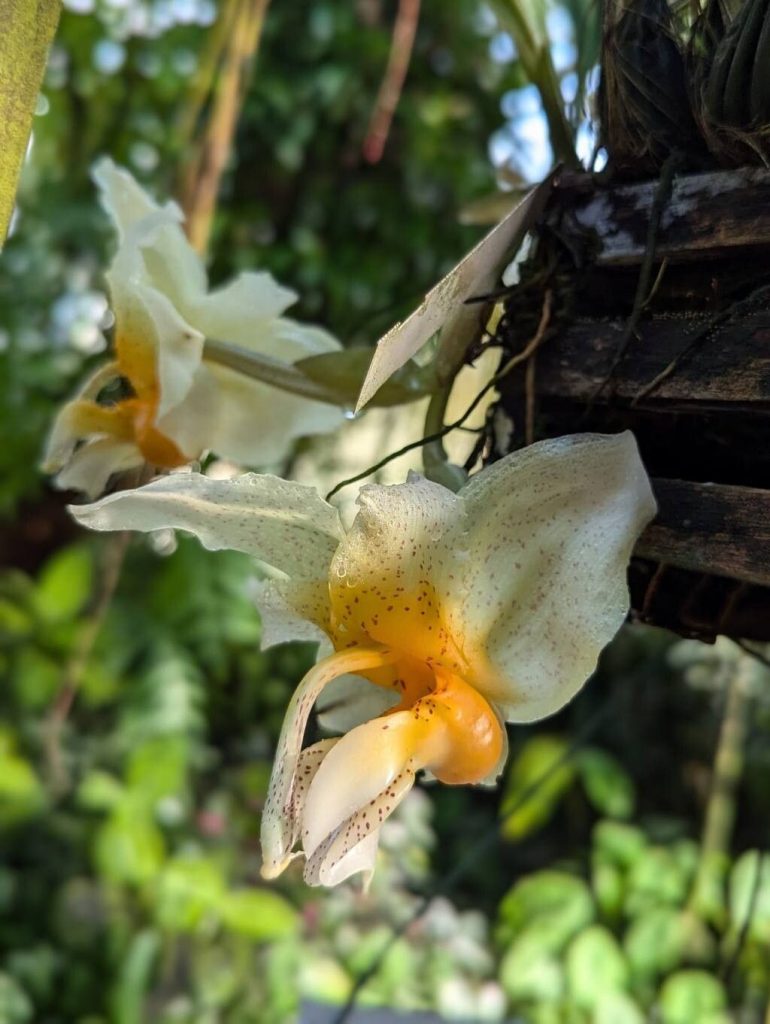
Stanhopea saccata, commonly known as the "Bucket Orchid," is a captivating epiphytic orchid prized for its pendulous, fragrant flowers that bloom from below the plant. These striking blossoms, with their intricate details and rich color, have secured its place among orchid enthusiasts. The unusual growth habit, with roots emerging through the pot’s drainage holes, adds to its unique appeal. However, its propagation isn’t straightforward, making successful cultivation all the more rewarding. This complexity, combined with its beauty, contributes significantly to its popularity among experienced orchid growers.
Seed Germination:
Currently, there are no known reliable methods for seed germination propagation of Stanhopea saccata. Orchid seeds are incredibly tiny and lack the endosperm needed for independent development. They require a symbiotic relationship with specific mycorrhizal fungi for germination and initial growth. Establishing this symbiotic relationship in a controlled environment is a highly specialized process that remains largely elusive for this species.
Cuttings:
Cuttings are also not a viable method for propagating Stanhopea saccata. Unlike some other orchids, Stanhopea lacks the ability to readily regenerate from stem cuttings.
Division:
Division is the most commonly successful method for propagating Stanhopea saccata. However, it presents its own set of challenges.
Challenges: Stanhopea plants are relatively slow-growing. Dividing them too frequently can weaken or even kill the parent plant. Each division must have a sufficient number of healthy pseudobulbs and roots to ensure survivability. Care must be taken not to damage the delicate roots during the process.
Practical Tips: The best time to divide is during the active growing season after flowering. The plant should be carefully removed from its pot, and the rhizome gently teased apart into sections, each containing at least three to four mature pseudobulbs and a healthy root system. Use sharp, sterilized instruments to minimize damage. Each division should then be potted in a well-draining medium, suitable for epiphytes, such as a mix of bark chips, sphagnum moss, and perlite.
Rewards: Division allows for the increase of the number of plants while maintaining the genetic characteristics of the parent. It’s a relatively straightforward method, once the plant is large enough to divide.
Tissue Culture:
Tissue culture offers the potential for large-scale propagation of Stanhopea saccata and offers an opportunity for disease-free plants. However, it’s a highly specialized technique requiring sterile conditions, specialized media, and a considerable amount of expertise.
Challenges: Establishing a sterile protocol and optimizing the growth media for Stanhopea saccata can be time-consuming and requires significant experimentation. The process is expensive and technically demanding, requiring specialized laboratory equipment and knowledge.
Practical Tips: There is limited publicly accessible information on effective tissue culture protocols for Stanhopea saccata. Collaboration with experienced orchid tissue culture laboratories is highly beneficial.
Rewards: Tissue culture offers the potential for mass propagation, allowing larger dissemination of unique clones for conservation or commercial purposes and offering the possibility of disease-free plants.
Conclusion:
Propagating Stanhopea saccata presents unique challenges, with division being the most practical method for hobbyists. While seed germination and tissue culture hold theoretical potential, they remain largely unattainable without significant resources and expertise. The rewards, however, are substantial. Successfully propagating this spectacular orchid offers a profound sense of accomplishment, making the effort worthwhile. The sheer beauty and fragrance of the resulting blooms serve as a testament to patience and dedication, a reward far exceeding the effort involved. Aspiring propagators should start with learning proper care and then gradually approach division once their plant is mature enough. Remembering that patience is key to success with this unique orchid is vital.