
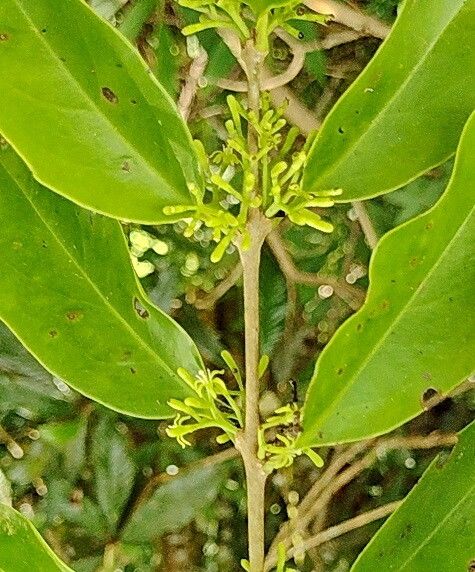
The Mistletoe Mystery: How to Propagate Struthanthus rhynchophyllus
Have you ever gazed up at a tree and wondered about the strange, leafy globes clinging to its branches? You might be looking at Struthanthus rhynchophyllus, a fascinating parasitic plant more commonly known as mistletoe. While its reputation as a romantic symbol might be well-established, the botanical world holds many secrets about this intriguing species.
One of the most captivating aspects of Struthanthus rhynchophyllus is its unique method of propagation. Unlike most plants, this mistletoe can’t sprout from seed directly into the soil. Instead, it relies on a symbiotic relationship with its host tree, a method known as hemiparasitism.
Here’s how it works:
1. The Sticky Seed: The mistletoe’s berries are sticky on purpose, acting as nature’s glue. These berries are often dispersed by birds, who feast on their fleshy exterior and leave behind the seed stuck to a branch.
2. The Host Connection: Once the seed lands, it begins to germinate, sending out a root-like structure known as a haustorium. This haustorium penetrates the host tree’s bark, tapping into its vascular system, stealing water and nutrients.
3. Growth and Development: The mistletoe draws sustenance from its host, but it also performs photosynthesis using its own chlorophyll, making it a “hemiparasite.” This allows it to grow and develop independently, even though it relies on the host for essential resources.
How to Propagate Mistletoe:
Now that you know the secrets of Struthanthus rhynchophyllus, you might be wondering whether you can cultivate your own mistletoe. While this plant is not commonly found in home gardens, it can be propagated from seed with a little patience and the right conditions.
1. Collect the Seeds: The best time to gather seeds is when the mistletoe berries are ripe, typically during late summer or early autumn. Be sure to obtain permission from the landowner if you are collecting them from a wild tree.
2. Prepare the Host: Choose a healthy host tree. Struthanthus rhynchophyllus prefers hardwood trees like oaks, elms, and maples. You can either plant seedlings directly into the host’s bark or use a technique called ‘grafting’. In grafting, you attach a living mistletoe seedling to the host tree’s bark.
3. Protect the Seedling: Once the seed is attached, keep it moist and protected from harsh weather conditions. You may need to cover it with a small plastic bag to create a mini-greenhouse effect until it starts to take root.
4. Patience is key: Propagation of Struthanthus rhynchophyllus is a slow process. It can take several months, or even years, for the seedling to establish itself on the host tree.
Important Considerations:
While mistletoe can be a fascinating and rewarding plant to propagate, it’s crucial to be mindful of its impact on its host:
- Check local regulations: In some areas, propagating mistletoe on trees may be regulated or prohibited.
- Observe your host tree: Monitor the host tree for signs of stress or decline. If the mistletoe growth becomes excessive, you may need to prune it back.
- Consider the ethics: Keep in mind that Struthanthus rhynchophyllus is a parasite. While it can be fascinating, it is important to consider the ethics of propagating a plant that relies on another for survival before you start.
Understanding the fascinating world of Struthanthus rhynchophyllus is a testament to the complexity and interconnectedness of nature. While it might not be the easiest plant to cultivate, it’s certainly a unique journey into the botanical world.