
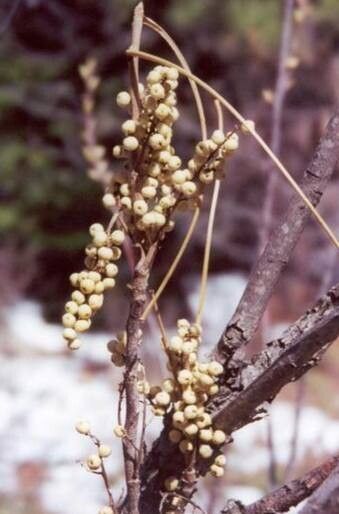
Propagating the Poison Oak: A Gardener’s Guide to Toxicodendron pubescens
Introduction:
Toxicodendron pubescens, commonly known as Pacific poison oak, is a shrub or vine notorious for its potent urushiol-containing sap, which causes a severe allergic reaction in most people. Despite its formidable reputation, its attractive foliage, showcasing variations in color throughout the year, and its resilience in challenging environments have garnered a surprising interest, particularly amongst dedicated gardeners fascinated by unique and resilient plants. Propagating Pacific poison oak, however, presents a unique set of challenges due to its toxicity and the inherent difficulties in establishing new plants. Understanding these challenges is key to successful propagation. Always prioritize safety, wearing protective gear (including gloves, eye protection, and long sleeves and pants) at all stages of handling this plant.
Seed Germination:
Currently, there are no known reliable methods for seed germination propagation of Toxicodendron pubescens. While seeds may be produced, germination rates are extremely low, even under optimal conditions, and seedling establishment is exceptionally challenging. This is likely due to a combination of factors including hard seed coats, dormancy requirements, and the plant’s reliance on specific mycorrhizal fungi for successful establishment.
Cuttings:
Cuttings offer a slightly more promising approach than seed germination. However, success is far from guaranteed.
Challenges: The high urushiol content makes handling cuttings risky. The plant’s tendency to produce adventitious roots is also relatively low.
Practical Tips: Softwood cuttings taken in early summer, treated with rooting hormone, and kept in a humid environment with bottom heat, may show some success. Misting regularly is crucial. Using a sterile propagation medium is also vital.
Rewards: Successful propagation using cuttings might offer a chance to replicate a specific plant’s desirable traits, maintaining uniformity in a collection. However, the likelihood of high success rates is not substantial.
Division:
Challenges: The potentially extensive root system makes division difficult and labor-intensive. Again, the risk of exposure to urushiol is significant.
Practical Tips: Division should be undertaken in early spring or late autumn when the plant is less active. Protective gear is absolutely essential. Sections with established roots and healthy shoots are more likely to survive.
Rewards: Division provides a relatively quick way to increase the number of plants. However, only established plants can be divided, and the method remains challenging due to the plant’s growth habit and urushiol.
Tissue Culture:
Tissue culture presents a potentially powerful approach, offering a method for clean propagation, free from pathogens and potential urushiol exposure (for those handling the cultures, appropriate protective and sterile lab conditions are always required).
Challenges: Establishing a reliable protocol for tissue culture propagation of Toxicodendron pubescens requires significant expertise, specialized equipment, and substantial experimentation. Obtaining sterile plant material is essential, as is optimizing the growth medium and environmental conditions.
Practical Tips: Research on suitable media, growth hormones, and sterilization protocols will be necessary for successful tissue culture. It requires specialized knowledge and laboratory settings.
Rewards: Tissue culture offers the potential for large-scale, consistent propagation and the production of disease-free plants. This method would bypass the challenges of urushiol handling, albeit at the cost of setting up a tissue culture lab or commissioning this work to a third-party lab.
Conclusion:
Propagating Toxicodendron pubescens poses significant challenges across all methods. Seed germination is currently unreliable, while cuttings and division present difficulties due to the plant’s characteristics and the inherent risks associated with handling its toxic sap. Tissue culture offers the most promising pathway for large-scale propagation but requires considerable expertise and resources.
The rewards, however, are substantial for those who succeed. Successfully cultivating this fascinating and challenging plant offers a unique sense of achievement, a testament to patience, skill, and a commitment to overcoming significant hurdles. For aspiring propagators, starting with cuttings may be a more achievable first step, followed by careful consideration of employing tissue culture techniques as a more efficient but advanced approach. Always remember to prioritize safety and wear appropriate protective gear throughout the entire process. The journey might be challenging, but the triumph is all the sweeter for it.